
Let's Talk

Relationships Under Stress

Listen to this episode of the Focus with Marlene Podcast

Get caught up with all episodes in the “Make Stress Work for You” series


 So many things that contribute to high levels of stress in today’s world. Not having a job, home schooling while maintaining a job, unexpected financial concerns, trimming our budgets to bare bones, travel restrictions, and the inability to enjoy social functions, are but a few.

When the cares of the day max our ability to cope, we find that those high levels of stress can make it harder to maintain positive relationships.

A better understanding of how we can respond to things that stress us out is extremely important so we can put positive, preventive measures and coping skills in place (see my book, Make Stress Work for You , and its accompanying Personal Application Workbook).

We know that anxiety levels can dramatically rise as optimism flies out the window and worry about our future takes over. Anger, guilt, and shame are quickly activated. Learning to calm ourselves through slow, even breathing whenever stress levels rise is imperative.

We need interaction with people.

When positive and supportive, those interactions can have a quieting and reassuring effect as we discuss options and encourage one another. But when relationships are strained with conflict and the inability to communicate, it adds another layer to our already overloaded stress levels.

What does communication involve?

We cannot not communicate. It is an ongoing process – a two-way street that involves both speaking and listening.

  • A good communicator uses words that say exactly what they are thinking, wanting, or feeling.
  • A good communicator avoids, if possible, words or phrases that color, cast blame or distort the message.

All communication goes through a filtering system.

The speaker’s message goes through his filters and the listener hears the message through their own filters.

Filters are anything that alters or distorts the message being sent or heard.

Our messages are influenced by how we feel physically and psychologically in the moment, both as a speaker and a listener. Our perceptions of the world, experiences, beliefs, expectations, and assumptions all color our communication.

Typical communication filters that may distort our speaking and listening ability:

  • Perceptual factors – how you make sense of the world
  • Attitudes, beliefs, and thoughts
  • Your past experiences
  • Your needs and wants
  • Cultural and ethnic differences
  • Gender issues
  • Temporal and environmental factors

Different cultures will use similar words that have a different meaning. For example, we call the trunk of a car a “trunk.” In England, they call it a “boot.”

These things can distort the message so what was intended may not be what is said or heard.

Communication breakdowns

Communication is sending and receiving messages we hope are understood. It involves both verbal and nonverbal language. It involves our body stance and facial expressions.

Communication becomes a problem when people don’t say what they mean, or aren’t really listening to what is being said or aren’t checking to see if what they heard was correct.

As speakers, we assume the other person understands exactly what we are trying to say. A listener receiving your words needs to be sure they understand the intent of the speaker and don’t fill in the gaps with assumptions or guesses.

They ask for clarification by paraphrasing or doing a perception check:

“To be sure I understand you correctly, this is what I understand you are saying to me.”

You repeat back what you heard and what you believe the intent to be.

Communication breaks down because:

  • We don’t know how to articulate and use the words that adequately define what we want to say
  • We attack/defend/blame or use heavily laced emotional words
  • We assume a listener will understand what we are trying to say
  • We are unaware of things that interfere with our communication: our biases, how we are feeling at that moment, our overall emotional well-being, our beliefs and attitudes, feelings we may have about the listener, etc.
  • We are unaware of our listener’s state of being

Communication is circular and involves thoughts, feelings, attitudes, beliefs, and ideas, as well as facts conveyed between individuals.

We are affected by the message we hear, and the other is affected by our responses. As conversation goes back and forth, we make connections, both in our thinking, modeled behavior, and our verbal and nonverbal exchange.

Words alone don’t give us adequate information.

Non-verbally, we communicate with our body posture and stance, facial expressions, tone and hand gestures, etc. While words can be manipulated, most of our non-verbal communication is automatic.

We can use words to conceal, distort, confuse, and deceive, but it is much more difficult to deceive through body language.

And even if we rehearse our body language, it is difficult to maintain that polished version for any length of time.

Whenever there’s a conflict between verbal and non-verbal, we will attend to the non-verbal first. Nonverbal cues are closely tied to our emotions. Studies show that only 7% of emotional meaning comes from the words themselves.

Non-verbal communication isn’t always accurate, either.

Relationships Under Stress | focuswithmarlene.com

People who fold their arms may be interpreted as shutting you out or putting up barriers. There are other reasons why people may fold their arms that have nothing to do with what is being spoken. We get into trouble with both verbal and non-verbal communication when the cues that are triggered are inaccurate or we guess or make assumptions.

Breakdown in communication usually occurs when:

  • We believe we already know how to communicate
  • We are too busy to take time to listen
  • We avoid what is difficult – we get bored and lazy
  • We don’t know what it is we really want and/or don’t know how to ask for it
  • We don’t know how to organize and plan our conversations
  • We don’t feel confident with our communication skills and fear reprisals
  • We are afraid we might be misunderstood
  • We rely on assumptions and expectations
  • We don’t want to be responsible
  • We want to avoid conflict
  • We form opinions and resist change

During the upcoming week, take time and mentally observe your speaking style.

  • Are you someone who uses a lot of facial expressions?
  • Do you speak with animated gestures of your hands?
  • Are you aware of your stance – how you sit or stand?
  • As a listener, do you stop what you are doing and look at the other person?
  • Do you verify your understanding of the intent?
  • How do you check to be sure what you heard was the actual intent?

We aren’t used to thinking about these things when we talk to one another. Becoming aware can reduce a lot of misunderstanding and conflict.


Do you want to turn your stress into a positive force?

Make Stress Work For You by Marlene Anderson | focuswithmarlene.comMy Make Stress Work for You bundle will help you:

  • Identify the personal stressors that create high levels of distress in your life
  • Learn how to identify problems and find ways to solve them
  • Replace unhelpful thinking with constructive and practical ways to lower levels of fear, worry, and anxiety

The book bundle includes:

  • ebook
  • audio recording of each chapter’
  • companion Study Guide & Personal Application Workbook
  • Four bonus guides

Click here for details and to order

Three Important Relationships to Nurture

Listen to this episode of the Focus with Marlene Podcast

Get caught up with all episodes in the “Make Stress Work for You” series


We gather together with others because we find some commonality with them. We have a human need to socialize and bond. The support we receive is more than just having fun or a sense of belonging. The people we hang out with over time become a statement, a reflection of who we are, our views, values, and beliefs.

Besides the relationships we form with others, the relationship we have with ourselves and God are essential. All three are important to living a life with purpose, integrity and meaning.

Develop Relationships with Others

The relationships we formulate have a deep impact on our lives. Because of that we need to ask ourselves whether we want to commit to or remain in certain relationships.

  • Do I spend a lot of time with people who do things that go against my values?
  • Have I taken time to formulate and define my values? Why do I believe what I do?
  • Am I constantly making excuses for myself and others with whom I spend time?

The life we choose to live reflects who we are, our principles and values.

Values are things we believe have merit and worth and importance.

Principles are ways of conduct we believe are appropriate.

When our actions are in conflict with those core beliefs and values, we find ourselves uncomfortable, conflicted and stressed. If the friends we choose to hang out with do not share the same values, we are faced with choosing between those values or compromising them.

We can be in social settings with people who have different opinions or points of view and we can agree to disagree. But within our personal friendships, it is important to ask, who am I hanging around with and why? What do we have in common?

Develop a Relationship with Self

When asked who is in control of your life, most people automatically say, “Well, I am, of course.” Yet these same people complain about all the things that go wrong and how they are simply a victim to whatever is happening. “I can’t do this because. . .  or If life had treated me differently. . . or I was born poor so there was no opportunity.”

Believing in yourself and in your ability to make goals and find ways to accomplish them requires a willingness and resolve to learn and try.

It requires personal honesty and a “Yes, I can” mindset. It doesn’t mean you won’t get discouraged or depressed. It does mean that you refuse to remain in that space.

A positive relationship with yourself accepts both your shortcomings and strengths, and takes responsibility for what you do.

  • You refuse to be a victim even when life throws you hard curve balls.
  • You don’t play the “blame game” where everything that goes wrong is somebody or something else’s fault.
  • You focus on the facts involved and then on an appropriate response.
  • You challenge your motives and rely on your ability to make tough choices.

Recognize when you make excuses. Recognize when you need to ask for assistance but fail to do so because of pride. Recognize when your lifestyle isn’t reflecting your values, beliefs and principles. Clarify them and make the choices and changes that mirror them.

Self-Talk

Having a positive and productive relationship with yourself is reflected in your self-talk. There is an internal dialogue that goes on 24/7. When that is consistently and constantly negative, without reflection of the things you can do, the improvements you can make, the attitudes and mindsets that you can establish, you will not have a very positive relationship with yourself or others.

The association we establish with ourselves will be reflected in our relationships with others.

We can set boundaries.

We can apologize when we have hurt someone.

We can forgive the transgressions of others and offer them grace and offer grace to ourselves when we have done something offensive or wrong. Grace doesn’t dismiss our mistakes. It simply says, Ok, I screwed up. But I have learned something valuable that I will apply going forward.

Building a positive relationship with yourself means you are willing to examine your lifestyle, habits and ways of thinking and acting in order to grow and become responsible.

It stops and considers the values and principles you have chosen that identify who you are.

When beliefs and values are compromised, you compromise yourself and your worth.

Sometimes the choices you are confronted with are not easy. But if you want to live your life authentically and honestly, your choices will be based on the commitment you make to live those values.

We are a combination of many things, not just either/or. Our strengths can trip us up with pride just as weaknesses can trip us up with discouragement.

Cultivate Mentoring Relationships

Three Important Relationships to Nurture | focuswithmarlene.com

Find mentors who will encourage but will also be honest with you. Good counsel will take you out of the ordinary and give you the opportunity to become extraordinary in your everyday life.

Seek out and cultivate relationships with people of good character and strength of conviction who are not just successful or accomplished, but who you respect for their integrity and measured wisdom. They have learned humility along with confidence. They are God-fearing and apply ethical principles in their business, work, and home life.

Develop a Relationship with God

Why do I need God in my life? Why do I need to establish a personal relationship with Him? As we recognize our vulnerabilities and weaknesses, we better understand our need for God, who loves us, embraces us, and gives us wisdom, strength, hope, and peace.

In the darkness of the night we struggle to believe and understand all the things that are happening to us. We do our best, but it never seems to be good enough. The losses in our life continue to mount up until we are left exhausted, curled in a fetal position, unable to move, without hope or motivation.

As we face truths about ourselves, our lifestyle, insecurities, and inabilities we may want to withdraw and isolate ourselves because we do not want others to see our vulnerabilities or our brokenness.

We build walls around our spirits and psyches to protect them from further hurt and disappointments. Yet when we do, we are walling in the acid of pain that gradually erodes our mental, physical, and emotional self.

It is there, in the darkness of our night, that we wrestle with ourselves and God. All the unwanted changes produce a darkness in our soul. And we question not only the decisions we have made, but our values and core beliefs about God and life in general. As the struggle intensifies, we try to put some perspective on what we are experiencing. It is not a comfortable place to be.

Yet it is there, in the darkness of our night — in  the brokenness of our spirit — where God reaches out to us with a word, a symbol, a person, a long forgotten biblical truth, a remembrance of the many times He has shown us His face.

Surrender Brings About a New Perspective

And we find in that surrender to Him, not only peace, but a new energy, a new strength, a new perspective. We have wrestled and came through to the morning of new understanding, faith, and hope. In that surrender and acceptance, we are not only given peace and a new insurgence of energy, but joy.

It is in the scriptures where we discover more about our God. He is Holy, Almighty and all powerful. But He is approachable and never abandons us, even when we abandon Him. He loves and cares about us and meets us where we are – in the messiness of life.

He has a goal and plan for each of us as well as for the world. He gives us free will and forgives us many times. But He demands obedience and insists we put Him first.

In his intro to the Book of Joshua, Eugene Peterson writes in The Message:

“God’s great love and purposes for us are worked out in the messes, storms and sins, blue skies, daily work and dreams of our common lives, working with us as we are and not as we should be.”

And it is in the messiness of my life that I come to Him and ask for grace, forgiveness, strength, wisdom, and hope and receive so much more.


Do you want to turn your stress into a positive force?

Make Stress Work For You by Marlene Anderson | focuswithmarlene.comMy Make Stress Work for You bundle will help you:

  • Identify the personal stressors that create high levels of distress in your life
  • Learn how to identify problems and find ways to solve them
  • Replace unhelpful thinking with constructive and practical ways to lower levels of fear, worry, and anxiety

The book bundle includes:

  • ebook
  • audio recording of each chapter’
  • companion Study Guide & Personal Application Workbook
  • Four bonus guides

Click here for details and to order

Relationships: Who Needs Them?

Listen to this episode of the Focus with Marlene Podcast

Get caught up with all episodes in the “Make Stress Work for You” series


 We enter relationships because we need people. We need what a relationship can bring, such as social activity and interactions, but we aren’t always ready to work on making that relationship valuable and meaningful.

We want to be loved and accepted for who we are in spite of our shortcomings. We want to be heard and understood.

Moving in and out of relationships is not very satisfying over the long term. So, understanding what we bring to our relationships and how we communicate with one another is important.

Perhaps you have experienced misplaced loyalty, broken commitments, and trampled expectations from those you considered friends, colleagues or spouses. If you have been hurt in relationships, you may ask: Relationships – who needs them? Wouldn’t I be happier staying out of any serious relationships?

We are social animals and require social interaction to survive.

Relationships: Who Needs Them? | focuswithmarlene.com

Research is showing evidence that we are hardwired to connect with each other and “that healthy relationships actually soothe our brains.”

Technology is allowing us to see what is happening within our brains as they work and respond to life. We were not meant to face “the trauma and difficulties of life” by ourselves. Creating secure bonds is important for our health.

Consider the following statistics:

Socially isolated people are two-to-three times more likely to die prematurely than those with strong social ties. The type of relationship doesn’t matter. Marriages, friendship, religious and community ties all seem to increase longevity.

Divorced men (before age 70) die from heart disease, cancer, and strokes at double the rate of married men. Three times as many die from hypertension; five times as many commit suicide; seven times as many die from cirrhosis of the liver; and ten times as many die from tuberculosis.

The rate of all types of cancer is as much as five times higher for divorced men and women, compared to their single counterparts.

Poor communication can contribute to coronary disease. One Swedish study examined 32 pairs of identical twins. One sibling in each pair had heart disease, whereas the other was healthy. Researchers found that the obesity, smoking habits, and cholesterol levels of the healthy and sick twins did not differ significantly. Among the significant differences, however, were “poor childhood and adult interpersonal relationships,” the ability to resolve conflicts and the degree of emotional support given by others.

The likelihood of death increases when a close relative dies. In one Welsh village, citizens who had lost a close relative died within one year at a rate more than five times greater than those who had not suffered from a relative’s death.

Do we need each other? Yes, I think we do.

Relationships begin in our childhood

Relationships: Who Needs Them? | focuswithmarlene.com

What is the earliest memory you have as a child and the relationships you had? Were they pleasant or sad? Did you feel rejected or accepted? We are shaped and molded by the people in our lives as we grow up. The experiences we had as a child affect our relationships as an adult.

Traveling Light for Mothers by Max LucadoIn Traveling Light for Mothers, Max Lucado wrote about a “wedding reenactment” they did at his church. In this staged drama the thoughts of the bride and groom were revealed to those watching as they stood before the pastor and the altar. Each had armloads full of “excess baggage” of “guilt, anger, arrogance, and insecurities” they were bringing with them to this new relationship.

Each believed they were marrying the person who would help them carry or relieve them of their load and would take care of them. As they stood before the congregation, their “baggage,” typically unseen, was piled high around them.

What did you bring with you to your significant relationships?

What did you learn as a child? Did you learn to trust, have faith, how to give and take and get along with others?

Did you feel loved and accepted even when your behavior didn’t warrant it?

Or did you learn that nobody cared, you were helpless to make any changes, and were told over and over again how worthless, stupid and insignificant you were?

Did you learn to shrink in the background so you wouldn’t be noticed?

Did you learn that no matter how hard you tried you were never quite good enough and would never amount to anything?

Did you learn that relationships were just constant arguments and fights and power struggles?

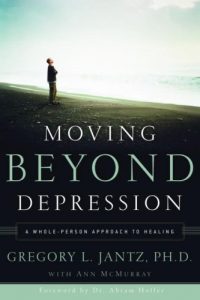
Moving Beyond Depression by Gregory L Jantz In his book, Moving Beyond Depression, Gregory L. Jantz, PhD, wrote about the importance of reviewing the family dynamics we grew up with.

When we can identify relationships that were unhealthy and destructive, we can also begin to identify those that were supportive and significant and work on strengthening those. That includes the relationship we have with ourselves.

If you have been in some troubling relationships, here are some questions you might like to ask:

  1. What was your best relationship and what made it successful?
  2. What was your worst relationship and what made it so bad?
  3. What do you want in a relationship? What do you give and what do you expect in return?
  4. What relationships are destructive in the long term and you are now ready to let go of and which ones do you want to strengthen?
  5. What kind of relationship do you have with yourself? With God?

Relationships are important.

There is so much we can do to both establish and strengthen good relationships as we let go of those that might feel good in the moment but are destructive over time. Even when experiencing difficult relationships in our youth it doesn’t mean we can’t develop positive and sustaining relationships as adults.

As we build on our relationships today, we recognize that relationships are never easy.

Troubled relationships have been with us for centuries.

From the beginning of time we have written testimony of contentious relationships. Consider the brothers, Cain and Abel, in Genesis. Or Job and his not-so-helpful friends.

But within the Bible we also find examples of helpful and positive relationships. David and Jonathan (I Samuel 18:20) or the instructive relationship of the Apostle Paul and Timothy in I & II Timothy. Or the beautiful story of Ruth and Naomi, mother-in-law and daughter-in-law. And the most important of all was Jesus and his relationship to all of us – we were loved so much he died for us.

Next week we will review our communication skills, how to say what we mean without attacking, and conveying to the other person what we want.


Do you want to turn your stress into a positive force?

Make Stress Work For You by Marlene Anderson | focuswithmarlene.comMy Make Stress Work for You bundle will help you:

  • Identify the personal stressors that create high levels of distress in your life
  • Learn how to identify problems and find ways to solve them
  • Replace unhelpful thinking with constructive and practical ways to lower levels of fear, worry, and anxiety

The book bundle includes:

  • ebook
  • audio recording of each chapter’
  • companion Study Guide & Personal Application Workbook
  • Four bonus guides

Click here for details and to order

Five Easy Ways to Express Anger Effectively

Listen to this episode of the Focus with Marlene Podcast

Get caught up with all episodes in the “Make Stress Work for You” series


I have spent extra time on the topic of anger because it is so prevalent in our world, and we see the destruction it can have.

Like summer wildfires, the results of anger unleashed and unchecked by logic or reason can leave behind destroyed relationships and ruined lives. Left unrestrained, our lives can become tinder boxes ready to explode with just a spark of irritation.

Anger, like fear, is a great stressor when it becomes the norm for dealing with life’s problems.

As therapists, we see the effects of growing up in homes where anger is out of control. The wounds and scars run deep. Unless recognized, addressed, and changed, the patterns of behavior repeat themselves from one generation to another.

Shame, guilt, fear, and sometimes downright terror often keep us from getting the help we need. Yet getting that help is the most freeing thing you can do.

In this series on stress, as I move from the topic of anger to the topic of relationships and communication, I want to leave you with the following.

Listen to what your anger is telling you.

Maybe it’s time to review your priorities and goals.

  • What is most important in your life – your career or your family?
  • Do you spend quality time with your kids playing and just being with them?

If you grew up with constant turmoil, conflict, and anger, you may be repeating those patterns with your children.

We are not doomed to repeat patterns that are destructive. Knowledge gives us power to change directions, heal and put in motion a different set of guidelines.

Find a good therapist who can help you unravel the roots of your anger.

Here are 5 simple ways to express anger effectively and channel it appropriately. It is a learned skill.

Five Easy Ways to Express Anger Effectively | focuswithmarlene.com

1. When you feel angry, STOP.

Don’t immediately react. Take some slow, even breaths. Count to ten if necessary, to calm down. Then ask yourself if the anger you feel is appropriate for this situation. If not, what hidden issues are being triggered making this worse?

2. When you are feeling calmer, ask yourself what you want to accomplish.

What do I want to have happen? Will an angry outburst give me the result I want? We don’t have to be afraid of our anger; we just need to weigh carefully the outcome of how we use it.

3. Shift from feeling to doing.

Move from anger to a clear plan of positive action. Don’t just feel hurt and angry. Do something constructive. Start a conversation. Evaluate and problem solve.

4. Avoid accusations.

Shifting blame or using accusatory statements only increases the problem. Take responsibility for what you do and say.

Instead of saying, you make me so angry, say something like, I get really angry when this is happening. You are now owning your anger.

Then state clearly and simply what you would like to have happen. Focus on what you want versus putting a guilt trip on someone else. Be willing to negotiate or compromise a solution. My upcoming blogs will give more examples of this.

5. Listen.

Each of us comes to confrontations and conflicts with our own set of rules, perceptions, and agendas. Unless we can listen and discuss we will continue to be in our battle zone.

Learning any new skill takes time and practice.

Put in place a prevention plan to reduce the possibility of anger outbursts. Here are six things that will help.

1. Recognize your trigger points.

Keep an anger diary and record the times you feel angry, what you are thinking and what your first impulse reaction is. After a week you will see a pattern of situations and typical responses.

As soon as your anger is triggered, ask yourself, is this really what I want? Challenge that thinking. Then replace angry thoughts with constructive problem-solving thoughts. Remind yourself you do not have to be reactive.

2. Have someone model appropriate coping strategies for handling stressful situations and anger.

Rehearse them and get feedback. Practice these new skills as often as possible.

3. Use relaxation techniques to reduce your stress levels during the day.

Mentally visualize yourself reacting in a way that will meet your goals.

4. Become aware of those times and places when your anger gets triggered.

Avoid them if possible. Learn effective communication and conflict management skills. Ask for what you want and listen to the other person’s point of view.

5. Clarify your values to reduce irrational thinking.

Expand your frame of reference. Replace negative thinking with constructive problem-solving, empathy, positive self-talk, and affirmations.

6. Re-direct your anger.

Put it into constructive action. Turn it into humor.

Believe in yourself. Ask God for the strength and courage to be honest with yourself.

When we can acknowledge our vulnerabilities, fears, and perceived weaknesses, we will discover how freeing it can be, and it helps us to be more gracious and understanding of others. But if we continue to hide our vulnerabilities, they will rule our life and we remain a prisoner of them.


Do you want to turn your stress into a positive force?

Make Stress Work For You by Marlene Anderson | focuswithmarlene.comMy Make Stress Work for You bundle will help you:

  • Identify the personal stressors that create high levels of distress in your life
  • Learn how to identify problems and find ways to solve them
  • Replace unhelpful thinking with constructive and practical ways to lower levels of fear, worry, and anxiety

The book bundle includes:

  • ebook
  • audio recording of each chapter’
  • companion Study Guide & Personal Application Workbook
  • Four bonus guides

Click here for details and to order

Anger: Yours, Mine and Ours

Listen to this episode of the Focus with Marlene Podcast:

Get caught up with all episodes in the “Make Stress Work for You” series


It’s Okay to be Angry. It is Not Okay to be Aggressive.

You may have been led to believe that anger is never good and when you get angry you should quickly censure it. As I described in my earlier posts, anger has a purpose and we need to pay attention to what it is telling us.

Aggressive behavior often accompanies anger out of control, but anger and aggressive behavior are not necessarily synonymous. You can feel angry without being aggressive.

When we feel we have little control over our life and anger becomes our predominant way of resolving conflict or problems, it can lead to aggressive behavior.

Whether you are a man or a woman, understanding your feelings of anger and what triggers it is important. The inability to understand its origins can result in hostility, silent rage, or passive-aggressive behavior. Understanding and becoming accountable for our emotions allows us to assert ourselves responsibly.

How do we distinguish between assertive behavior, passive-aggressive behavior, and aggressive behavior?

Passive-aggressive individuals typically:

  • Have difficulty expressing thoughts and feelings and will hide or deny their feelings
  • Deny conflicts when they occur
  • Ignore their own needs and then blame others
  • Manipulate others to get their needs met
  • Allow others to make decisions and choices for them and then become resentful
  • Use subtleties, manipulation, and veiled hostility with others
  • Are difficult to be around and use subterfuge and deceptive ploys in their interactions with others

People who exhibit aggressive behavior:

  • Talk in an aggressive tone and behave aggressively
  • Get their needs met at the expense of other people
  • Do not respect the rights of others
  • Overinflate their own abilities to cover their insecurities
  • Feel people don’t care about them; therefore, they do not need to be concerned about others
  • Angry/hostile people do not hear or listen rationally
  • Unable to have a rational conversation when angry

Anger is a physical experience.

Strong emotions trigger powerful body changes as it prepares a person to fight or flee. An aggressive, angry, or hostile person in your face is prepared to fight. Anger can quickly escalate to physical aggression, abuse, or destruction of property.

When anger becomes rage, we see hostility.

A hostile person will explode over seemingly simple things. Responses are blown out of proportion to events that triggered them. Hostile language includes yelling and screaming, in your face, sarcasm, and expletive words (obscenity or profanity). Anger spews out like acid on unsuspecting victims. An angry, hostile person does not hear or listen rationally.

Dealing with angry and aggressive behavior in others

Anger directed towards us often triggers an angry response in return. If we don’t know how to respond appropriately, we might believe the alternative to anger is being passive, or never getting angry. However, anger, like any of our feelings when not acknowledged or denied, goes underground.

When a natural expression of anger is smothered or suppressed, we get a false sense of comfort with the belief that if I block out or keep a tight rein on anything that smacks of anger, I will be okay and won’t lose control.

When we don’t acknowledge and deal calmly with our anger we are headed for trouble.

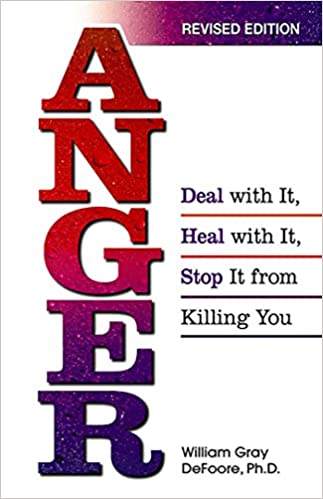
Anger: Deal with it, Heal with it, Stop it from Killing YouRepressed anger creates a larger problem, especially in our relationships. As Bill DeFoore, Ph.D., in his book, Anger: Deal with it, Heal with it, Stop it from Killing You, eloquently said, “To be passive means not to be active.”

When we live life passively, we “let things happen instead of making things happen.”

We don’t accomplish things, our relationships begin to fail, and we struggle to feel confidence and be in charge of our lives. In the words of Bill DeFoore:

“Buried feelings, like buried vegetables, don’t just lie there. They get hot and generate energy, which has to come out one way or another.”

When we exhibit passive behavior, we deny our own self-expression. Being assertive allows you to express your feelings in a direct but calm way.

9 things to do when faced with anger and aggressive behavior

Anger: Yours, Mine and Ours | focuswithmarlene.com

1. Do not return anger with anger.

Don’t try and have a conversation when you or the other person is angry. People who are angry and venting do not hear what is being said. You cannot have a rational discussion.

2. Take time to calm down.

You might say something like, “I can’t talk when you or I are angry. I want to hear what you have to say. Let’s both cool down and come back in a half hour (or set a time) and have a conversation.”

3. Separate your inner self from the anger.

When another’s anger is directed at us, our initial response is to get angry in return. Keep your inner self calm. Don’t focus on the anger. Focus on observable data or a definable problem, but not personalities or insults.

4. Validate the person’s feelings.

“You seem to be very angry right now. I want to hear what you have to say. Let’s wait until we both calm down.”

5. Clarify the problem.

“This is what I understand the problem to be. Do you agree and have I understood your position correctly?”

6. Focus on the facts.

We tend to get off track when angry and end up not addressing the problem itself. Gather facts as you can observe them.

7. Leave if your anger keeps rising.

Set a later time to discuss. Honor that time reset.

8. Admit when you are wrong – even in face of insults.

Find some tiny bit you can identify with.

9. When necessary, answer assertively – not aggressively.

Stick to facts and not emotional responses to what is being said.

If you are the recipient of anger and abuse on a daily basis from a partner or spouse, please seek help from a trained counselor. You will not be able to change or fix that person’s anger problem simply by being more accommodating.

Responding to Criticism

Positive criticism is directed toward behaviors and not the person.

People who are criticizing may not be able to articulate that. Thank the person for the information. You need not defend yourself or your position.

If there is anger and criticism, validate feelings and find something to agree with. “You’re right. My behavior was incorrect. Thank you for bringing it to my attention.“

Explain yourself when appropriate. Explanations are not apologies. If you feel you must apologize, keep it simple and short. Most criticisms don’t deserve an apology or an explanation.

Over the course of years, I have read many good books on anger that people could benefit from. While the ones I have listed below are all beneficial in understanding and dealing with anger, I know there are others as well. If you find yourself constantly getting angry or are in an angry relationship, the information offered can be helpful.

References:

DeFoore, Bill, Ph.D., Anger: Deal with it, Heal with it, Stop it from Killing You, Health

Communications, Inc., Deerfield Beach, Florida, 1991

McKay Matthew, Ph.D., Peter D. Rogers, Ph.D., Judith McKay, R.N., When Anger Hurts:

            Quieting the Storm Within, New harbinger Publications, Inc., 1989

Lerner, Harriet Goldhor, Ph.D., The Dance of Anger: A Woman’s Guide to Changing the

Patterns of Intimate Relationships, Harper & Row, Publishers, Inc., 1985

Harbin, Thomas J., Ph.D., Beyond Anger: A Guide for Men, Marlowe & Company, New York,

2000.

Tavris, Carol, Anger: The Misunderstood Emotion, Touchstone Press, 1989

Ellis, Albert, Ph.D., Anger: How to Live With and Without it, Carol Publishing Group, 1990


Do you want to turn your stress into a positive force?

Make Stress Work For You by Marlene Anderson | focuswithmarlene.comMy Make Stress Work for You bundle will help you:

  • Identify the personal stressors that create high levels of distress in your life
  • Learn how to identify problems and find ways to solve them
  • Replace unhelpful thinking with constructive and practical ways to lower levels of fear, worry, and anxiety

The book bundle includes:

  • ebook
  • audio recording of each chapter’
  • companion Study Guide & Personal Application Workbook
  • Four bonus guides

Click here for details and to order

8 Warning Signs of an Anger Problem

Listen to this episode of the Focus with Marlene Podcast

Get caught up with all episodes in the “Make Stress Work for You” series


Anger, like all emotions, has a purpose. It is neither bad nor good on its own. When managed and expressed appropriately, it can be an important ally and friend.

The energy that anger creates can help us make important changes. When used as a motivational force it gives us the motivation to change our lives for the better.

Left unchecked, however, it simmers beneath the surface, ready to explode at any moment. Anger then focuses on everything that is and has been going wrong in our lives. It keeps us from seeing anything good.

It is to our benefit to find out how we acquired an angry-aggressive habitual response before it becomes a wildfire that burns everything in its path. When we react without restraint or before we accurately identify the problem connected to it, we not only inflict pain on others, but to ourselves. When it becomes our typical response to anything annoying, we have a major problem.

The Good, Bad and the Ugly

Our emotions change depending on the situations we find ourselves in and the interpretation we make at those times. While there are some hereditary differences in temperament that can influence our emotional responses, they are just that – a predisposition. There isn’t an anger gene any more than there is a smart gene.

When anger becomes our first response to events, it may have its roots in the past when we had been angry but were not allowed to express it in any way. Perhaps we had been treated unfairly and our good intentions and sacrifices were dismissed as nothing. We begin to look for meanings attached to what people say or do and put our own negative spin on it. Wounds from childhood run deep. While they may be buried in our sub-conscious, we continue to be influenced by them.

Reactive vs Proactive

When you are reactive, you react emotionally to whatever is happening in the moment. When you become proactive, you look for potential problems and ways to resolve them before they happen.

When reactive, you believe your feelings of distress are a result of what others are doing. You become defensive and go on the attack. Behaviors are motivated by impulse rather than thoughtful choices.

In fact, you don’t believe you have any legitimate choices. Opportunities are for other people and you are simply a victim of circumstances. You don’t believe you have any control over your life, and you are constantly looking for someone or something to blame.

Reactive people often become aggressive.

Developing an Anger Habit

8 Warning Signs of an Anger Problem | focuswithmarlene.com

Like any habit, anger, when overused, can soon become a habit. We are the ones who decide whether we will develop an anger problem.

Like any habit, anger can be reduced and replaced.

8 warning signs of an anger habit:

1. Triggering event.

Anything that we perceive as emotionally threatening in some way. Within families, it is that immediate reaction to a child’s temper, talking back or ignoring the rules. Or hypersensitivity to anything your spouse says. We can change our response at this stage.

2. Warning signs – emotional or physical.

What are some of your first emotional responses? Become aware of what they are. You may be feeling hurt or anxious, threatened or fearful. There’s often a combination of emotions that go unnoticed at first until we train ourselves to become aware of them. Go back to times when you got angry. What were your feelings just before that anger kicked in?

3. Thought patterns.

Feelings don’t happen on their own; they are a response to our interpretations and perceptions. Ask yourself, why am I getting so angry? Is this incident worth getting angry over? Has anger worked for me in the past, and if so, did it actually resolve my problem or create another problem? Is there another way I can solve this problem? What was accomplished when my anger went unchecked?

4. Choices available to us when we are angry.

We can allow the anger to grow and fester. We can get angry and fight. Or we can choose to step out of our comfort zone and develop the courage to engage in a more constructive way. It takes courage to choose a different way to handle disputes. Courage is defined not just as the ability to conquer fear or despair but choose a course that is not easy but more productive.

5. Battle signs.

When we have allowed anger to go to the battle stage before considering alternatives, we have put ourselves in a fighting mode. We gear up to destroy an enemy and defend ourselves. The problem is the battlefield involves our families and neighbors and colleagues and friends. The enemy in this battle becomes our loved ones. Is this who we want to do battle with?

6. Engagement.

As we become embroiled with anger, we lose control of our emotions and ourselves. We are reacting and not thinking. At this junction, we are no longer in control of what we are doing.

7. Consequences.

When anger has spent its emotional power, we can see the devastation it has produced and those who have been wounded. Sometimes the wounding can be fatal in terms of our relationships. When we choose our responses to life, we are choosing the consequences as well.

8. Recovery and evaluation.

When the battle is over, emotions calm down and you have an opportunity to examine what has happened. If you take time to do an assessment and are really honest with yourself, you will be able to answer the following:  Did I get the outcome I wanted? If you do not assess the consequences of your actions, you will continue to repeat the same pattern. Only the fallout gets worse.

We can change directions, replace habits and discover different ways to resolve problems when we recognize our patterns of response to circumstances, when we ask pertinent questions and when we take time to prepare ourselves for different responses.

Instead of following the typical old pattern of getting angry and responding without thinking, we can do the following:

Stop.

  • stop avoiding your problems or denying they are there
  • stop rationalizing
  • stop pushing problems away
  • stop medicating with drugs or alcohol to dull your pain and underlying fear

Allow yourself to feel your emotions. Then ask yourself:

  • why do I feel this angry?
  • what am I supposed to be learning here?
  • what is my anger trying to tell me?

Identify the problem and look for solutions.

  • what constructive options do I have?
  • what responsible behaviors can I apply?
  • what positive changes do I want to have happen?
  • What problem solving strategies can I use to bring about a positive conclusion?

Remember.

Anger has a purpose. Connect with its message and all the other emotions that are often buried with it: fear, guilt, pain. Work through them to healing.

If you have had a problem with anger, seek out a good professional mental health counselor to help you through underlying long-held issues attached to it.


Do you want to turn your stress into a positive force?

Make Stress Work For You by Marlene Anderson | focuswithmarlene.comMy Make Stress Work for You bundle will help you:

  • Identify the personal stressors that create high levels of distress in your life
  • Learn how to identify problems and find ways to solve them
  • Replace unhelpful thinking with constructive and practical ways to lower levels of fear, worry, and anxiety

The book bundle includes:

  • ebook
  • audio recording of each chapter’
  • companion Study Guide & Personal Application Workbook
  • Four bonus guides

Click here for details and to order

Revenge: The Sweet, Sour and Bitter

Listen to this episode of the Focus with Marlene Podcast

Get caught up with all episodes in the “Make Stress Work for You” series


“An eye for an eye makes the whole world blind.”

– Attributed to Mahatma Gandhi (1869 – 1948)

“How dare she!”

“That was mean!”

“That’s it – it’s over.”

“How could he do that to me?”

Someone has wronged us or betrayed us. Anger rises. It simmers in our thoughts as we contemplate our revenge: “Just wait; I’ll get even with you.”

And we repeat to ourselves over and over the injustice of the situation, of how we were treated and why we didn’t deserve it.

What felt like a kick in the stomach the first time is repeatedly replayed as we continue to stoke the flames of anger, hurt, and betrayal until we have a raging furnace inside of us – our  stomach churning into hard knots, chilling our bones.

Each time we review the offense, we feel more victimized, more persecuted, and our desire for revenge gets stronger.

It doesn’t matter that it was a loving spouse, a sister, or trusted friend – what was, is no more.

  • You had been a loyal and good friend, and now you have been betrayed.
  • You thought your love would last forever, but now the affair revealed the great deceit against your relationship.

Humiliation and shame move in with the anger. You have been vilified. You have every right to be angry. You have every right for revenge.

The problem with revenge

“Something of vengeance I had tasted for the first time: as aromatic wine it seemed, on swallowing, warm and racy; its after-flavor, metallic and corroding gave me a sensation as if I had been poisoned.”

– Charlotte Bronte

The problem with revenge, however, is that it doesn’t resolve anything. Even if that revenge is only played out in our heads, there is no sweet satisfaction. We remain stuck in a cycle of endless need for justification and retribution.

Each time we lament on how unfair life has been, we continue to beat ourselves up…  continue to feel the pain. Any dreams or goals we may have been pursuing have been replaced with settling of scores; our grievances turning hard and rigid inside of us until all we taste is bitterness and we become embittered and unhappy.

What someone has done to you – you are now doing to yourself.

Words have physical responses within our bodies.

Revenge: The Sweet, Sour and Bitter | Focuswithmarlene.com

When the shock first hit you, you felt like someone had punched you in the stomach. As you repeat the events, the words continue to punch you in the gut, keeping you in a state of turmoil and high stress.

Whenever you “gear up” for a battle in your mind, you are gearing up to take some kind of action. When there is no action you can take, the chemicals and hormones dumped into your system begin to eat away at you – physically. You have gone from stress to dis-stress.

There is a reason why Jesus said to forgive 70 times 7 (Matthew 18:22). We take it as a moral imperative.

But science also tells us that if we hang onto and nurse our grievances and resentments, we are putting a slow death sentence on ourselves. (See Forgiveness: A Gift we Give Ourselves). It is not so we become self-righteous. It is to keep us from destroying ourselves. Retribution and revenge are not seeking justice. It just continues a cycle of unhappiness and bitterness with no end.

How to move past resentment in constructive ways

  1. Acknowledge that you have been wronged. Acknowledge that you are angry. Accept that it has happened.
  2. Ask: I have been hurt; but do I want to continue hurting myself?
  3. Ask: Am I willing to let go of the injustice and use my energy in more constructive ways?

We can choose what we do with all our emotional responses to circumstances. We can choose to nurse the wrongs, or we can choose to let go and focus on living a more constructive and loving life.

Let go.

Let go of the past.

Let go of resentments.

Let go of all the ways you believe people have offended or wronged you.

Let go of anything that keeps you thinking in a negative way.

Come to terms or reconcile with the fact that everybody will say and do things that are hurtful. Sometimes it is intended – other times it isn’t.

If we choose to hang onto those betrayals, we are hurting ourselves.

Resolve, Forgive, Accept.

Resolve any disapproval you may have of yourself or others.

Forgive yourself and forgive others.

Accept the forgiveness that Christ has given us – truly accept and then let go.

Everyone has made mistakes. Everyone has made bad choices. Everyone has done things they wish they hadn’t done. Regurgitating the betrayal doesn’t help anyone.

Let go of having to be right while others are wrong.

Let go of your polarized positions.

Replace with respect for each person’s point of view and different opinions. You can maintain your position and still listen to why another believes and acts the way they do. Define why you believe and act the way you do. You are establishing and choosing to live the principals and values that will enhance your life regardless of what others do.


Do you want to turn your stress into a positive force?

Make Stress Work For You by Marlene Anderson | focuswithmarlene.comMy Make Stress Work for You bundle will help you:

  • Identify the personal stressors that create high levels of distress in your life
  • Learn how to identify problems and find ways to solve them
  • Replace unhelpful thinking with constructive and practical ways to lower levels of fear, worry, and anxiety

The book bundle includes:

  • ebook
  • audio recording of each chapter’
  • companion Study Guide & Personal Application Workbook
  • Four bonus guides

Click here for details and to order

Acceptance Reduces Conflict

Listen to this episode of the Focus with Marlene Podcast

Get caught up with all episodes in the “Make Stress Work for You” series


Acceptance is a concept – a state of mind – a way of looking at life and problems. It is a way of thinking that can be applied to any circumstance. It is a pivotal point that takes us from what we can’t do to possibilities, options and choices.

Problems have a magnetic way of holding us in place. Like an insect caught on fly paper, we get stuck in the mess of it all and can’t see a way out.

Acceptance takes us out of the victim role and puts us in the administrator role.

It keeps us from playing the blame game where everything – from circumstances to people, parents, siblings, religion, God, whatever – are blamed for our inability to do anything.

Acceptance puts us in control of our responses regardless of what life throws at us.

With acceptance we can ask ourselves the following questions:

  • What isn’t working and why?
  • What am I resisting that requires a change in my thinking and habits?
  • What do I really want to have happen?
  • What is in my control? What is out of my control?
  • Am I making individual personalities the problem versus how I relate and communicate?
  • Can I do some creative brainstorming to expand my options so I can develop a plan of action with each step outlined?

Acceptance helps define and articulate any problems we have regardless of what they are.

Acceptance in our relationships

Just as not everyone sees the world as we do, not everyone will see problems the same way. One person might look at a situation and make a snap decision as to what needs to be done.

Another person might think, wait a minute, I need more time to think about this.

Or one person might see a set of circumstances as a huge problem while another doesn’t see any problem at all. If these are people in the same household, it can ignite further problems as the argument now becomes who is right and who is wrong.

When one person remains adamant about their position without a willingness to listen to another’s point of view, problems multiply, and become inflated. Now the other person becomes the problem. It no longer is acceptance of what is happening so you can resolve difficulties but trying to resolve the differences of interpretations.

When you find yourself constantly in conflict, you need to stop and ask, what am I missing here? What are we arguing about? What is the real problem?

Right vs. Wrong = Everyone Loses

Acceptance Reduces Conflict | focuswithmarlene.com

Accepting that another’s point of view may be as important as yours is sometimes hard. But when your battle is about who’s right and who’s wrong, you both have lost. Acknowledging that you may have different opinions becomes a starting point.

When you are willing to change your attitude from one of attack/defend to how can we find a way to work together, you are on your way to finding solutions. When you accept the fact that you, your coworkers, neighbors or family members will have a different way of seeing life, it allows you to search for ways to come together instead of immediately doing battle.

With acceptance, you can modify your interpretations and perceptions to include those of others. As you recognize your typical behavior patterns or typical ways of thinking and responding, you can let go of unrealistic expectations and unenforceable rules.

As you admit that neither of you are perfect, you can offer grace to others whose habits can be irritating and who love to argue.

You are able to give grace to yourself as well. You will do stupid things and make mistakes and say hurtful things when you don’t stop and think first. Grace allows you to say I’m sorry, to forgive yourself and others, and find ways to come together.

Conflict creates enormous stress

Non-acceptance will keep you in constant turmoil and anger. And when your anger is directed towards everybody else there are no winners – only losers.

Non-acceptance of differences can keep you in a fighting mood because you insist on being right while everybody else is wrong. Or you never think of yourself as having a valid point of view, which is also destructive.

Conflicts create an enormous amount of stress when they continue over long periods of time. Stop and remind yourself that you are seeing circumstances differently. Stop and listen to what the other person has to say. We want to be heard.

When people are not listened to, they begin to feel disrespected, unwanted, and unworthy of having an opinion.

Accept that you don’t have all the answers.

Accept that you are not perfect, and neither is the other person.

In accepting that you are not the greatest thing in God’s green earth, you acknowledge that you have faults and personality traits that can irritate others. It can be an important first step in learning about who you are in relation to others.

Acceptance can be humbling, but also so very freeing.

Marlene Anderson


Do you want to turn your stress into a positive force?

Make Stress Work For You by Marlene Anderson | focuswithmarlene.comMy Make Stress Work for You bundle will help you:

  • Identify the personal stressors that create high levels of distress in your life
  • Learn how to identify problems and find ways to solve them
  • Replace unhelpful thinking with constructive and practical ways to lower levels of fear, worry, and anxiety

The book bundle includes:

  • ebook
  • audio recording of each chapter’
  • companion Study Guide & Personal Application Workbook
  • Four bonus guides

Click here for details and to order

Stress Reducer: Acceptance

Listen to this episode of the Focus with Marlene Podcast

Get caught up with all episodes in the “Make Stress Work for You” series


In February of this year I wrote a blog post titled, “Accept Your Loss and Reclaim Your Life.”

Acceptance is a necessary step in helping us recover from losses.

When we accept our circumstances, their formidable impact on our life is reduced while helping us find ways to reconcile and heal.

In many ways, we are addressing stressful events every day. We acknowledge, accept, look for options and work to find solutions instead of allowing them to create ongoing turmoil. Because acceptance is such an important concept, I want to expand on how it can help us lower stress levels in our daily lives.

We are currently living in uncommon stressful times: the pandemic, inability to go back to work; wondering whether our kids can go back to school, whether we will have enough money to pay our bills or if life will ever return to normal. Add to that the emotional stress that is generated as we try to communicate and work together to solve the escalating problems we face.

We were made for stress.

To live is to experience stress, good or bad. It helps us accomplish our goals. It energizes us to plan and build.

It is when stress comes from problems we don’t know how to fix, ongoing disagreements within our marriage, our kids getting into trouble or having that extra responsibility of caring for aging parents that we feel more and more distress.

Add to that ongoing underlying differences and arguments with in-laws and we have our own epidemic in our homes. Because we don’t know what to do, we keep responding in the same way over and over again, even when it isn’t working.

Denial, minimization, and avoidance

To reduce the consequences of the problems we face, we often deny, minimize, or avoid them. We may fight or resist and persuade ourselves that if only the other person would change, things would be better. We convince ourselves there is nothing else we can do to bring about a more positive resolution.

How can acceptance make a difference?

“I can’t get anything done. I have to do everything around here. Why can’t my spouse and the kids do more? Why don’t they understand why I need some rest too? All I want is some quiet time – is that too much to ask?”

Every time you think you are being ill-treated or abused, your emotional response gets more and more intense and soon becomes a pattern of how you approach all problems. Before you realize it, you are waking up feeling angry and frustrated waiting for the next shoe to drop.

The tension and conflict that is created when we feel we have few or no choices is enormous. And stress created by ongoing feelings of anxiety, foreboding, and anger has the same effect on our body as if we opened the door and saw a tiger snarling at us. The body quickly activates the F/F Response.

But today’s tiger is the responses we make and maintain regarding our problems. Your body is activated, but there is no place to use those F/F body preparations, and they begin to work against us.

  • Acceptance means we accept the circumstances in which we find ourselves.
  • Acceptance means acknowledging what is happening without blame, denial, or additional exaggerations.
  • Acceptance means we stop fighting and resisting.

Like the angry child Mom holds tightly in her arms until he stops fighting, we also hang on to our hurts, our disappointments, and our responses. We continue to fight because we don’t see alternatives. Without acceptance, we remain stuck in an unending spiral going nowhere. It is where we can start working on solutions.

Acceptance requires honesty and honesty can be painful.

Stress Reducer: Acceptance | Focuswithmarlene.com

  • It is much easier to blame someone or something rather than become responsible.
  • It is much easier to become defensive or complacent rather than assertive.
  • It is easier to hide behind what we or others should, must or have to do rather than make tough choices.

In the process, we become a victim and unknowingly resort to manipulation and blame to reduce conflict and tension.

Here are some typical responses people make when asked to accept their ongoing difficulties in order to find a resolution.

  • Accept? It might be easy for you to say – you didn’t have a mother like I did. Or a father who came home drunk and beat us. You didn’t have a sister who was the darling of the family. You weren’t compared to a brother who could do no wrong. Nothing I did was ever good enough.
  • Accept? I can’t be laid off. I’m a single parent. My ex doesn’t pay child support and I am struggling to survive. I’m exhausted and stressed to the max. Or, I don’t want to accept the fact that I am out of work and have to start over – again.
  • Angry? You bet I’m angry. Somebody is always telling me what to do, even when I try my hardest. It’s never good enough! Life sucks! Accept? Accept what? What choices do I have?
  • If I accept – what does that make me? A doormat?

Acceptance does not mean that we have given up or that we will become a passive participant to life. In the process of acceptance, we begin to accept all parts of who we are – our strengths and our weaknesses. We stop trying to prove ourselves and instead begin to focus on finding solutions.

Acceptance tells me I’m okay. No matter what has happened, I can begin again.

With acceptance we can better define the problem.

Letting go of our need to be right can help us come to grips with our own imperfections. Letting go of our belief that we have all the answers or have it all together allows us to see things from a new perspective. Acceptance gives us the opportunity to ask what we really want and move towards finding practical solutions.

Acceptance means a new beginning.  I start right where I am – right here – right now.

We can’t force change, but we can impact what happens by altering our attitudes, behaviors, and beliefs as we seek better solutions. Acceptance allows our energy to be used to explore what we really want instead of remaining fixated on what we don’t want.

Acceptance means I do not have to stay in this uncomfortable spot – I can learn and gain from it.

Take Charge

Acceptance allows us to gain wisdom from our past. It acknowledges that we will not have all the answers we need by ourselves. It acknowledges there is a God, a creator who is still in charge, and reaches down to help us.

Acceptance allows us to take charge and begin to problem-solve to find answers that work for everyone. We can reduce the stress by how we approach our problems and the decisions we make.

Marlene Anderson


Do you want to turn your stress into a positive force?

Make Stress Work For You by Marlene Anderson | focuswithmarlene.comMy Make Stress Work for You bundle will help you:

  • Identify the personal stressors that create high levels of distress in your life
  • Learn how to identify problems and find ways to solve them
  • Replace unhelpful thinking with constructive and practical ways to lower levels of fear, worry, and anxiety

The book bundle includes:

  • ebook
  • audio recording of each chapter’
  • companion Study Guide & Personal Application Workbook
  • Four bonus guides

Click here for details and to order

Challenge and Replace Irrational Thinking

Listen to this episode of the Focus with Marlene Podcast

Get caught up with all episodes in the “Make Stress Work for You” series


Last week you recorded and reviewed a record of how you typically respond to circumstances throughout each day.

The purpose was to discover patterns of thinking and behavior that add unnecessary stress to your life.

Were you surprised by how your thoughts could increase or decrease the stress you had?

As we learned from Aaron Beck and Albert Ellis, we make assumptions about the world and ourselves that become unquestionable core beliefs and unbreakable rules by which everything and everyone is evaluated.

Irrational thinking influences how we think and act, how we treat others, our relationships, our attitudes, expectations, and assumptions.

Thought-Belief Distortions

Here is a modified list of thought-belief distortions or irrational thinking that Beck and Ellis developed to help us better understand how our typical responses to life can create problems.

  • Overgeneralization – a single negative event becomes a rule.
  • Mental filtering – we filter out the positive and focus on the negative.
  • Black or White – there is no in-between.
  • Mind reading – we jump to conclusions.
  • We make predictions and act as if they were factual.
  • Failures become catastrophes and successes are minimized as unimportant.
  • Emotions interpret our reality and govern how we must act.
  • Everything is personalized – we are either in control or have no control.

Do you recognize any of these thinking patterns? Remember, with every emotional reaction there is an accompanying thought.

Challenging Irrational Thoughts and Beliefs

Challenge and Replace Irrational Thinking | focuswithmarlene.com

Once we recognize our distorted thoughts and beliefs, we can start challenging them.

Challenging thoughts asks:

  • Why do I believe this is true and who says it is true?
  • How accurate is my thinking given the circumstances and what is actually happening?
  • How can I modify or expand those first initial thoughts and responses?

Here is the example I gave last week of how easy it is to get wrapped up in responses that escalate our stress levels.

Your day started with frustration, trying to get the kids up and ready for school. Those feelings of irritation continued as you battled heavy traffic on your commute to work. You continued to think about how your kids’ disobedience spoiled the remainder of your day. Later in the morning, that irritation turned into anger when you were given an unexpected project to complete before noon. By the time you got home at night, your anger had been simmering all day, and when you hear your spouse’s comments about not having dinner ready, you explode. How dare he put more demands on you?

Unchallenged, that first automatic response at the beginning of the day triggered an on-going irritation that led to more and more anger until by the end of the day you blew up.

Unenforceable rules were broken. Kids should behave and do what they are told. At work, no consideration was given for your workload. People should respect and appreciate you. Everybody is out to get you. Nobody cares. And tomorrow won’t be any different.

Any logical reasoning is filtered out and by the end of the day you were unable to let go and look for ways to relax and enjoy the rest of the evening. Instead, you continued to hang onto your anger and resentment, which then expanded to other remembered grievances you had. Any proactive thinking was eliminated.

Challenging takes us out of the typical responses that continue to escalate.

We can look for more ways to be proactive. We can roll with the punches and find ways to reverse or modify the effects of the day through laughter or humor. The goal is to return our body to a restful state.

Here is an exercise that can help you experience this difference.

Think back to a difficult situation you encountered.

Close your eyes and create a picture in your mind as vividly as possible of what took place.

Then, review the following questions and write down what you discovered.

  • What was happening?
  • What were you feeling? Example: hurt, angry, guilt, sadness, anxiety, etc.
  • What irrational thinking was involved? There is often a stream of thoughts and recollections that are attached to any event.
  • What core beliefs were affected? Were unbreakable rules broken? They typically include words such as should, must or have to.
  • What assumptions and expectations did you have of yourself or others?
  • What personal doubts or insecurities did you have?

Challenge and Replay

Now replay the situation again and challenge any irrational thinking. Could you expand or reframe the circumstances to broaden your understanding and give you a more positive interpretation?

As you repeat it from this different perspective, how does it feel? Close your eyes and visualize this different response. Allow yourself to feel the difference between the two versions.

Were you able to feel in charge of your response? Did it allow you to let go of your frustrations and irritations? Can you adopt some of this to situations in the future?

We will experience days when everything goes wrong. We will find ourselves getting irritated and upset. But we don’t have to stay in those spaces. We can choose to find a positive way to deal with life’s irritations.

Once a pattern is identified, use the challenging method to put a new one in place.

Marlene Anderson


Do you want to turn your stress into a positive force?

Make Stress Work For You by Marlene Anderson | focuswithmarlene.comMy Make Stress Work for You bundle will help you:

  • Identify the personal stressors that create high levels of distress in your life
  • Learn how to identify problems and find ways to solve them
  • Replace unhelpful thinking with constructive and practical ways to lower levels of fear, worry, and anxiety

The book bundle includes:

  • ebook
  • audio recording of each chapter’
  • companion Study Guide & Personal Application Workbook
  • Four bonus guides

Click here for details and to order