

Let's Talk

Take Charge of Your Time – Take Charge of Your Life

Listen to this episode of the Focus With Marlene Podcast

Click here to get caught up on all episodes in this series on recovering from loss.


“You’ll never change your life until you change something you do daily. The secret of your success is found in your daily routine.”

—John C. Maxwell

What is your daily time routine?

Habits and time management go hand-in-hand. If you want to maximize your time, you need to put habits in place that will help you follow those guidelines.

Next week you will learn what keeps habits in place. But first, let’s set up a time management program that works for you.

Time management is more than making to-do lists.

We all make lists of things to be done and then either abandon them or become stressed in the process of trying to get everything done. And we tend to do the things we like doing first and then put the rest on hold until we feel like it.

While to-do lists are helpful reminders, managing and prioritizing your overall time comes first.

Time management begins with reviewing how you currently spend your time every day.

  • What tasks are left undone and how does impact everything else you are trying to accomplish?
  • Are you substituting to-do lists for a time management schedule?

To-do lists involve incidentals that need our attention. Time management sets a structure with dependable routines, so you delegate your time to get things done.

“Success is the sum of small efforts repeated day in and day out.”

—Robert Collier

After putting together a time management plan for each day, revisit your to-do lists.

  • How much time is needed to accomplish each task?
  • How can I fit it into my regular schedule?
  • Does that task need to be done today?
  • If it is a large project, how can I break it down into manageable segments?

“Practice isn’t the thing you do once you’re good. It’s the thing you do that makes you good.”

—Malcolm Gladwell

Last week you kept a record of how you spent your time for a week, your daily habits and routines, and what you did at various times of the day from morning to night. Review your record again with the following questions in mind.

  1. What habits keep you from accomplishing necessary chores each day? Perhaps it was putting off for tomorrow what could be done today. Write them down specifically.
  2. Did you schedule “down” times as well as work times? Without scheduled times for needed relaxation, we will neglect chores in favor of just relaxing.
  3. What problems are being ignored because you keep putting them off for tomorrow?
  4. What personal responsibility are you avoiding? Our denial systems can become very active taking us off the hook while blaming others.
  5. How does one problem area affect another and what habits of behavior are consistent between each of the problem areas? Example: putting off daily chores ends with an unorganized and messy home that then affects every aspect of day to day life. For example, not taking time to hang up clothes, ends with a pile of jumbled clothes at the end of the week and difficulty finding what you wanted to wear.
  6. Which areas create a domino effect, constantly affecting all the other areas in your life? For example, if 75% of your time is spent on work while neglecting family, social, spiritual life, etc. your life will become imbalanced.

“There is no elevator to success; you have to take the stairs.”

—Zig Ziglar

5 basic tips to take charge of your time and your life
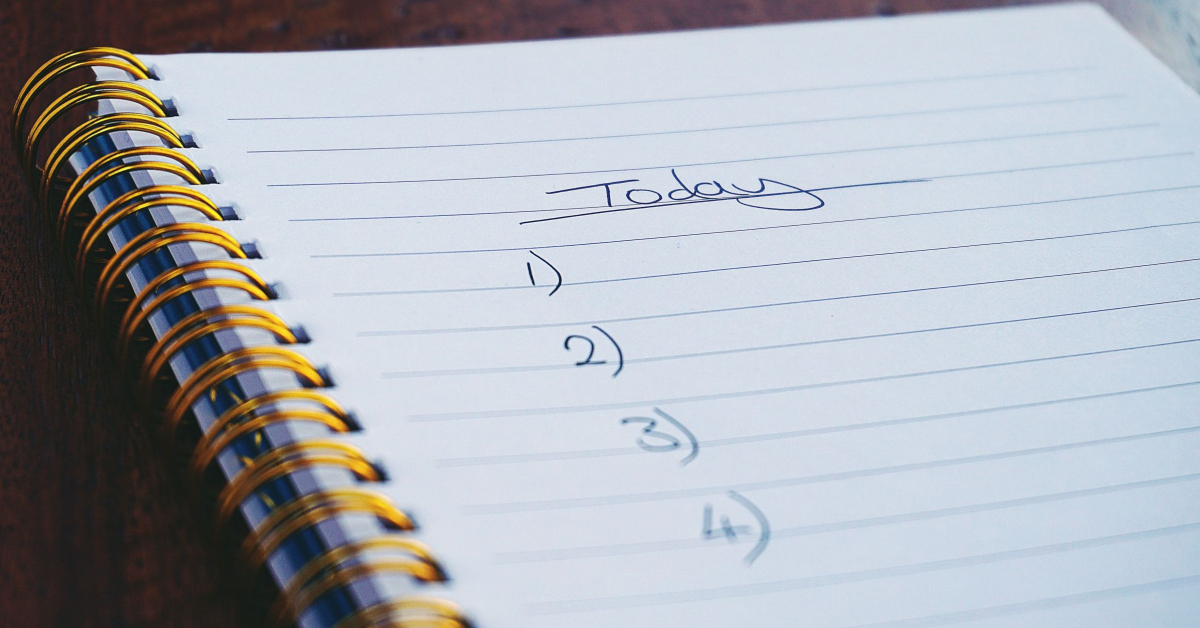
Take Charge of Your Time – Take Charge of Your Life

Where do you begin to make the changes needed to take charge of your time and energy? Here are five basic ways to take charge of your time and your life.

Start with a sheet of paper that has time increment spaces for an entire day. Then as you look at the suggestions below, begin putting a dependable routine in place.

  1. What routines or schedules need to be in place and followed each day to keep life running smoothly? Make a list of them along with the time needed to complete them. For example: when you get up, mealtimes, work schedules, cleanup times, home maintenance habits, bedtime, etc.
  2. What needs to be done each week: laundry, general household cleaning, shopping, etc. Extend your planning to include a monthly calendar. Designate a time when you will do these things either weekly or monthly.
  3. List projects you want to work on. They can be pleasurable or things that need to be done. These can range from cleaning out your closet or garage, to gardening, planning trips, helping family members, taking on-line classes, etc. These are things you can work on after the basics are done. If a project or chore is large, break it up into small chunks. For example, your closet is a mess and it becomes an overwhelming task, so you put off organizing it. Break the job into manageable segments and do one at a time. Accomplishment is a great motivator.
  4. Once daily routines are established and followed, look at your to-do list and prioritize. Tackle first what is most needed even if that is least pleasurable.
  5. Set aside time each day for relaxation. This isn’t just for social activity. This is a time to rekindle your spirit and let go of your stress. It can be a time for meditation, reading or becoming immersed in a project you love that not only lowers stress but gives you great pleasure.

We have 24 hours each day.

  • How do you want to spend them?
  • Have you avoided making future goals because you haven’t been successful in the past?
  • What new habits can you put in place to make your time truly your time?

Next week, we will look explore what keeps our habits in place. How are they being reinforced? And how can I put that reinforcement in habits that are helpful to me?

Learning to Live Again in a New World, by Marlene Anderson | focuswithmarlene.comLearning to Live Again in a New World

We need validation for the turmoil of thoughts and emotions we experience. But we also need the tools necessary to create a new beginning that is both satisfying and meaningful. My new book, Learning to Live Again in a New World, offers those tools to help work through the problems you might be facing.

It is a guide to help you through the ups and downs of grieving a significant loss. And it includes a study guide at the end for use with groups.

Marlene Anderson

Are Your Habits Sabotaging Your Efforts?

Listen to this episode of the Focus With Marlene Podcast

Click here to get caught up on all episodes in this series on recovering from loss.


“Good habits are worth being fanatical about.”

—John Irving

It has been said that over 40% of our actions each day are habits. If so, much of our day is on autopilot, and it behooves us to look carefully at our habits to discover which are working for us and which are working against us. This is especially important as you prepare to make new goals for the future. Successful goals rely on habits that keep you on track.

“Once you understand that habits can change, you have the freedom and the responsibility to remake them.”

—Charles Duhigg

As you reflect on the goals you have made in the past, why were some never completed while others were? What made the difference?

“Feeling sorry for yourself, and your present condition is not only a waste of energy but the worst habit you could possibly have.”

—Dale Carnegie

The importance of preplanning

My husband and I built two homes together, acting as our own contractors. The first was a house design already drawn up. In the second home, we designed the floor plan based on some important preplanning:

  • What did we want?
  • What could we afford?
  • What was and wasn’t necessary?

Because of that preplanning, we ended up with a home that we not only could afford with the essentials needed, but loved living in.

Similar to building a house, you are preparing a plan and blueprint for what you want moving forward. This preparation will eliminate a lot of unnecessary work down the road and will maximize the use of your time and energy.

“In essence, if we want to direct our lives, we must take control of our consistent actions. It’s not what we do once in a while that shapes our lives, but what we do consistently.”

—Tony Robbins

Reasons we fail

As you explored the whys, whats and hows of past decisions, you investigated what worked and what didn’t and why. Here are some typical reasons we fail:

  • We lack long-term commitment and give up.
  • We lack the motivational habits that keep us on track.
  • We have an initial spurt of energy but not a plan to take us all the way.
  • We haven’t looked honestly at our strengths and weaknesses, accepting all of who we are, and haven’t reflected on behaviors and repeated errors. Until we analyze why we are doing the things we do, we won’t know how to replace those behaviors.
  • We haven’t adequately addressed diversions that occur every day.
  • We haven’t accurately and honestly identified why we did not succeed in the past, so we do not know how to keep from repeating the same errors today.
  • We allow old messages to keep surfacing that tell us we can’t make it.
  • We haven’t established our values and made a commitment to follow them.

There is little we can’t achieve if we set our mind to it. But it does require planning, a time commitment, a belief in our abilities, and motivation to follow through when the going gets rough. It also requires understanding the habits we currently have.

“Motivation is what gets you started. Habit is what keeps you going.”

—Jim Rohn

Habits are a wonderful thing unless they consume our time and energy without giving us the results we want. Habits provide the structure we need to stay on track. They remind us to follow our intentions and not just what feels good in the moment.

“The trick to success is to choose the right habit and bring just enough discipline to establish it.”

—Gary Keller and Jay Papasan

What is your daily time routine?

Are Your Habits Sabotaging Your Efforts? | FocusWithMarlene.com

Habits and time management go hand-in-hand. If you want to maximize your time, you need to have habits that will keep you moving in the right direction. If you constantly put off chores that need to be done each day, you will find yourself consumed by trying to catch up.

To discover how effectively you use your time, keep a record of what you do each day for one week. On a sheet of paper, put down the hours of the day and then record what you do within that time period; the time you get up, morning schedules, daytime routines, after work, evening and then bedtime. Don’t try to change anything – just get the information you need to work with.

At the end of the week, review your time log. Did you have predictable routines in place? If not, how did that affect your ability to maintain order in your life? Were you able to complete necessary tasks, or where you constantly playing catch up?

Next week we will discuss ways you can manage your time. Then we will speak to the habits that need to be replaced in order to make time work for you instead of against you.


Learning to Live Again in a New World, by Marlene Anderson | focuswithmarlene.comLearning to Live Again in a New World

We need validation for the turmoil of thoughts and emotions we experience. But we also need the tools necessary to create a new beginning that is both satisfying and meaningful. My new book, Learning to Live Again in a New World, offers those tools to help work through the problems you might be facing.

It is a guide to help you through the ups and downs of grieving a significant loss. And it includes a study guide at the end for use with groups.

Marlene Anderson

Developing a Vision: Why, What and How

Listen to this episode of the Focus With Marlene Podcast

Click here to get caught up on all episodes in this series on recovering from loss.


“Whatever you focus on, your energy will follow…”

Developing a vision is more than just thinking about what you might want to do or to have. It’s also developing a new focus. Your focus determines who you are and who you can become. It makes you unique.

On the front page of my website I have defined my platform with the following:

Focus

  • On God – let Him lead
  • On what you can do – not what you can’t
  • On choices and possibilities
  • On solutions – not problems
  • On principles and values – live them

“If we think we are limited or have no choices, we will experience hopelessness, helplessness, anxiety and fear. But if we focus on God, possibilities and options, our energy will be released and directed toward finding the solutions that are right for us.”

These five important considerations can help you establish a positive focus for your life. This is especially important when recovering from a major loss, as grief often keeps us focused on the loss instead of planning for the future. When we focus on loss, it will be difficult to find solutions and overcome obstacles moving forward.

I have made goals that were never completed, primarily because I had not done the preliminary work necessary. I hadn’t created a timeline or adequately defined what I wanted and what was required to get there.

I hadn’t considered ahead of time the obstacles I might encounter or ways to overcome them.

And I hadn’t put together a basic plan of action.

Without these things, goals become more like exciting new ideas we try out but never get really serious about. It sounded like a good idea in the moment, but we hadn’t explored what was involved in making it an actual working goal.

Before you begin to set goals in earnest, let’s explore a little further what you really want and why. Ask yourself what made the difference between success and failure in the past and why some goals were abandoned while others were not. You want to be successful.

Why, What, and How

eveloping a Vision: Why, What and How | FocusWithMarlene.com

Remember to not abandon any ideas, wants or desires you have or may have had. As you go through the following list, consider any of your desires or thoughts a possibility.

Maybe you had thought about getting more education or starting your own business or putting time and energy into creating crafts that others would want to buy. It may not have been possible before, but is it a possibility now? Age is not a factor – finances are not a factor. If it is important enough to you, you will find a way to make it happen.

These three little words, why, what and how, provide questions to help you think through your wants and wishes and possibilities. Keep a notebook handy to write down any and all thoughts as you explore the questions. There might be some overlap in the questions. You may not have answers to all of them. Some are thought-provoking and could become more important later, such as some of the how questions.

Why:

  • Why do I want to do this or make this a goal?
  • Why have I hesitated in the past?
  • Why is it important now?
  • Why do other things take precedence and seem more important than reaching this goal? Example: Am I willing to become more disciplined and self-regulated?

What:

  • What specifically do I want to do, to have, or to attain?
  • What keeps me from doing it? (past attempts, failures, lack of commitment, etc.)
  • What obstacles, restrictions, setbacks do I face? (financial, age, lack of support, determination, fear, unsure, insecurity, etc.)
  • What interferences are there? (Demanding job, family concerns, over-committed in other areas, home to maintain, etc.)
  • What would happen if I didn’t make a decision and get started?

How:

  • How will I maintain other important and necessary commitments? (job, family, church, rest, important relationships, etc.)
  • How will I get through discouraging moments?
  • How will I keep myself motivated when I am tired and alternative diversions become more compelling?
  • How will I define my goal specifically, so I know exactly how to structure my plan of action?
  • How will I know when I have reached my goal and am ready for the next one?

As you explore what you really want and don’t want, what has kept you from succeeding in the past and how you will remain motivated in new goals, this enlarged dimension of who you are will aid you moving forward.


Learning to Live Again in a New World, by Marlene Anderson | focuswithmarlene.comLearning to Live Again in a New World

We need validation for the turmoil of thoughts and emotions we experience. But we also need the tools necessary to create a new beginning that is both satisfying and meaningful. My new book, Learning to Live Again in a New World, offers those tools to help work through the problems you might be facing.

It is a guide to help you through the ups and downs of grieving a significant loss. And it includes a study guide at the end for use with groups.

Marlene Anderson

Putting the Pieces Together: Who Am I Today?

Listen to this episode of the Focus With Marlene Podcast

Click here to get caught up on all episodes in this series on recovering from loss.


“For I know the plans I have for you,” declares the Lord, plans to prosper you and not to harm you, plans to give you hope and a future.”

—Jeremiah 29:11, NIV

Last week you reflected on all you have learned on this journey through loss. Now, you will use that information and take that next step in putting together the pieces of your life that were disrupted into a new picture of who you can become.

Early in my writing career, I did an interview with a Christian radio station host. Before the interview, I was given a set of questions to preview that would be used in our discussion. They included my years growing up, my family, my teaching and counseling career, and my new career goals as a writer and speaker.

The interview preparation made me pause and think about who I was before and after the loss of my husband, what I valued, and how the things I learned helped me achieve. Taking some thoughtful time to reflect gave me a deeper appreciation of myself, the attributes I had, what I had learned about myself, and the life experiences that helped shape and mold me.

Each of us can uncover similar things when we take time for reflection. We are a composite of DNA, personality traits, childhood experiences and core beliefs established along the way. We are a combination of strengths and weaknesses. When we’ve suffered a major loss, our thoughts revolve around why we can’t or won’t succeed that becomes a self-fulfilling prophecy.

Throughout life there will be turning points, defining moments where we can stop and reflect; opportunities to eliminate what isn’t working and put in place new resources. Beginning with a more measured assessment of who we are, and what helped us succeed in the past, we will be better equipped to make plans for our future.

Who Am I?

As you consider and anticipate the needs and wants for your future, think about what makes you “you.”

How would you describe your personality and attributes?

If we just met and I asked you to tell me about yourself, what would you say? Typical responses are often the roles we have in life such as teacher, mom, CEO, factory worker, mechanic, librarian, physician, etc.

But that is only a small part of our life story. That is merely the outside wrappings. How would you describe yourself outside of those roles?

Use the following questions to help you in this process:

  • What do you value and believe?
  • What do you think about on a daily basis?
  • What do you like to do and why?
  • What do you hate and why?
  • How would you describe life in general?
  • What creates problems for you? Do you consider them faults and failings that have more power over your life than the unrecognized assets and strong points that are waiting to be applied?
  • What achievements have you made? It is important not to minimize.
  • What do you consider your special talents and abilities?

Say Hello to Yourself

Putting the Pieces Together: Who Am I Today? | FocusWithMarlene.com

Take a sheet of paper and draw a circle in the center. Add a smiley face and put your name in the middle. Draw spokes leading outward like a sun. Each of these spokes radiating outward is a part of how you describe or define who you are.

As you consider the following questions, write on each of the spokes a descriptive word about yourself.

Be sure you put a balance of strengths and weaknesses. We are an amalgam of positive traits and those we might see as not so positive. We are not either/or. We are a wonderful combination of all of them and can benefit from all of them.

  1. What traits or strengths would you assign to yourself? For example: Do you see yourself as strong, determined, or hesitating and thoughtful, etc.?
  2. Describe some of your social skills. For example: do you consider yourself friendly, shy and aloof or engaging, talkative, social, etc.?
  3. What are your predominant attitudes or ways of thinking – dependable, trusting, independent, reliable, loyal, positive, etc.?
  4. How would you describe your typical emotional state? Are you happy, anxious, angry, contented, cheerful, compassionate, etc.?
  5. What talents and abilities do you have – artistic, computer savvy, athletic, good planner, etc.?

Be as honest as you can with this exercise. Add as many spokes as you need. You are a wonderful human being. Take this image with you as you move forward.

Next week we will continue our preparation for new goals.


Learning to Live Again in a New World, by Marlene Anderson | focuswithmarlene.comLearning to Live Again in a New World

We need validation for the turmoil of thoughts and emotions we experience. But we also need the tools necessary to create a new beginning that is both satisfying and meaningful. My new book, Learning to Live Again in a New World, offers those tools to help work through the problems you might be facing.

It is a guide to help you through the ups and downs of grieving a significant loss. And it includes a study guide at the end for use with groups.

Marlene Anderson

Where Do We Begin?

Listen to this episode of the Focus With Marlene Podcast

Click here to listen to today’s podcast episode.

Click here to get caught up on all episodes in this series on recovering from loss.


“Thankfulness is the beginning of gratitude. Gratitude is the completion of thankfulness. Thankfulness may consist merely of words. Gratitude is shown in acts.”

—Henri Frederic Amiel

Since January, my articles have focused on strategies to heal and recover after your loss so you can focus on rebuilding – creating a new beginning.

You have grieved, accepted, let go and are now ready to put your energy into making plans for the future.

Before making any major long-term goals, some preliminary questions can help you avoid a lot of wasted time and energy. Some of those questions include identifying your strengths and weaknesses.

Have you given thoughtful consideration to what you would like to do in the future and what obstacles or barriers you may encounter?

Starting over is never easy.

When we started out in life, it seemed there was a more defined path to follow: going to college, establishing a career, getting married, starting a family, etc. Somehow it was easier to coordinate all the pieces and move in the direction we wanted to go.

But now, everything seems more difficult and complicated. Hanging on to what we had, we may find it difficult to define what we want, and we may struggle with where to start. If it becomes overwhelming, we may put it off.

A new approach is required – a new mindset.

One of the mantras I put in place early in my life when faced with difficult decisions was, Yes, I can. That mindset was especially helpful after my husband died. The problems I faced seemed overwhelming at times. Repeating those three little words, Yes, I can, gave me the encouragement and belief I needed to keep going and look for solutions. It was an affirmation I encourage you to apply.

Considering future options

As you consider options for your future, reflect first on everything you have accomplished or overcome in the past.

  • What have you learned that can help you moving forward?
  • What do you need to leave behind that wasn’t helpful, such as negative self-talk and a negative attitude?

Change is always difficult, but it is also exciting. You are taking the best of you and using it to create a new life that holds purpose and meaning.

Where Do We Begin? | FocusWithMarlene.com

To accomplish anything of value requires thought and planning.

Goals require a defined intention, a willingness to work, and ongoing motivation. It is setting a deliberate course of action and following through.

You will be required to set priorities and make some tough choices. What are you willing to do and not willing to do?

In my upcoming articles, you will learn time management and self-regulation skills that will keep you on track. There will be some tough choices such as postponing pleasure in the moment in order to maintain a course that has rewarding long-term benefits.

It isn’t just strengths and achievements from your past that you bring forward, but what you also have been learning through this grief journey. We often do not see the progress we are making.

The questions below offer a quick review of where you might find yourself today. I’ve included links to blog posts and podcast episodes you can revisit that address this.

Are you struggling with emotional conflict?

Review the posts on conflict, difficult emotions and solutions.

Are you accepting and letting go?

Are you reframing your circumstances and loss to see a larger picture of what was and what can be?

Are you putting in place a new mindset that will energize your plans?

Are you able to equate your loss with others who have gone through life altering changes?

What can their true-life stories teach you about making a successful new beginning?

Are you able to identify some of the major obstacles you face going forward?

Sometimes the greatest obstacle you may ever have to face is “you.”.What do you continue to say to yourself that stops you? How do you define your focus of future possibility?

Are you able to see blessings and be grateful?

Balancing your circumstances to include both what was lost and what was gained, helps you heal and normalize life.

As you review the articles, you will notice I have repeated important concepts, defining them in different ways and in different contexts. I did this purposefully, to help you gain a broader picture of what you are capable of doing and overcoming.

You can have a meaningful life again. It doesn’t mean there won’t be some tough spots and difficult decisions. But you are gaining the knowledge and learning the life skills that will help you meet those challenges. I want you to succeed.

Next week’s post will begin the process of picking up the pieces of a life shattered by loss and putting them together in a new vision for yourself.


Learning to Live Again in a New World, by Marlene Anderson | focuswithmarlene.comLearning to Live Again in a New World

We need validation for the turmoil of thoughts and emotions we experience. But we also need the tools necessary to create a new beginning that is both satisfying and meaningful. My new book, Learning to Live Again in a New World, offers those tools to help work through the problems you might be facing.

It is a guide to help you through the ups and downs of grieving a significant loss. And it includes a study guide at the end for use with groups.

Marlene Anderson

Gratitude: A Brain Changer

Listen to this episode of the Focus With Marlene Podcast

Click here to listen to today’s podcast episode.

Click here to get caught up on all episodes in this series on recovering from loss.


“Gratitude is a powerful catalyst for happiness. It’s the spark that lights a fire of joy in your soul.”

—Amy Collette

You may be wondering why I am spending so much time on humor, laughter, blessings and gratitude in this series. I am because they are such powerful mindsets that can overcome depression, sorrow, and hopelessness.

They are some of life’s most powerful tools that can be used every day in many circumstances to lift our spirits and motivate us to look for ways to accomplish goals and be happy. This is especially beneficial when healing from a loss.

Gratitude

Did you know that just by searching for positive things to be grateful for, you are activating your brain to produce more feel-good hormones? Just by the process, you are changing how your brain is working. Wow – I think that’s pretty significant!

Then why don’t we focus more on all the blessings and things we can be grateful for rather than the things that make us upset and unhappy?

“Gratitude makes sense of our past, brings peace for today, and creates a vision for tomorrow.”

—Melody Beattie

We have all suffered unspeakable tragedies, and people wonder how they will survive, go on, rebuild, find joy again. Yet we can and do.

Focusing on the positive doesn’t mean we don’t need to spend time identifying and resolving problems. Instead, it helps us recognize and specifically interpret the problems we need to resolve instead of just focusing on the symptoms that make us feel miserable.

“In ordinary life, we hardly realize that we receive a great deal more than we give, and that it is only with gratitude that life becomes rich.”

—Dietrich Bonhoeffer

As a former teacher, facilitator and therapist, I encourage people to challenge negative thinking and replace it with a more positive and objective point of view. I do the same with myself.

How we react and interpret problems will help us find solutions.

While events and people can make us angry or discouraged, we do not need to stay in that position. We can alter our response.

This is not a Pollyanna approach where everything is okay. A positive attitude recognizes that if there is bad stuff happening, there is also good stuff. The good stuff, however, tends to be overshadowed or colored by the bad stuff that holds us captive.

“Gratitude turns what we have into enough.”

—Anonymous

In last week’s post, I asked you to look for blessings. We find gratitude the same way and they overlap in many ways. Gratitude can be as simple as I am grateful to be alive. I am grateful I can decide how I will use my time and energy.

Gratitude is being thankful for all the things we have. It is a recognition and appreciation for the unexpected blessings that pop into our lives and expressing that thankfulness in some way.

“Life is a gift. Never forget to enjoy and bask in every moment you are in.”

—Unknown

Consider the choices you are making

We are making choices all the time. We choose how we want to look at life. We choose the actions we will take. We can focus on constructive planning and managing our time, or we can focus on doing whatever feels good in the moment.

We can choose to worry, or we can choose to put our energy into problem solving. We can choose to be mindless, or we can choose to think of ways to develop a purpose for our life.

Some things to consider:

We choose our attitudes and responses to life situations

  • Bitterness or gratitude
  • Resentment or extending grace
  • Negative comparisons or personal self-worth
  • Anger or reconciliation
  • Anxiety and fear or faith and promise
  • Belief in God or being my own god
  • Integrity, honesty, generosity or self-centeredness, greed, what’s in it for me

 We choose our mindsets and patterns of behavior

  • What I can do vs what I can’t do
  • Finding solutions rather than remaining in a state of helplessness
  • Acceptance of events and moving forward or resisting and remaining stuck
  • Personal responsibility vs the blame game
  • Forgiveness vs revenge
  • Assessing options, taking a risk vs panic, fear and worry
  • Focus on similarities and agreement vs division and differences

We choose our lifestyle

  • Letting go of critical self-talk or affirming our strengths and abilities
  • Self-discipline and regulation instead of whatever feels good in the moment
  • Principles and values vs whatever the current culture dictates
  • Long-term goals vs immediate gratification
  • Developing good friendships and safe environments vs being one of the crowd

Take a moment and reflect on the choices you are making every day.

  • Which ones help you solve problems and energize your efforts?
  • Which ones focus only on what isn’t working and creates even more conflict?
  • What choices can you make that will activate more gratitude and maximize your happiness?

Learning to Live Again in a New World, by Marlene Anderson | focuswithmarlene.comLearning to Live Again in a New World

We need validation for the turmoil of thoughts and emotions we experience. But we also need the tools necessary to create a new beginning that is both satisfying and meaningful. My new book, Learning to Live Again in a New World, offers those tools to help work through the problems you might be facing.

It is a guide to help you through the ups and downs of grieving a significant loss. And it includes a study guide at the end for use with groups.

Marlene Anderson

Blessings in the Midst of Tragedies

Listen to this episode of the Focus With Marlene Podcast

Click here to listen to today’s podcast episode.

Click here to get caught up on all episodes in this series on recovering from loss.

“If you concentrate on finding whatever is good in every situation, you will discover that your life will suddenly be filled with gratitude, a feeling that nurtures the soul.”

—Rabbi Harold Kushner

Most of us would agree that a blessing is something fortunate that has happened to us for which we are thankful. We think of them in the moment as a relief from pressure, something unexpected that reduces stress or makes us feel good.

I have discovered, however, that many times blessings come disguised and are only realized later. We are required to make tough choices within the challenges we face. Making those tough choices has taught me to think beyond the moment. This was especially true when I was creating a new life for myself after the death of my husband. I knew I not only could survive, but I could use my skills to rebuild a meaningful life.

There are blessings within our losses, but often we need to deliberately search for them. Is it worth the effort? I think so, because we gain a new depth of gratefulness, strength and confidence in the process.

“When I started counting my blessings, my whole life turned around.”

—Willie Nelson

Blessings are gifts that enable us to see beyond the pain and see hope in the worst of circumstances. Blessings ignite our energy; they awaken our passions and resolve. They give us a renewed desire to go beyond working through the tangles of life. They give us a time-out, a breathing space and relief from the immediate troubles of the day.

“Reflect upon your present blessings — of which every man has many – not on your past misfortunes, of which all men have some.”
—Charles Dickens

Counting your blessings

To “count your blessings” is not some frivolous philosophy, ideology or precept.

Blessings in the Midst of Tragedies | focuswithmarlene.com

  • It can transform the ordinary and commonplace, putting a different “spin” on what you are experiencing.
  • It can give you a different perspective to an otherwise dark outcome, offering a way out or through, giving you more understanding, depth and meaning.
  • It becomes the paintbrush that paints rays from the sun shining through the dark clouds.
  • It captures that moment of hope and faith and transforms the world around you.

We are surrounded by blessings every day. Recognizing them, however, often requires thoughtful reflection.

Blessings let us know we are not alone – there is a God who has not only created this incredible world but continues to maintain it. We are not alone in our tragedies, challenges or adversities – He is with us all the way.

I am thankful for being alive. Yet, being alive is something we take for granted until we are faced with death. For someone who has dealt with cancer, watched a child struggle to live, or have missed a tragedy by seconds, being alive has a depth of meaning that most of us seldom think about. Modern medicine has enabled me to walk, replacing two hips and fusing a back. Blessings are there in all of it.

“When we lose one blessing, another is often most unexpectedly given in its place.”
—C.S. Lewis

Becoming a widow was painful. But the unexpected blessing has been that I have been able to devote my time and energy to sharing my training and life experiences through my writing and speaking. I have met some wonderful people who have become good friends. I have seen firsthand what motivation and inspiration can do against seemingly insurmountable odds.

Do I miss the life I had? Of course. But I also have created a new one that holds joy, happiness and contentment.

How would you describe your life? What are you thankful for?

Is life just one set of problems after another without any pleasure mixed in-between? Or is there more meaning to your life because of the troubles and hardships you have been given?

Perhaps your thankfulness is deeper than most of us because you just avoided a tragedy, learned how to live with a life-defying illness or survived a loss impossible to define. For those of you who have overcome so much, and remain thankful, we can learn from you.

It is easy to focus on all the things that go wrong and continue to focus on our misfortunes. We are rewarded at first by not having to do the work to overcome. But it is at a deep cost – a cost of creating and building a new meaningful life. We look at problems as intrusions instead of challenges to live more productively and become happy. In comparing ourselves to others, we only see what we don’t have and fail to see all the things we do have. But when we change our focus, our lives will take on a whole new dimension.

During this week, begin writing down the things you are thankful for – those blessings you hadn’t acknowledged. You will be blessed in doing the exercise.


Learning to Live Again in a New World, by Marlene Anderson | focuswithmarlene.comLearning to Live Again in a New World

We need validation for the turmoil of thoughts and emotions we experience. But we also need the tools necessary to create a new beginning that is both satisfying and meaningful. My new book, Learning to Live Again in a New World, offers those tools to help work through the problems you might be facing.

It is a guide to help you through the ups and downs of grieving a significant loss. And it includes a study guide at the end for use with groups.

Marlene Anderson
Finding Humor in Our Grief

Listen to this episode of the Focus With Marlene Podcast

Click here to listen to today’s podcast episode.

Click here to get caught up on all episodes in this series on recovering from loss.

“And finding something funny – anything – under those painful conditions is good.

If you can laugh even while you feel pain, there’s hope.”

—Linda Richman

In her book, I’d Rather Laugh: How to be Happy Even when Life Has Other Plans for You, Linda Richman tells her story of pain from the losses in her life, first while growing up and then culminating in the loss of her son and working through that tragedy with humor.

 “I learned that we can withstand a lot of pain and loss and not just survive it but rise above it. I learned that no matter how sad you are today, happiness and laughter and even joy are still distinct possibilities for tomorrow, or if not tomorrow, the day after that. And I learned that you and I have in our power the ability to get all that and more. . . no matter what horrible thing has happened; life still offers you humor if you want it.”

It isn’t what happens to us – it’s what we do with it.

Survival. Linda Richman had a crazy mother and a father who died when she was 8. She hated her mom, who had major problems. Linda married early and her marriage was a disaster. She became agoraphobic, fearful of being in crowded places or leaving her home.

Just when Linda was pulling her life together, her son was killed at the age of 29. She went into a tailspin. Her daughter was in pain and she was in pain until one day Linda cracked a joke that broke the pain cycle, released them from it, and changed both their lives.

We may not think we can be as fearless or strong as Linda, but each of us has the capacity to activate humor in some way to help us heal.

“A merry heart doeth good like a medicine.”
—Proverbs 17:22

On the first anniversary of my husband’s death, I invited friends and family over for a dinner party. All of us had been grieving in our own way. The intensity of pain had receded, and it was time to come together and just laugh. I wanted to put a happy, positive layer to our memories. So, we toasted to his life and laughed as we shared humorous stories of our times together.

“Against the assault of laughter, nothing can stand.”
—Mark Twain

Laughter heals.

Are there really health benefits to laughter, other than feeling good in the moment?

Yes, there are, and it is confirmed not only through scripture and sages of the past, but also from medical research. Unchecked, long-held stresses over time contribute to illness.

Laughter releases hormones that help heal our physical body and strengthens our heart and immune system.

Hearty laughter exercises the heart – lowers blood pressure, gives our lungs a workout, and releases tension in all parts of our body.

Humor is not just fun.

Finding Humor in Our Grief

It is an extremely powerful medicine that heals the soul and mends the body. Humor is a revival, a mini-vacation, a breath of fresh air, a way to cope. Humor can allow the pain to subside for a moment, make life more bearable, put perspective on situations, and allow us to laugh at ourselves and our situations. It gives us power over what might seem like an impossible or powerless situation.

“When you get to the end of your rope, tie a knot and hang on. And swing!”
—Leo Buscaglia

It may seem difficult to laugh and find joy in our losses when our hearts are heavy with sorrow. But when we give ourselves permission to feel joy, happiness and laughter, our losses take on a more complete and healing integration. We can tap into those layers of humor as well as the layers of pain and sorrow.

We might think it irreligious or in some way devaluing of our loss to find things that are humorous. Instead, it balances our sorrow with joy. It takes the sting out of loss and brings normalcy back into life. It takes an intolerable situation, one packed with intense emotions, flips it over and “tickles its tummy.” Humor takes the edge off pain.

We can choose to look at the world in a positive way or a negative way. A loss by its very nature demands grieving. But even when grieving, we have the ability to laugh.

What we gain through humor and laughter:

  • Ability to see a more all-inclusive view of life – sorrow and happiness.
  • We can stop pretending, be real and laugh at ourselves and our imperfections.
  • Possibilities are expanded and we feel encouraged to move forward.
  • Humor helps us cope and survive in even the most horrible conditions. It gives us a way out – it balances life. Laughter disconnects us from the dreadfulness of the moment.
  • Humor helps us overcome fear, anxiety and uncertainty. It removes the rough edges of loss and fills in the deep chasms of distress.
  • Anger, hostility and fear are diminished. It is difficult to be remain angry when we can laugh.
  • Humor and laughter diminish emotional pain.
  • Humor breaks a deadly self-fulfilling prophecy of doom.
  • Laughter brings people together.

With all the positive results of humor and laughter, why don’t we laugh more?

I think we don’t want to be judged or criticized. We might feel embarrassed if we are showing a happy side when we are “supposed” to be grieving.

Sometimes we do not want to give up the immediate benefits of being angry. There might be a hesitancy because we heard messages as a child that said we were to be serious, especially when grieving a significant loss.

But I would rather find those moments when I can laugh in the midst of my sorrow. When I find those kernels of the absurd and ridiculous, I can create that moment of freedom from pain to laugh at myself and my world. It is both freeing and regenerating.

Each of us has the ability to create humor and laughter. And it is not just fun. It is extremely serious and a powerful “medicine” that heals the soul and mends the body and helps us cope in the worst of times.

What makes you laugh?

When do you laugh the most? Find time each day to find something to laugh about or find humor in. Make it a priority. It will help make your grief recovery easier and satisfactory.


Richman, Linda. I’d Rather Laugh: How to be Happy Even when Life Has Other Plans for You, Warner Books, 2001


Learning to Live Again in a New World, by Marlene Anderson | focuswithmarlene.comLearning to Live Again in a New World

We need validation for the turmoil of thoughts and emotions we experience. But we also need the tools necessary to create a new beginning that is both satisfying and meaningful. My new book, Learning to Live Again in a New World, offers those tools to help work through the problems you might be facing.

It is a guide to help you through the ups and downs of grieving a significant loss. And it includes a study guide at the end for use with groups.

Marlene Anderson
Accentuate the Positive

Listen to this episode of the Focus With Marlene Podcast

Click here to listen to today’s podcast episode.

Click here to get caught up on all episodes in this series on recovering from loss.

“Ac-cent– tchu–ate the positive, eliminate the negative…” was a popular song in the 1940s.

We can look at any situation and see both the positive and the negative. If we choose to look at things from a positive point of view, we will see a glass half-full of water instead of a glass half-empty. Our perceptions affect our moods and emotional states.

Do we choose happiness or is it a result of external events?

And if we have so much control over our happiness, then why are we so unhappy?

“What we call the secret of happiness is no more a secret than our willingness to choose life.”

—Leo Buscaglia

Happiness is a ChoiceIn his book, Happiness is a Choice, Barry Neil Kaufman lists six key shortcuts to happiness. The first key is to make happiness a priority. While recovering from a loss, our grief and associated problems remain in the forefront of daily living. We don’t stop to shift our focus to what is going well. And yet, until we do make that shift, we will remain stuck in a negative pattern of emotional thinking and feeling.

We often associate happiness with the accumulation of wealth or stuff. But stuff won’t make us happy. In fact, the more we accumulate the more we will become unsatisfied and wanting more.

Being happy is a choice.

When we make that choice, we begin to see life differently. How we choose to live life is up to us. If we choose to look for the good and act accordingly, we will see positive things happening in our life. We can bring something good out of adversity when we actively seek it.

Are you happy?

If not, what keeps you from actively seeking happiness? Were you happy before your loss, and if so, what needs to happen for you to experience happiness again?

You are confined only by the walls you build yourself.
—Lifehack

The body-brain connection

A lot of scientific research into the body-brain connection indicates that our thoughts create a chain reaction throughout our mind and body. What we think and believe has profound physical consequences.

Consider what happens when you experience an unexpected kindness. One minute you may be feeling depressed and discouraged. Then someone tells you how much you are appreciated and suddenly you feel a lift of spirit and energy. It happens in a flash.

Predictably Irrational - The Hidden Forces that Shape our DecisionsDan Ariely, Professor of Psychology and Behavioral Economics at Duke University, author of Predictably Irrational – The Hidden Forces that Shape our Decisions, cites the research included in this study that show how the expectations we hold about life will influence how we experience what is happening.

Two people involved in the same event may experience something totally different based on their expectations rather than what is actually happening.

“Creativity is intelligence having fun.”
—Albert Einstein

If our expectations can influence and “shape” our responses predicting the outcome, then holding the expectation that we can be happy regardless of what happens, will have a huge influence on how we go about living. When we make a deliberate decision to be happy, it becomes a mindset, an expectation, a belief that we live out in any situation.

“Your talent is God’s gift to you; what you do with it is your gift to God.”
—Leo Buscaglia

Every day is an opportunity to begin again – to start over – to write a new chapter in our life story. We can purposefully look for things to be grateful for and make a decision to laugh in the midst of our struggles, or we can choose to hang onto our sorrow.

We can choose to find solutions or focus on the futility of trying.

We can actively look for all our blessings or we can focus only on losses and what we don’t  have.

We can focus on love instead of hate – laughter instead of crying.

We choose our focus in all things.

We can choose to accentuate the positive or become a victim of our losses. We can choose our expectations and our attitudes and try one more time.

Changing our mindsets will influence everything we do. We can choose to be happy.


Ac-Cent-Tchu-Ate the Positive” was published in 1944. The music was written by Harold Arlen and the lyrics by Johnny Mercer. The song was nominated for the Academy Award for Best Original Song at the 18th Academy Awards in 1945.


Learning to Live Again in a New World, by Marlene Anderson | focuswithmarlene.comLearning to Live Again in a New World

We need validation for the turmoil of thoughts and emotions we experience. But we also need the tools necessary to create a new beginning that is both satisfying and meaningful. My new book, Learning to Live Again in a New World, offers those tools to help work through the problems you might be facing.

It is a guide to help you through the ups and downs of grieving a significant loss. And it includes a study guide at the end for use with groups.

Marlene Anderson

Hope Helps Us Move from One Season to Another

Listen to this episode of the Focus With Marlene Podcast

Click here to listen to today’s podcast episode.

Click here to get caught up on all episodes in this series on recovering from loss.

“For everything there is a season, and a time for every matter under heaven: a time to be born, and a time to die; a time to plant, and a time to pluck up what is planted; a time to kill, and a time to heal; A time to break down, and a time to build up; a time to weep, and a time to laugh; a time to mourn, and a time to dance…” 

—Ecclesiastes 3:1-4 (The New Oxford Annotated Bible)

A time to laugh and a time to cry.

Every year we prepare for the traditional changes that occur with the different seasons – fall to winter, winter to spring, etc. We can also identify with the writer of Ecclesiastes when he talks about the seasons of life we go through. But we are not always ready to accept them, especially when that season exchange is out of sync with our expectations.

We want the pleasant things – we don’t want the unpleasant.

We don’t want to give up one to gain the other. We want life – not death. We want laughter and joy, not weeping and mourning. Yet both are necessary components to life.

I believe it is only within our difficulties, troubles and losses where we discover more about life and ourselves. When mentally, emotionally and spiritually wounded, we retreat from the world to find solace and direction. This isn’t just a time for introspection, however, but an opportunity to discover anew God’s great love and purpose for us.

When grieving the loss of my husband, there were times when I felt like a little child, my soul crying in depths devoid of sound to all except God. In those moments, I found myself held and comforted.

Grieving is a journey to heal the wounds of the heart and spirit

In our retreat and solitude, we arrive at a place where we need to lay our burden down, give up the struggle and rest. When we stop struggling, we gain peace.

Hope is an active journey

Hope actively and purposefully takes part in the healing process as we explore future options and possibilities. Each chapter in my book, Learning to Live Again in a New World, begins with a vignette from my own healing and growth journey, followed by information to apply to help the healing process. Here is an excerpt from one of those chapters.

Learning new skills requires determination, struggle and hard work. It seems at times that we push and push that proverbial stone and it doesn’t move. And then, one morning, we wake up and find ourselves sitting on top of it! We haven’t moved it; we haven’t gone around it; we have climbed on top and are on our way over and beyond!

In talking with a friend who was going through some tough times, I shared a page from my book, A Love So Great, A Grief So Deep, words I had written when my husband was dying. I wanted to continue to hope even when I knew the end was near.

“Hope is the effort to fly with wings not yet grown. If I don’t hope – don’t try – don’t struggle, there will never be the possibility of flying.”

Hope! It is a gift I cannot refuse. Belief. It is the assumption that God will catch me when reality doesn’t match my hopes and I begin to fall.

In order to fly, you will be required to exercise your wings. In order to fly, you need a willingness to “let go” of your fear of heights, and free fall, spreading your arms to catch the updrafts and float. In order to fly, you must believe and have hope that you can. That hope sustained me after his death and carried over into a new season for me.

There would be no life without hope – just an existence devoid of happiness and joy.

Hope Helps Us Move from One Season to Another

In the struggle we might get bruised and bloodied. But to live without hope is worse than struggling – flapping wings that take you nowhere.

Just like pushing that proverbial stone, whether it moves or not, we become strong in the effort. Flapping our wings make them stronger, capable of carrying us. I want to soar like the eagles. I always have. But in order to do that, I need to do the work required to get strong.

Hope energizes. It seeks new solutions as we learn from crashes what to do and what not to do.

Hope is action. It is moving forward even when the world is at its darkest.

Hope is believing there will be an end to the pain and struggle. There are good days ahead. While this may be a time of weeping, retreating and mourning, we know that we will not be there forever.

Grieving a loss takes time and effort. In the journey out of any ending, we can discover renewed purpose and meaning.

Here is what I wrote in my journal when I was ready to take charge of my life again:

“This morning as I sit from my new vantage point, I am captivated by the view extending before me, the options available to me. As I remember the dark, deep and narrow canyons, I am reminded that even there, patches of blue sky could be seen. When I had looked up, those canyon walls expanded, and I felt the power and love of my Heavenly Father as I received a new surge of energy and hope. And when the way out of those dark canyons of grief and sorrow seemed to disappear, God gave me toeholds, branches to grab hold of and hang on to until the path became clear once more.”

Fear grounds us – makes us miserable, resentful, and blaming. Fear can eat us up and spit us out like so much garbage!

Hope reaches upward. Fear drives us down into the ground. Hope is the wings that enable me to fly, every day.

As you continue to move towards a new beginning, hang onto hope when the going seems rough. You will make it through this. You will enjoy happiness again. You will live life with purpose and meaning once more.


Learning to Live Again in a New World, by Marlene Anderson | focuswithmarlene.comLearning to Live Again in a New World

We need validation for the turmoil of thoughts and emotions we experience. But we also need the tools necessary to create a new beginning that is both satisfying and meaningful. My new book, Learning to Live Again in a New World, offers those tools to help work through the problems you might be facing.

It is a guide to help you through the ups and downs of grieving a significant loss. And it includes a study guide at the end for use with groups.

Marlene Anderson