
Let's Talk

Constant Emotional Turmoil

Listen to this episode of the Focus with Marlene Podcast

Get caught up with all episodes in the “Make Stress Work for You” series


It seems that life keeps handing us one stressful thing after another. We barely resolve one problem when ten others pop up, demanding immediate attention. Stress now becomes a constant battle, a way of life that keeps our thoughts and emotions in turmoil.

According to Aaron Beck and Albert Ellis, renowned scientists and psychologists, it isn’t situations by themselves that determine how we feel, but rather the interpretations and perceptions we make.

While it is important to pay attention to our emotional responses, we also need to pay attention to what we are saying to ourselves about these incidences. We can blow events out of proportion by how we think. These become thought distortions or irrational thinking that increases our stress levels.

Beck and Ellis compiled a list of thought-belief distortions or irrational thinking that create major problems for us and compounds our stress.

If you purchased my book, Make Stress Work for You: 12 Steps to Understanding Stress and Turning it into a Positive Force, you also received a worksheet that describes these irrational thinking patterns or thought-belief distortions.

Core Beliefs

The assumptions we make about our world and ourselves become absolute beliefs, and everything is evaluated by them. These core beliefs form unbreakable rules that everybody must or have to follow and influence how we think and act, how we treat others, and include our attitudes, expectations, and assumptions.

Before we can eliminate or reduce unnecessary stress, we need to address the thoughts directly associated with those events.

Stressful Life Events

Let’s take a look at some of the things that can create high levels of stress in our lives:

Family pressures: spousal conflict, daily chaos, lack of structure and routines, single parent household, workload imbalance, etc.

Poor time management: inability to manage personal time, establish routines and dependable schedules, set goals, and follow through.

Unhealthy lifestyle: eating on the run, lack of exercise, poor diet, lack of self-control or self-management, etc.

Psychological: unhealthy and negative thinking, consistent devaluing of your worth, biased comparisons, lack of temperance and moderation, negative outlook on life.

Inability to be assertive: passive-aggressive, aggressive instead of assertive.

Short-term coping strategies vs long-term strategies: alcohol, overeating, drugs, anger/rage, escape through the internet, fantasy, pornography.

Inability to identify and resolve problems: Continue to focus on symptoms without working on the problem, criteria not established, prioritize, problem-solve.

Ongoing conflict: problems at work, disagreements with co-workers and bosses, inability to work together, poor communication skills, family pressures, inability to negotiate.

Go over the list.

Do you recognize some of them?

Take one situation and imagine yourself working with it. What can you change that could lower stress levels?

How could you change your responses to make it more manageable?

Discovering Your Personal Patterns of Thinking

Constant Emotional Turmoil | focuswithmarlene.com

To better understand whether your responses to life’s challenges that are creating additional stress, you need to first become aware of your characteristic patterns of thinking and acting.

Keep a record for a week of your typical responses to situations. You especially want to know whether anger, anxiety, worry or fear is predominant.

Use a separate piece of paper for each day. Jot down the time of day and write next to it any intense emotions you felt and the situation that triggered it. Then record the automatic thoughts you had. What were you thinking? What did you believe about yourself and your abilities to meet that challenge? What rules did you have in place that dictated that others must or should follow?

Here is an example of what such a recording might look like.

7:30 – feeling really irritated – the kids are still not up, and I have to get to work. Why can’t they do what they are told?

9:00 – angry – the traffic is worse than ever – if the kids did what they were supposed to do, I wouldn’t be leaving home late.

10:00 – angry and upset – I was handed a project and told to complete it before noon. How am I supposed to get this done when I have other work to complete? I never get appreciated or respected for any of the time I put in and everything I accomplish.

6:00 – really angry – my husband walks in the door and wants to know why dinner isn’t ready? Really!! Doesn’t he know what a bad day I have had?

At the end of the week, review your notes and how you typically responded to circumstances throughout your day.

The purpose was to discover patterns of negative or irrational thinking that added unnecessary stress to your life. After your review, ask yourself the following questions:

  • Did you recognize a predominant or typical response pattern?
  • Why do you think certain emotions were triggered so often?
  • How accurate or rational were your thoughts in relation to what was actually happening? Did you find yourself filtering out anything positive?
  • What unbreakable rules were in place that others did not follow? They usually contain the words, must, should, or have to.
  • What did you believe about yourself and the world in relation to what was happening?
  • Was your response reasonable or helpful given the circumstance? How did it help resolve any problems? How did it add to your problems?
  • Could you have chosen a more tempered response? If you had, would you have felt less stressed with a more positive result?

Remember, initial responses can be altered. Once a negative pattern has been recognized that is not helpful, it can be changed.

Marlene Anderson


Do you want to turn your stress into a positive force?
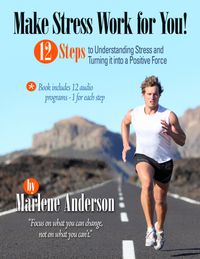
Make Stress Work For You by Marlene Anderson | focuswithmarlene.comMy Make Stress Work for You bundle will help you:

  • Identify the personal stressors that create high levels of distress in your life
  • Learn how to identify problems and find ways to solve them
  • Replace unhelpful thinking with constructive and practical ways to lower levels of fear, worry, and anxiety

The book bundle includes:

  • ebook
  • audio recording of each chapter’
  • companion Study Guide & Personal Application Workbook
  • Four bonus guides

Click here for details and to order

Personalized Stress: The Stress we Create

Listen to this episode of the Focus with Marlene Podcast

Get caught up with all episodes in the “Make Stress Work for You” series


We will experience stress every day. That is normal and natural. For example:

You’ve been asked to work overtime – again. The bus was late, you arrive home to kids fighting and an irritated spouse, the kitchen is a mess and you just want to throw up your hands and scream.

That is a pretty normal reaction to a string of events that were frustrating and exasperating. Who wouldn’t want to throw up their hands and scream?

However, when we remain in that agitated state, the original stress is compounded. We need our jobs, we want to have good times with our families, and we know we can adapt, but how do we keep the accumulation of expectations and demands from overwhelming us?

Good Stress

Stress is good when we use it to adapt to life in positive ways. Think about all the times when you were doing something you enjoyed, working on projects you loved, and developing plans for the future. Your stress response allowed you to stay focused, determine what needed to be done and follow through. While involved, you completely lost track of time. You could work long hours without seemingly getting tired.

When we understand that stress is a necessary part of life, both to keep us safe and to accomplish things, we can direct our attention to how we make it worse or even unnecessary.

What makes the difference? And how can we meet the demands of our life without stress escalating out of control?

Our Response to Danger

A major part of our overall stress system is alerting us of danger. When our brain receives information that we might be in danger of some kind, our Fight/Flight response is immediately activated. It is an old survival system that prepares us within seconds to either fight or flee or remain frozen in place in preparation to meet that threat. Without that quick response and interpretative system, we would not survive.

It is estimated that around 33 different hormones are released into the body. Every organ is affected in some way: heart, circulatory system, adrenal glands, stomach, intestines, kidneys, liver, brain, lungs, etc. Blood is shunted away from our extremities. Digestion is put on hold. Glucose is dumped into the blood to provide energy. Sweating helps remove excess toxins.

When the danger is past, the body returns to a restful state; our heartbeat returns to normal, our blood pressure lowers, and our digestive system continues its interrupted work.

It’s a great system. The mind interprets data, the body prepares us to act on that data, and after we have acted, the body returns to a restful state again.

When that threat isn’t a physical threat but a threat to our self-worth, integrity and esteem, the same response is also activated. Our body prepares as if it was in physical danger.

The problem with these kinds of threats is that we continue to remain in a heightened state of alert in anticipation that something terrible might happen. It becomes harder and harder to relax, there are fewer times for our bodies to return to a restorative state, and we soon become dis-stressed and exhausted.

The Distress We Create

Personalized Stress: The Stress we Create | FocusWithMarlene.com

The additional stress we create that goes beyond prevention and caution, and usually occurs through worry, anxiety, fear, or long-standing anger and resentment. When feeling stressed, we automatically assume it is the result of time pressure, overwork, and family conflicts.

While all of these generate stress, it is the additional layer of stress that we add by our thoughts and beliefs that we want to avoid. It’s not that our F/F system is constantly activated, but when that system cannot return to a normal resting stage until we let go and allow ourselves to relax.

Let’s look at the example given at the beginning of this article. It is a day of ongoing and escalating frustration and irritation. There will be many stressful times that we cannot alter. But again, we were made to adapt.

What we do have control over is how we choose to respond overall to these situations. Stress levels will continue to increase if we remain angry and resentful over long periods of time. Anger can soon become a preferred response to everything. When that happens, we have drastically increased our stress load.

To reduce any stress, physical, psychological or emotional, we need to find those ways to return our bodies to a restful state.

  • How could you modify or reduce any of the feelings and responses to the above situation?
  • What might you have done that would have reduced or replaced that increasing anger?

Sometimes we don’t want to let go of our anger and resentment because we don’t want to allow people to get away with putting us in difficult situations.

What we don’t realize is that by hanging onto that resentment, we are now hurting ourselves. Hanging onto and nursing that anger doesn’t change a thing except to make us more miserable.

What Stresses You Out?

What stressful situations are you dealing with? What is your ongoing response to them? Look at the list below and consider whether any of them create stress in your life:

  • Environment: traffic, long commutes, noisy neighbors, etc.


  • Social: interpersonal relationships, obligations, family expectations, etc.


  • Physiological: poor diets, overweight, poor self-regulation, unpredictable routines, little time management, unhealthy lifestyle.


  • Psychological: thought patterns, devaluing our worth, low self-esteem, constant biased comparisons, negative thinking, etc.


Now in the column below, write down how they may be affecting you and how you can offset the initial source of stress.

  • Environment –


  • Social –


  • Physiological –


  • Psychological –


There are many things we cannot change. But we can change our long-term responses that can lower the stress we are experiencing.

Marlene Anderson


Do you want to turn your stress into a positive force?

Make Stress Work For You by Marlene Anderson | focuswithmarlene.comMy Make Stress Work for You bundle will help you:

  • Identify the personal stressors that create high levels of distress in your life
  • Learn how to identify problems and find ways to solve them
  • Replace unhelpful thinking with constructive and practical ways to lower levels of fear, worry, and anxiety

The book bundle includes:

  • ebook
  • audio recording of each chapter’
  • companion Study Guide & Personal Application Workbook
  • Four bonus guides

Click here for details and to order

We Were Made for Stress

Listen to this episode of the Focus With Marlene podcast

During this pandemic, I have had conversations with many people. Everyone is feeling stressed due to prolonged isolation and restrictions.

But for some, that stress is far worse than for others. What makes the difference?

Make Stress Work For You by Marlene Anderson | focuswithmarlene.comIn my book, Make Stress Work for You: 12 Steps to Understanding Stress and Turning it into a Positive Force, I talk about the difference between good stress (eustress) and bad stress (distress). As you read and listen to the audio of each of the steps, you will learn how you can take charge of the stress in your life.

While stress is universal and everyone experiences it, it is also very personal. What stresses one person may be an exhilarating experience to another. Consider sky diving or swimming. In the Study Guide and Personal Application that accompanies this book, the questions presented can help you understand the sources of your personal stress.

We can’t live without stress nor do we want to. It is an essential part of living. But we can make it work for us and not against us.

What stress is and how it impacts our lives

If we use the analogy of a car and gasoline, we could say we are the vehicle and stress is the gas – the source of energy that drives that car. We are behind that wheel, and we can determine where we will go and how we will use that energy.

Cars run effectively and smoothly for long periods of time if they are properly taken care of and maintained. If they are not, your car soon breaks down. Just like your car, if you don’t take care of or maintain your mind and body, you will soon break down.

We were designed to adapt to the world around us.

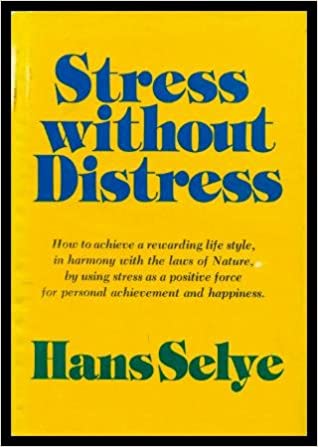
Stress Without DistressAs Dr. Hans Selye, renowned scientist for his work on stress, and recipient of two honorary doctorates, wrote in his book, Stress Without Distress, “Stress is the nonspecific response of the body to any demand made upon it.”

Stress is that adaptive ability that allows us to adjust to any new situation, whether it is enjoying the grandkids, going to work, raising our families, cheering at a football game, or responding to a threat. If we couldn’t adapt, we wouldn’t be able to respond to life – mentally, emotionally, socially or physically.

Stress can be both motivating and energizing.

When it is working for us, we can set goals, plan our careers, enjoy life, solve problems, and live life to the fullest. When it is working against us, however, we soon become ill and worn down.

We are given a certain amount of adaptive ability at birth to use throughout our lifetime to make the adjustments required to live. When that storehouse of adaptive ability is used up, however, we don’t get any more.

Although we have no control over the amount of adaptive ability we are born with, we do have considerable control over how we use it.

The human body is extremely resilient and flexible.

Even when high levels of stress extend for longer periods of time, we are still able to cope and rebound. However, when we don’t find a way to resolve the cause of our stress, and we remain stressed for longer and longer periods of time without relief, we will become distressed.

When that happens, our sleep will be impacted, and we won’t get the rest we need. It becomes more and more difficult to relax, and we find ourselves on a downward spiral of stomach or gastrointestinal problems, headaches, hypertension, irritability, and looking for short-term fixes like drugs, alcohol, or food. Our heart seems to be constantly racing, our hands and feet are often cold or clammy and we use social media as a diversion or quick fix.

We were made to adapt to whatever life throws at us.

We have the ability to respond to difficult and challenging situations. But when those demands become overwhelming, we become overloaded and fatigued. Normal stress, which activates and energizes us, can gradually become dis-stress when we are constantly geared up for action of some kind but there is no way to use that energy source. Then it begins to work against us.

We Were Made for Stress | focuswithmarlene.com

Here are some things we know about the effects of stress:

  • It is estimated that around 75% of doctor’s visits are attributed to high or prolonged levels of stress.
  • Stress contributes to heart disease, high blood pressure, strokes, and other illnesses.
  • Stress contributes to the development of alcoholism, obesity, suicide, drug addiction, cigarette addiction and other harmful behaviors.
  • Tranquilizers, antidepressants, and anti-anxiety medications account for many prescriptions written in the United States each year.
  • Prolonged stress exhausts the adrenal glands, depletes the nervous system, and can cause symptoms such as ulcers, chest pains, headaches, depression and finally exhaustion. It also lowers the immune system which protects us from many serious diseases.
  • Recurring health problems of any type can be a signal that we are under high levels of stress that we need to pay attention to. When the body is highly stressed for too long, it gets out of balance and that imbalance is expressed with disease.

Stress log

Keep a stress log for a week and mark down those times when you are feeling stressed, under pressure and always tense.

  • What signs and symptoms, both physical and emotional, were you experiencing when stressed?
  • Was this an ongoing stress?
  • What patterns of thinking or responding to life kept you more stressed?

Ask yourself what you can do to reduce your stress levels.

The Relaxation ResponseThat might be as simple as refusing to let irritations ruin your day, or becoming more in charge of your thoughts, laughing off things that are really unimportant.

Even when you’re completely stressed out, you can help your body return to a normal relaxed state.

Learning to respond differently to life’s challenges can keep stress levels down and have a profound difference overall in your health and enjoyment in life.

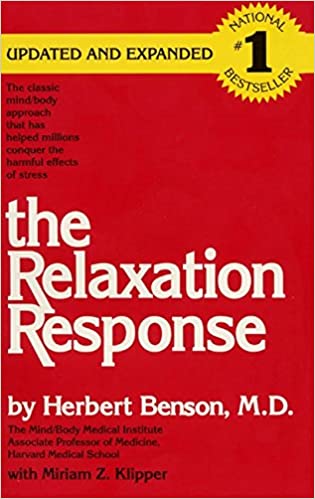
Dr. Herbert Benson, M.D., author of The Relaxation Response, details the importance of learning how to relax to maintain your health.

Because it is often difficult to put that into practice, I have recorded a Relaxation CD (available for purchase on my website) that enables you to simply listen and allow yourself to let go of tension and relax.

We can’t avoid stress. Nor do we want to.

What we do want to do is find ways to reduce distress and activate the stress that helps us accomplish goals.

12 Steps to Aging Confidently

I was asked to speak to a group of ladies recently about aging and adjusting. I put together twelve ways we can age with confidence and decided to share it as a blog post. At any age we can take charge of our lives and step into that space with confidence.

Listen to this Episode of the Focus With Marlene Podcast


12 Steps to Aging Confidently

1. Develop a new focus – a new mindset.

Focus on what you can do; don’t dwell on what you can’t do. As we age, there will be things we no longer can do and things we struggle to do. For example, arthritis can make it difficult to pick up objects or hold onto them, and we begin to worry about our abilities declining.

Worry can become a habit that eliminates possibilities. Do what you can and do it with confidence.

2. Acknowledge and accept.

It is hard to accept that we are aging. But each day is an opportunity to begin again.

  • What interests, passions, or things have you wanted to do but never had time for?
  • Is it possible to do some of them now?

For example, travel. Most cruise ships adapt for wheelchairs, making travel with disabilities possible.

Accept the changes that are happening. It is part of life. Become comfortable with who you are at this stage in life.

3. Believe in yourself.

Think back to times when you were challenged with overwhelming situations.

  • What did you do?
  • What worked?
  • What didn’t work?
  • What did you learn about yourself?

When faced with difficult things in the moment, we often struggle with the enormity of the challenge. Yet, when we reflect on past difficult times, they felt just as enormous and impossible at that time. But when we confronted them, we were able to move through and beyond and learn something valuable in the doing. Each life event taught us something important.

12 Steps to Aging Confidently | Focuswithmarlene.com

4. Find something meaningful to do every day.

You bring to projects a maturity and a lifetime of wisdom that you didn’t have when you were younger. You are never too old to try something new. You can develop new skills.

Work on projects together with others, such as quilting or making prayer shawls.

Many organizations need volunteers that can read stories to children at the library, or volunteering at a local hospital or helping at a food bank.

For me it is writing, blogging, and speaking, finding a new way to do what I love to do, which is counseling and teaching.

There are more productive days ahead of you than you might think.

5. Let go of the past.

Let go of resentments. Let go of anything that keeps you thinking in a negative way. Come to terms or reconcile with whatever happened in the past.  It is over. It is done. Resolve any torment or heavy disapproval you may have of yourself or others.

Forgive yourself and forgive others. Forgiveness is a gift. Everyone has made mistakes. Everyone has made bad choices. Everyone has done things they wish they hadn’t done. Regurgitating the past keeps you from moving forward.

We may look back and think, I wish I had done this or that, but each new day gives us the opportunity to start fresh. Let go of what you can’t do and focus on what you can.

6. Do something pleasant each day…

…Whatever that is, even if it is only 10-to-15 minutes. That might mean going for a walk, reading a book, calling a friend, doing some crossword puzzles, baking cookies, taking an online course, working on an interesting project – anything that takes your mind off your worries or depressed mood. During that time, focus on the here and now – not the future or the past – but right now, in the moment.

7. Share your life stories.

Why do you need to share your stories? Because they contain a lifetime of learning, often gained the hard way. You have faced losses and challenges you never wanted. But within those challenges you became a better person, a stronger person.

Others want to know they can make it too. Share your doubts and fears and what you have learned along the way. Share your wisdom. Remember the uncertainties you had. Acknowledge that you don’t have all the answers, but you don’t need to. Be honest and genuine.

8. Develop a network of friends.

Connecting with others is not just a feel-good thing – it is necessary for our health and wellbeing.

For those who are widows, it is especially critical. Share and encourage one another. This network of friends becomes an extended family. You can laugh together and share your concerns. You can be honest and real. You do not have to solve everybody’s problems, but you can listen and encourage each other. You are there for one another as you lose longtime friends. You need that network of friends to help you through those tough times. Relationships are critical to our health. Get together, play games, and laugh.

9. Develop a sense of humor.

Every day, find something to laugh about. It is amazing how it changes your mood. A friend of mine sends me funny pictures, blog posts, etc. that make me roar with laughter. I pass them on. Find those funny stories – post funny pictures around the house that make you smile when you pass by. Laugh at yourself. Here again, science has shown us the powerful positive impact it has on our health.

10. Make time work for you.

We have 24 hours 7 days a week. Managing time is making time work for you.

When you develop schedules and routines, it stabilizes your life. It provides a structure and dependability for each day. Your schedule does not have to have a rigid hour-by-hour regulation. It can be very flexible, but it establishes routines that make life more predictable and offers a structure for each day. It allows you to accomplish the daily, weekly, or monthly chores that are needed, with time set aside specifically for relaxation and fun.

11. Give yourself grace.

When you struggle in the morning to get started and just want to sit down for the remainder of the day, take the day off and take care of your needs. Then when you are feeling better, resume your activities. Grace yourself extra time to do things when needed.

Grace allows you to be human. We are not perfect. It says you can be kind to yourself, giving yourself leniency and compassion.

Give yourself grace to have a day of doing nothing. Then pick up the reins the following day.

12. Celebrate your life.

Count your blessings. Every day, give thanks for what you have. Make a list of things you are grateful for. Repeat them often. It not only makes you feel better, but research shows it lowers stress levels and improves brain functioning.

When you purposefully look for things to be grateful for, it begins to reshape your situation and your outlook.

When I wake up, I begin my day by thanking God for all the things I am grateful for. It sets the tone for the day. And whenever I get down, I stop and remind myself of all the things I am grateful for. Achy bones and joints or cloudy rainy days, there are still a multitude of things to be grateful for.

10 Takeaways for Continued Success as You Heal from a Major Loss

Listen to this episode of the Focus with Marlene Podcast

Click here to get caught up on all episodes in this series on recovering from loss


As I finish this series of blog posts and podcast episodes associated with my book, Learning to Live Again in a New World, I want to leave you with some thoughts.

Healing from a major loss is not easy and isn’t accomplished in a few months or even a year. It is a process that involves coming to terms with something you had not expected or wanted.

Taking charge of rebuilding your life will empower you to step out in confidence.

You have completed and applied the suggestions given in the last six month’s posts on recovery and rebuilding. Losses can be tricky and difficult to process, and you can become discouraged. But when you recognize your progress, you will have confidence to keep marching forward.

Acceptance and letting go started the process of rebuilding.

Taking charge of the nitty-gritty details of life and making them work for you has been another defining step. Recognizing the nuggets of blessings and gratitude have given you a new confidence.

Before we complete this series on learning to live again, I want to leave you with these final thoughts.

10 Takeaways for Continued Success as You Heal from a Major Loss | Focuswithmarlene.com

1. Be patient and loving with yourself.

It takes time to recover and rebuild. Learning and applying new skills take time.

2. Formulate realistic expectations for your future.

Temper your expectations with a reality you can work with. Don’t expect to climb Mt. Everest without learning mountain climbing. Be prepared to experience ongoing setbacks and challenges. That is life.

3. Use resistance to your advantage.

You can resist accepting and remain stuck in your grief and loss, or you can resist letting problems take control of your life. Two mantras I use whenever I get discouraged are, “yes, I can,” and “I refuse.”  I can accomplish what needs to be done and I refuse to let unwanted challenges take me down.

4. Nurture confidence in yourself.

We are made stronger in our weakness. Accept both your weaker side and your stronger side. We are a combination of both. Refuse to compare yourself with others.

Comparisons are deadly because we tend to compare our inadequacies with another’s strong points.

5. Choose your focus.

Your focus is where you decide to put your attention. It becomes the cornerstone for everything you do. It is where you put your day-to-day emphasis. You can focus on everything that isn’t working, or you can focus on all the things that are working. It’s an attitude. It’s a mindset.

6. Take one new skill at a time that you want to apply to your life and work with it.

Maybe it is better time management. Maybe it is becoming more grateful. Maybe it is learning to recognize your problems so you can work on them.

7. Become a master problem solver.

Learn to recognize underlying problems that are creating anxiety and distress. Some problems have been there awhile and may take a little time to identify the root cause.

The more you focus on resolving problems vs. focusing on symptoms, the quicker you will be able to resolve them.

8. Laugh and enjoy life.

Laugh at your inadequacies. Laugh at life – whatever it hands you. When you can accept and laugh at yourself you can appreciate and love yourself. You become honest and genuine. Having fun and enjoying life is as important as accomplishing goals.

9. Let go of resentments.

Hanging onto them and feeding them will not give you the justice or satisfaction you desire. Resentments will eat you up – they will destroy you. The justice you believe you need will never be satisfying enough. Instead, they become giant roadblocks to anything positive in your life.

10. Live your values.

It is who you are. It defines your character. It tells others what kind of person you are; trustworthy, honest, responsible, loyal, and dependable. Character is a work in progress for each of us.

You are a wonderful human being, made by our Heavenly Father, with talents and aptitudes unique to you. You are needed in this community of people. We all gain when we share our stories and challenges and resolutions with others.


Learning to Live Again in a New World, by Marlene Anderson | focuswithmarlene.comLearning to Live Again in a New World

We need validation for the turmoil of thoughts and emotions we experience. But we also need the tools necessary to create a new beginning that is both satisfying and meaningful. My new book, Learning to Live Again in a New World, offers those tools to help work through the problems you might be facing.

It is a guide to help you through the ups and downs of grieving a significant loss. And it includes a study guide at the end for use with groups.

Marlene Anderson

Yes, You Can

Listen to this episode of the Focus with Marlene Podcast

Click here to get caught up on all episodes in this series on recovering from loss


“When I stand before God at the end of my life, I would hope that I would not have a single bit of talent left, and could say, ‘I used everything you gave me.’”

— Erma Bombeck

You have been on a life-altering journey, a journey you had neither anticipated nor wanted.

There have been many unexpected surprises that demanded change, adjustment, a new assessment, and adaptation of plans. Your life has been forever altered.

Taking back the reins of your life requires purpose, choice, and determination.

I believe that deep within each of us lies the resources we need to meet any crisis, adversity, or unwanted change. These resources are often buried beneath doubts and old destructive messages. But we can uncover them, collect new information and alter our thinking to accommodate old models of doing things.

This is not for the faint of heart. But those willing to dig deep inside themselves will find the resolve needed to meet any challenge. And with the help of God, we can find both the strength and courage to step forward.

“The person who risks nothing, does nothing, has nothing, is nothing, and becomes nothing. He may avoid suffering and sorrow, but he simply cannot learn, feel change, grow or love. Chained by his certitude, he is a slave; he has forfeited his freedom. Only the person who risks is truly free.”

—Leo Buscaglia (1982)

Since January of this year, my blog posts have offered information on ways to heal, recover and gain a new appreciation for who you are as you developed new skills and applied them in rebuilding your life.

Sometimes we are required to do whatever is necessary in the moment until we are able to mobilize our goals. Then we often ask ourselves, what can we do as we sort out the ins and outs of beginning again?

Yes, You Can | focuswithmarlene.com

Let me share a personal story of a time when I needed to ask that question:  What can I do? While it might not fully define your circumstances, there is an important lesson here that can benefit everyone.

My husband and I had just moved into a new home we had built and were in various stages of unpacking and finding a place to put things. A vertebra in my lower back had been gradually deteriorating, putting pressure on a sciatic nerve. Without warning, it could trigger a leg spasm in my left leg, culminating in a leg cramp that locked my leg in a rigid position. Once locked, I was unable to move it until it had run its course. With enough warning, I could alter the outcome of the spasm.

If I recognized the beginning of that muscular contraction, I could push my foot down hard on the floor and break the cramping cycle. Even when asleep, there was a part of my brain on constant alert for the beginning of such a spasm. If I jumped out of bed quick enough, I could stop the process.

If I didn’t catch it in time, I would have to endure the excruciating pain until the affected nerves and muscles released me from its grip. Lifting and bending aggravated my lower back even more. Unpacking boxes was impossible.

I had to wait a week before I could see my orthopedic surgeon. Not being able to finish unpacking was frustrating. But what could I do in the interim?

Reading books or looking at magazines would be short-lived and trivial pursuits were not for me. I needed to be doing something constructive. Then, I heard that small internal voice remind me, as it had so often in the past: focus on what you can do and forget about what you can’t do.

Focus on what you can do – not what you can’t

But what could I do?

Then, I remembered all the cooking magazines I had collected over the years full of great recipes and cooking tips that I had brought with me to my new home. I was waiting for a time when I could go through them, select the ones I wanted and throw the rest away. I had been too busy until now. Now, I realized, was the perfect time to get the job done.

Before I went in for scheduled back surgery, I went through all those magazines that had been languishing in boxes, placed the saved recipes in binders and threw the rest away. I still have and use those recipes and cooking lessons.

No matter what the situation, difficulty, or limitation, there is always something of purpose we can focus our attention on.

A New Mindset: Yes, You Can!

One of the most important skills you can develop is a mindset of “yes, you can.” This mindset believes in “you” and looks for ways you can apply yourself.

It is an attitude that reflects a willingness to dig deep inside and pull out those resources waiting to be developed and used; resources such as determination and the ability to be flexible.

It incorporates what you have learned but may have forgotten or dismissed. Think about what you mastered in the past and how you did that. Add to that the resourcefulness of ingenuity and perception gained through this journey.

You will make mistakes.

You will misinterpret the data you are given. You will judge yourself harshly and have doubts and concerns. You will get discouraged. That is part of being a human being.

But granting yourself grace to make mistakes, accepting yourself with all your faults as well as your strengths, and asking for the strength and wisdom you need from God, will see you through the toughest of times.

You can make it. And you will be richly blessed in the process.

“You are never too old to set a new goal or to dream a new dream.”

– C.S. Lewis

This isn’t just about putting a positive spin on a serious situation.

It’s about looking at where you are in this moment and telling yourself, “Yes, I can.”

You may not have all the answers or resources, but you can ask and find the help you need. But the bottom line is you need to believe in yourself. With the help of God, you can strengthen your resolve, have faith in yourself, improve your life skills and accomplish.


Learning to Live Again in a New World, by Marlene Anderson | focuswithmarlene.comLearning to Live Again in a New World

We need validation for the turmoil of thoughts and emotions we experience. But we also need the tools necessary to create a new beginning that is both satisfying and meaningful. My new book, Learning to Live Again in a New World, offers those tools to help work through the problems you might be facing.

It is a guide to help you through the ups and downs of grieving a significant loss. And it includes a study guide at the end for use with groups.

Marlene Anderson

Brainstorming: How I Worked Through a Problem

Listen to this episode of the Focus with Marlene Podcast

Click here to get caught up on all episodes in this series on recovering from loss


All successful people have a goal. No one can get anywhere unless he knows where he wants to go and what he wants to be or do.

—Norman Vincent Peale

Last week we addressed conflicts and problems that exist between more than one person, and how you can properly identify the problem, given two different perspectives.

This week I share a major problem I faced and how I was able to resolve it.

After the death of my husband, I was faced with a huge financial decline along with a house we had just built, a small mortgage and lack of immediate resources.

My basic problem: What do I do now? What are my options?

Additional problems: If I have to move, where will I move to? How much can I spend on a different home?

Brainstorming: How I Worked Through a Problem | focuswithmarlene.com

Here are some of the ways I explored my basic problem and solutions I tried.

Through this process I was able to set my final criteria for where I wanted to live with a move I needed to make.

  • I could stay in my house and rent my daylight basement. I tried that but found I was uncomfortable with that as a solution.
  • I could become even more frugal and try to make it without selling. While I can be very frugal and had a small income each month, I realized there would be increases to homeowner costs, tax increases, etc. that I needed to prepare for.
  • If I sold my house, would the sale of my home furnish me with enough money to purchase another? This created additional questions, such as: Where would I move? Do I rent or buy? Do I stay within the community or move closer to my kids? What were the pros and cons of each?
  • Should I consider going back to work even though I was retired? I did not want to return to full-time teaching. Would part-time work give me enough funds to remain in my current house and still meet increased costs and unexpected emergencies?

The possibility of having to sell the beautiful home my husband and I had just built was not something I wanted to entertain. But as I examined each of the questions and potential solutions, carefully evaluating each, I realized my options were limited.

I had to assess what I wanted for my future long-term as well as any financial restraints involved. I was not just evaluating whether I could remain in my current home, but where I could move to, whether to rent or purchase. This was a major life-changing decision. After carefully thinking through all potential options, I made my decision to sell my home and purchase another.

Then I had to decide where I wanted to move to.

Should I move closer to my kids, return to the state where we had lived before, or remain in this area? After exploring homes on the market in surrounding towns, I made my final decision. I wanted to remain in my same community.

Next, I needed to determine what I could afford.

When I looked at the homes available to me within the price range I had set, however, they required some kind of upgrade or remodeling which would then increase the total price of the home.

As I brainstormed other options, it occurred to me that I could purchase one of the available lots and move a modular home on it as there were many wonderful models available to choose from in my price range.

But when I considered the cost of the lot, building a foundation, and a move from the factory, I realized I could build a house from the ground up for the same price and I would have more square footage and design options.

Problem-solving will take you through many opportunities to increase your list of choices.

Brainstorming and evaluating as many of those options as possible is also an opportunity to refine your criteria, your wants and needs.

As I expanded my awareness of what I could work with and do, it enabled me to see many possibilities I would never have considered when I started. By exhausting all possibilities and then choosing the best, I was able to arrive at a final decision that went far beyond my dreams. I was able to build a house I could never have afforded otherwise.

As you work with your ideas, you can evaluate and discover more of what you want.

When you have enough information and evaluate the pros and cons of each, you will be able to choose one that best fits your needs and implement a plan of action. Through this process, you are allowing new ideas to surface that you might not have thought of otherwise. I ended up with a home and an asset I would not have had otherwise.

When you start problem-solving and brainstorming ideas, don’t limit yourself.

As new possibilities pop up, consider them valid considerations. In the process you will clarify your criteria.

Be open to new ideas when they present themselves.

Be willing to look at many different possibilities before making a final decision. When you have exhausted all your options, you will find one that is right for you.

I love my new home and never would have had it if I hadn’t gone through the process I did. Have faith in yourself. Talk to others, gather that information, and then go for it.


Learning to Live Again in a New World, by Marlene Anderson | focuswithmarlene.comLearning to Live Again in a New World

We need validation for the turmoil of thoughts and emotions we experience. But we also need the tools necessary to create a new beginning that is both satisfying and meaningful. My new book, Learning to Live Again in a New World, offers those tools to help work through the problems you might be facing.

It is a guide to help you through the ups and downs of grieving a significant loss. And it includes a study guide at the end for use with groups.

Marlene Anderson

What is the Problem? Yours – Mine – Ours

Listen to this episode of the Focus with Marlene Podcast

Click here to get caught up on all episodes in this series on recovering from loss


When you learn the basics of problem-solving it will be a skill that you use automatically.

In last week’s post, I outlined five basic components of problem solving; questions you need to ask to find the solution you want. Today you will set the criteria to resolve your problem and learn how to identify exactly what the main problem is.

Identify the problem – define the conflict

Whether the question is how to advance beyond basic survival, how to prepare for your financial future, or how to better communicate with your spouse, it is crucial that the problem be correctly defined.

Unless the problem is correctly defined, you will be trying to rid yourself of emotional distress rather than resolving the actual problem.

Many problems involve our relationships with others: spouse, children, in-laws, neighbors, co-workers, bosses, etc. Until we know how this conflict is affecting all parties involved, we will not be able to adequately separate symptoms from the problem.

Step out of the emotional space for a minute and focus on what is causing you to feel that anger, worry or distress.

What is the actual problem? Do others see it the same way?

Symptoms

Symptoms are the emotional upset you are feeling, and the ongoing conflict affecting life on a daily basis. Problems affect the behaviors of everyone, sometimes through defensive actions, other times through aggressive action or inaction.

Sometimes problems will have us withdraw from any communication, fearful of making the matter worse. Unaddressed, the problem keeps us from listening or communicating at all. Sleep is affected, as are relaxation times. Life has lost all pleasure.

Who is involved?

When the conflict you are experiencing involves others, the perspective of both people needs to be considered.

  • Does the other person see a problem or just you?
  • How does the problem impact each of you?
  • Can you adequately define how you are being affected?
  • Can you listen with an open mind?

It is often difficult to hear another’s point of view. Everybody sees the world differently.

Before problems involving one or more people can be resolved, clarification of both person’s perspective is necessary.

In intimate relationships, emotions can quickly run high along with misinterpretation and misunderstanding. When both people are willing to take time to articulate their opinions, personal perceptions, assumptions, and expectations, and listen to the other person, problems can be successfully worked on.

You can’t tell another person how they should feel or what should be important to them, but you can stop and examine your motives and what is important to you and why.

Is it more important to win an argument, or to work towards a positive resolution?

Is winning more important than the relationship?

If your relationship is meaningful, you will probably have a sincere willingness to listen and understand the other’s point of view.

  • What can both of you accept and live with?
  • What can’t you accept?
  • What sacrifices are you willing to make?
  • What are the alternatives and the impact it might have over time?

Setting the stage for sincere discussion

Whenever a problem involves other people, choose a time and place when you can have a sincere discussion, a time when you both can listen as well as emote, without time pressure. If this is a conflict that involves all family members, ask for a family meeting where the problem can be addressed, and everybody can be heard. Set a time that everyone can agree to.

Holding regular family meetings can be very productive because kids are able to voice their concerns, and everyone has input. It is a time when parents can define the rules and explain why they are necessary. In my parenting classes, regular family meetings were encouraged. It can prevent many problems from getting out of hand.

Discussion includes feelings and behaviors. We become vulnerable and defensive. To actively listen, if you are unsure what was intended, stop, and ask for clarification.

Example: I want to better understand our differences and what specifically you would like to have happen. Is this what you meant? If not, would you explain it to me again?

Say it in a proactive way that encourages further discussion rather than defending/attacking. You can then share what you want and need.

Setting criteria for the outcome

Before you can brainstorm solutions, you need to have criteria identified and written down for what needs to happen for this problem to be resolved.

Gather all the relevant facts. Then brainstorm ways to reach that solution.

Set some rules you both can agree to while working together, such as showing respect, no name calling or labels, a willingness to listen, asking questions politely, and requesting a time-out if emotions get high.

Take the problem apart and look at it from every angle

What is the Problem? Yours – Mine – Ours | Focuswithmarlene.com

  • What are you personally willing to do to arrive at a solution?
  • What personal biases would keep you from working on finding a potential solution?
  • What obstacles do you put up preventing a positive outcome?

Look at the problem forwards and backwards, inside and out. Let it permeate your unconscious. Experience it in as many different ways as possible.

Visualize a solution

Challenge old expectations and assumptions. Break away from rigid patterns. Be willing to try something new.

Re-examine pieces of the problem rather than just rearranging it. Problem-solving assumes certain boundaries. There are things you will not do, and you share that.

Finding answers requires forward thinking and suspending judgement.

It is important not to prejudge any ideas before you have explored their validity. That is especially true for the ideas others present. When we suspend judgement, we can explore more options, think about how each idea might be useful and take the time to evaluate before eliminating.


Learning to Live Again in a New World, by Marlene Anderson | focuswithmarlene.comLearning to Live Again in a New World

We need validation for the turmoil of thoughts and emotions we experience. But we also need the tools necessary to create a new beginning that is both satisfying and meaningful. My new book, Learning to Live Again in a New World, offers those tools to help work through the problems you might be facing.

It is a guide to help you through the ups and downs of grieving a significant loss. And it includes a study guide at the end for use with groups.

Marlene Anderson

Questions I Need to Ask to Find the Solutions I Want

Listen to this episode of the Focus with Marlene Podcast

Click here to get caught up on all episodes in this series on recovering from loss


“All problems become smaller when you confront them instead of dodging them.”

—William F. Halsey

How do I solve this problem?

We experience problems every day that require some kind of action. Most are insignificant, or require little thought, such as, What will I wear today?  Do I want to take the weekend off and get away? We make a decision and move on.

But other problems are more complex with more serious outcomes, such as, How can I make enough money to support my family or care for an aging parent? How do I survive this pandemic?

One problem often has a multitude of other problems attached, each requiring thought and consideration. An aging spouse with health issues may require additional care.

  • Should they be put into a long-term care facility?
  • Can I afford it?
  • Should I become the sole caretaker or hire home care?
  • What are the costs of home care?

You may have been laid off with no adequate jobs to be had in your area. The bills need to be paid.

  • Is this a time to move?
  • How will that affect the members of my family?
  • What will be the impact, both short-term and long-term?

When adversities come at a rapid and unexpected pace, we easily become overwhelmed. If we are not familiar with problem solving in the past, we will find it difficult to step back and out of the emotional arena and apply some logical steps to resolve our problems. Sometimes we are simply trying to survive, and any decision made is temporary.

“No problem can be solved until it is reduced to some simple form. The changing of a vague difficulty into a specific, concrete form is a very essential element in thinking.” 

—J. P. Morgan

Where do I begin?

To resolve any problem requires first identifying the root problem. Sometimes it is obvious. Other times, it can be difficult to separate the main problem from all the attached problems, or the symptoms it creates.

Example:

A wife and husband constantly quarreling. One problem is lack of communication skills and another problem is recognizing what each brings to the relationship from their past, etc. Other problems dragged into it are work schedules, things they don’t enjoy doing together, and in-laws.

The main problem, however, is the inability to work together on solvable issues to a negotiated resolution.

How does each spouse perceive the problem? Is it a workable problem or a personality trait they don’t like?

How have they resolved problems in the past? And what makes this problem different? Or is it the same problem, only enlarged? How does each person perceive the problem?

This is especially important and requires listening skills to clarify and communicate wants, needs and end results. It also requires a desire to work together.

A problem well stated is a problem half solved.

—John Dewey

5 basic components of problem-solving

Questions I Need to Ask to Find the Solutions I Want | focuswithmarlene.com

1. Identify and define the problem.

Separate it from the symptoms. Symptoms include how you feel, the behaviors that result, etc. Is this an ongoing problem or a recent development? Gather and analyze as many facts as possible to determine the underlying problem or problems.

2. What and who is involved?

Separate individuals from behaviors. The focus is not on people but what is happening, and the behaviors associated. If you focus on personality differences, no resolution will be attainable.

We can modify behaviors. Work together with others who are directly involved to seek acceptable resolutions. This requires active listening and communication, taking responsibility for your emotions, expressing your needs and preferences and a willingness to work together to find solutions instead of blaming.

3. Brainstorm.

Generate as many possible solutions as you can think of. List whatever comes to mind even if they seem fanciful or unlikely. In reviewing your list, these can often stimulate further options that might be useful or important.

4. Evaluate and implement.

What criteria do you have for a successful resolution? What are the pros and cons, positive and negatives of each?

Prioritize, select one, and try it out. Create a plan for implementation. If several people are involved, be sure everyone understands and agrees.

5. Assess the outcome.

Is the problem being resolved? If not, try another one.

Have you accurately identified the underlying problem? Do not feel as though you have failed. You will not know until you have tried.

Some solutions create additional problems you had not anticipated. Consider them in your final resolution. Don’t hesitate to keep searching. It isn’t how quick you find the right solution, but that you have methodically and consistently worked through it to find one that will work.

What problem are you facing right now that you can apply these 5 principles to?

Maybe it’s one mentioned above or maybe you are trying to identify the root problem. Next week we will continue how to identify and resolve problems.


Learning to Live Again in a New World, by Marlene Anderson | focuswithmarlene.comLearning to Live Again in a New World

We need validation for the turmoil of thoughts and emotions we experience. But we also need the tools necessary to create a new beginning that is both satisfying and meaningful. My new book, Learning to Live Again in a New World, offers those tools to help work through the problems you might be facing.

It is a guide to help you through the ups and downs of grieving a significant loss. And it includes a study guide at the end for use with groups.

Marlene Anderson

Replacing Habits That Keep You from Being Successful

Listen to this episode of the Focus With Marlene Podcast

Click here to get caught up on all episodes in this series on recovering from loss.


“Successful people are simply those with successful habits.”

—Brian Tracy

To be successful, you need to be in charge of both your time and habits. Chores need to be done but we also need fun and relaxation.

In my recent post, Are Your Habits Sabotaging Your Efforts? you kept a record of how you spent your time each day for a week.

Last week, in Take Charge of Your Time – Take Charge of Your Life, you re-examined the log you kept, and formulated a workable structure for how you spent your time each day.

This week’s post will help you understand how habits are created and reinforced.

  • What habits currently in place are working for you and why?
  • Which ones aren’t?
  • And if they are not helping you, how can you replace them?

Why do we do the things we do

Before habits can be replaced, we need to understand what keeps them in place. Everything we do, we do because we get a payoff or reward of some kind. That payoff can be in the immediate moment or in the future.

We get immediate pleasure in eating that piece of cake. We rationalize our behaviors by telling ourselves we will only do it this once. Unfortunately, rationalizing can become a habit that keeps other unwanted habits in place.

Rewards and benefits

Habits are maintained because they are reinforced in some way through a reward or benefit we receive. Sometimes that reward is something that is removed (negative reinforcement) and sometimes it is something received (positive reinforcement). We are being reinforced by either of these.

Here is an example to better illustrate what I mean.

A mother gives a child who is acting out in the store some candy so he will be quiet. The child has just been “positively rewarded” for yelling and screaming.

But the mother has also been rewarded. She was “negatively rewarded” because something she didn’t want was removed: the yelling and screaming stopped.

For behaviors to become habits, they need to be reinforced (positively or negatively), repeatedly and consistently over a period of time.

In the above example, the child soon learns that he will get what he wants by acting out and the mom learns that when she acquiesces, she doesn’t have to listen to his yelling and screaming. Once behaviors are in place, they only need to be reinforced intermittently to remain in place. Understanding this process, the mom can choose a better way to handle acting out to achieve compliance.

Another example:

Your child cleans his room and each time he is rewarded with a hug, positive comments and extra computer time, which he highly prizes. Gradually, as cleaning his room becomes fairly consistent, only occasional rewards are needed such as, “good job” comments or extra playtime once in a while.

The behavior has become a habit. Or a child might eventually clean his room because he doesn’t want to get yelled at anymore. In that case he is negatively rewarded (no more yelling from Mom).

Identify short-term and long-term rewards

As you evaluate your habits and what keeps them in place, it is important to identify the rewards you receive, both short-term and long-term. In establishing new habits, you may notice both something positive received and something negative removed.

For example, developing time management skills will give you control over your time (something positive received) while removing anxiety over not completing tasks (something negative removed).

“We are what we repeatedly do. Excellence, then, is not an act but a habit.”

—Will Durant, based on Aristotle’s teachings

Behavior modification summary

Here is a quick summary of how behaviors are reinforced and become habits. Remember that all behaviors can become habits if they are repeatedly and consistently rewarded.

Positive Reinforcement

Behavior + consequence (something received) = Behavior increases

Example:  child cleans room, gets hug and extra TV time – behavior is reinforced and will continue or increase.

Negative Reinforcement

Behavior + consequence (something is removed) = Behavior increases

Example:  Child whines at store for candy. Mom gives in, child is positively reinforced (gets candy); Mom is negatively rewarded because child stops whining. Child learns that whining eventually pays off if Mom at some point gives in. Mom chooses a quick solution to get peace, but with long term negative consequences.

Intermittent Reinforcement

Reinforcement is done once in a while to maintain a habit rather than consistent and immediate that is needed to put a habit in place.

Take charge of your time and your habits

Research on how our brain works gives us new insights into why we do the things we do and continue to do them even when they are not beneficial.

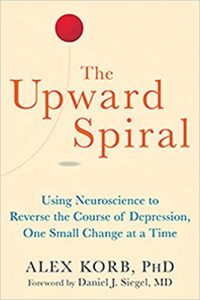
The Upward Spiral: Using Neuroscience to Reverse the Course of Depression,One Small Change at a TimeAccording to Dr. Alex Korb, author of The Upward Spiral: Using Neuroscience to Reverse the Course of Depression,One Small Change at a Time, it takes both decision and action to change a downward spiral to an upward one.

Habits that keep us from accomplishing our goals become a downward spiral.

To change that downward spiral of negative habits and routines, requires first recognition and then making a conscious decision followed by action. Taking that tiny step in a new direction begins the process of habit change. When you do, you are changing the dynamics of the neurons and neurotransmitters in your brain.

Remember the story of Arnold Beisser? Finding himself in an iron lung and unable to move, he decided to take charge of his life.

He recognized his position, made a decision to alter that and took his first few steps by engaging in things within his room. As he continued his quest to find a purpose for his life again, he not only left his iron lung, but became a psychiatrist, an administrator and author. He did this by first making a conscious decision followed by tiny steps in a new direction.

Habits are resistant to change.

Replacing them takes time, commitment and dedication. A lifestyle becomes a habit. When we are no longer satisfied with how we live, it’s time to question what we are doing. We not only need to know what isn’t working, we need to know why and what new habits can replace them.

Change starts now.

So, my challenge to you is to pick a behavior or habit you want to replace and start the process. Putting a new habit in place takes hard work and courage and we’ll often rationalize why it is just too difficult to change.

Put yourself in the driver’s seat. Setting up and following a daily routine does not have to be so rigid that you can’t enjoy life. But it is there where we begin to take charge of our life.


Learning to Live Again in a New World, by Marlene Anderson | focuswithmarlene.comLearning to Live Again in a New World

We need validation for the turmoil of thoughts and emotions we experience. But we also need the tools necessary to create a new beginning that is both satisfying and meaningful. My new book, Learning to Live Again in a New World, offers those tools to help work through the problems you might be facing.

It is a guide to help you through the ups and downs of grieving a significant loss. And it includes a study guide at the end for use with groups.

Marlene Anderson