
Let's Talk

How a New Perspective Transforms Adversity

The Power of Perspective

A new perspective means choosing to look at a situation in a different way.

My youngest son, Don, was born with a severe absence of neck muscles—a condition many would see as a life-limiting handicap. Yet, he never dwelled on what he lacked. Instead, he focused on what he could do: draw. As soon as he could hold a pencil, he was creating art.

He grew up wearing a specialized brace that allowed him to walk, run, and play. In his teens, he had surgery to fuse his back, which left him with a Harrington rod. He briefly wore a neck brace in high school but remained unbothered.

He embraced drama class, even traveling to England with the troupe. Don went on to college and became a respected creative artist in Los Angeles.

Without even realizing it, he maintained a “yes, I can” perspective, always finding a way. He was comfortable with who he was from a young age. Raising him was an honor.

Don is a perfect example of how our perspective profoundly influences our lives.

When faced with an overwhelming problem, do you get stuck focusing on how awful the situation is, or do you adopt a new perspective that says, “This is difficult, but I can work with it”? This is the act of reframing—seeing beyond the immediate problem.

woman sitting on bench enjoying mountain scenery

Embracing Your Strengths and Self-Acceptance

Adversity challenges us and can make us feel vulnerable and anxious. However, recognizing and using our strengths can provide a renewed sense of purpose, worth, and meaning, offsetting those feelings of vulnerability.

Take time to celebrate your strengths. This is not pride; it is acknowledgment.

Accept yourself—all parts of you, exactly as you are. You are not better or worse than anyone else, nor are you an extension of another person’s dreams or needs. Your worth doesn’t need to be proven by developing your potential.

While you will experience setbacks and hurts, you will also be rewarded with moments of peace, contentment, satisfaction, and joy. You have inherent worth, dignity, and value.

When you accept yourself, you acknowledge both your potential and your weaknesses. You recognize that you have much to learn, which enables you to grow. Acceptance of self allows you to develop into the person you were meant to be in a positive way. Non-acceptance often leads to resentment, anger, and frustration as you constantly seek approval from others.

The Practice of Reframing

A new perspective is like reframing what life has handed you, expanding your view. When facing difficult or traumatic events, your established perceptions of what you can and cannot do are challenged. Reframing allows you to review your expectations and assumptions and make necessary adjustments.

It involves stepping back from the immediate problems, taking in more information, and developing a wider outlook.

This perspective might include using humor to cope with difficult times. Humor reduces tension and helps you see a lighter side to your situation. (For more on this, see my recent post, Why Laughter is the Best Medicine: Boosting Health and Happiness.)

As you consciously look for ways to change your perspective, your stress levels will drop, and your ability to cope with and work through problems will increase.

We can choose how we respond to any situation.

We can reduce anger and resentment and gain a better understanding of the differences we have as human beings.

We also gain a better perspective of ourselves: we are not perfect. When both our strengths and weaknesses are accepted, our lives become workable.


Threads of Life

Threads of Life: Stories to Warm the Heart and Challenge the Mind, by Marlene AndersonWe will all struggle with burdens and overwhelming odds at some point. But when we encourage one another to not only survive but thrive, we can go on to celebrate life.

How we respond to these experiences will weave together the fabric of who we are. In Threads of Life, you’ll find a tapestry of stories about overcoming adversity, taking that needed risk, and moving beyond your losses to empower your life and find the joy, comfort, and laughter that we all need.

Along the way, you’ll learn valuable lessons about endurance and resilience as you face formidable difficulties. Learn how focusing on what you can do instead of what you can’t enables you to climb any mountain, overcome any obstacle, and praise God in the process—the story of living.

Threads of Life is available on Amazon in paperback and e-book versions.

The Power of Gratitude: A Simple Guide

Remember the feeling when a friend helped you through a tough time or a coworker surprised you with an unexpected gift?

Gratitude is that feeling of thankfulness, appreciation, or gratefulness in response to someone’s kindness, generosity, or understanding.

The word “gratitude” comes from the Latin word, gratus, meaning “pleasing” or “thankful.” It is an emotion similar to appreciation that operates on three levels:

  1. Personal Appreciation: Being thankful for what you possess and receive.
  2. Interpersonal Gratitude: Directing thanks toward others who positively impact your life.
  3. Transpersonal Gratitude: A feeling of appreciation for life itself or a higher power.

When we feel gratitude, we not only recognize the value of what we have, no matter how small, but we also want to express our thanks for the kindness of others. It is a powerful emotion that significantly contributes to overall well-being and happiness.

woman in field with arms raised in thanks

How do you show gratitude?

Expression usually comes in simple phrases like, “Thank you,” “I’m so grateful,” or “I truly appreciate your help.”

However, gratitude can also be demonstrated through actions:

  • Offer practical help when someone is struggling, such as running an errand or assisting with a task.
  • Give a thoughtful gift, even a small one, to show appreciation.
  • Send a personalized and handwritten thank-you note.
  • Offer compliments or sincere praise when someone is doing well.
  • Spend quality time with friends in person, rather than relying on quick online interactions.
  • Offer support simply by stopping and listening to someone’s concerns.

Showing appreciation

The Practice of Authentic Gratitude

To make gratitude a meaningful part of your life, be genuine—it must come from the heart.

  • Be Specific: Highlight the exact things you are grateful for. For example, instead of saying “Thanks for your help,” try: “I’m so grateful for your help with the presentation. It really made all the difference.”
  • Be Consistent: Practice gratitude regularly to build positive and genuine relationships.
  • Acknowledge God’s Blessings: As a form of transpersonal gratitude, take a moment to reflect on your blessings and give thanks to God for the gifts in your life, recognizing that the Bible teaches us to give thanks in all circumstances.

Here are three ways you can express deep appreciation:

  1. “Thank you for taking the time to listen to me when I was feeling stressed. It means a lot.”
  2. “I really appreciate you for being such a great friend. You always know how to make me laugh.”
  3. “I can’t thank you enough for your support during this difficult time.”

Ultimately, expressing gratitude boils down to treating others the way you want to be treated. This is genuine, honest gratitude that comes from the heart, reflecting kindness, appreciation, and respect.


Threads of Life

Threads of Life: Stories to Warm the Heart and Challenge the Mind, by Marlene AndersonWe will all struggle with burdens and overwhelming odds at some point. But when we encourage one another to not only survive but thrive, we can go on to celebrate life.

How we respond to these experiences will weave together the fabric of who we are. In Threads of Life, you’ll find a tapestry of stories about overcoming adversity, taking that needed risk, and moving beyond your losses to empower your life and find the joy, comfort, and laughter that we all need.

Along the way, you’ll learn valuable lessons about endurance and resilience as you face formidable difficulties. Learn how focusing on what you can do instead of what you can’t enables you to climb any mountain, overcome any obstacle, and praise God in the process—the story of living.

Threads of Life is available on Amazon in paperback and e-book versions.

Why Laughter is the Best Medicine: Boosting Health and Happiness

The Power of Laughter in Difficult Times

When was the last time you laughed until tears rolled down your cheeks?

That feeling of pure joy is a universal experience. Entertainers expertly use humor to transform any situation, showing us that a “humor spot” can be found even during difficult times.

Laughter and humor are vital components of a healthy life. They act as a natural pick-me-up, reducing pain and enhancing our ability to work and connect with others.

The benefits aren’t just psychological; laughter is physically therapeutic, improving the flow of oxygen to the heart and brain.

We all have moments when everything seems to go wrong, tempting us to yell or lash out in frustration. However, we can choose to reframe almost any situation, no matter how bad, to reveal a spark of humor.

As Leo Buscaglia wisely noted:

“When you get to the end of your rope, tie a knot and hang on. And swing!!!”

Laughter as a Therapeutic Tool

Laughter and humor are a powerful approach for dealing with life’s difficulties. Using humor doesn’t minimize problems; it helps us work through them.

Therapists often employ humor to soften the impact of overwhelming issues, enabling clients to address them more effectively. Using humor as a therapeutic intervention can promote emotional, mental, and physical healing.

The good news is you don’t need formal therapy to enjoy the benefits of laughter. You can cultivate them yourself.

“The crisis of today is the joke of tomorrow.”

—H. G. Wells

people laughing

The Science of Laughter: Key Health Benefits

The advantages of incorporating laughter and humor into your life are profound:

  • Reduces Stress: Laughter lowers stress hormones, such as cortisol, creating feelings of relaxation and calmness.
  • Boosts Mood and Relieves Pain: Laughter releases endorphins, which act as natural painkillers and can help manage chronic pain.
  • Improves Cardiovascular Health: Laughter improves circulation, can potentially lower blood pressure, and overall promotes better heart health.
  • Strengthens Relationships: Laughter shared in social settings fosters a sense of community and belonging. Feeling connected is a fundamental human need, and humor is a wonderful way to develop those bonds.

As Mark Twain observed:

“Against the assault of laughter, nothing can stand.”

Incorporating Humor into Your Daily Life

How can you weave more humor and laughter into your routine?

  1. Seek Opportunities to Laugh: Watch funny movies or spend time with people who make you genuinely laugh.
  2. Laugh at Yourself: Look for the humor in events, but also learn to be lighthearted and use self-deprecating humor to manage stress and difficult times.
  3. Reframe Your Perspective: Take an anxiety-inducing or frustrating event and actively search for one tiny element that could be viewed differently—not with sadness or anger, but with a kernel of humor.

What makes you laugh? Begin intentionally seeking it out today.


Threads of Life

Threads of Life: Stories to Warm the Heart and Challenge the Mind, by Marlene AndersonWe will all struggle with burdens and overwhelming odds at some point. But when we encourage one another to not only survive but thrive, we can go on to celebrate life.

How we respond to these experiences will weave together the fabric of who we are. In Threads of Life, you’ll find a tapestry of stories about overcoming adversity, taking that needed risk, and moving beyond your losses to empower your life and find the joy, comfort, and laughter that we all need.

Along the way, you’ll learn valuable lessons about endurance and resilience as you face formidable difficulties. Learn how focusing on what you can do instead of what you can’t enables you to climb any mountain, overcome any obstacle, and praise God in the process—the story of living.

Threads of Life is available on Amazon in paperback and e-book versions.

Purposefully Practicing Patience

To move forward after a significant loss, we must adjust to a new identity and a new way of life. This process requires us to let go of what was to rebuild what will be. It is a journey that demands patience and courage.

Embracing Fear and Practicing Patience

The first step in adjusting to a new reality is to face your fears rather than push them away. When we confront our fears, we can make the conscious decision to let go and move forward.

This also means acknowledging our resistance to change and granting ourselves the patience needed to learn a new way of being.

Research shows that impatience can be destructive. It not only keeps us from solving problems but also harms our mental and physical health. It’s been suggested that “patience is preventive medicine,” as it can reduce depression and improve relationships.

While a certain amount of impatience can motivate us to resolve issues, patience is essential for our well-being.

Woman praying in garden

Cultivating a Patient Mindset

So, how can we develop patience?

One effective tool is reframing. Instead of getting angry in heavy traffic, you can reframe the situation by telling yourself you’ll use the time to think through a problem.

Another strategy is proactive management—managing your expectations to prevent impatience. For example, if you know you’ll be traveling during rush hour, expect delays. When you anticipate a delay, you will respond to it much differently.

It’s important to remember that patience isn’t about becoming passive. The goal isn’t to wait endlessly but to wait skillfully.

Along with patience, we need courage to act when necessary, compassion to connect with others, and the wisdom to know when to wait and when to move. Patience allows us to develop empathy and gratitude.

The next time you feel the need to rush, remember that it takes time to identify our problems and find adequate ways to deal with them.

As a researcher once said, “How we wait shapes who we become—down to our cells.”


Threads of Life

Threads of Life: Stories to Warm the Heart and Challenge the Mind, by Marlene AndersonWe will all struggle with burdens and overwhelming odds at some point. But when we encourage one another to not only survive but thrive, we can go on to celebrate life.

How we respond to these experiences will weave together the fabric of who we are. In Threads of Life, you’ll find a tapestry of stories about overcoming adversity, taking that needed risk, and moving beyond your losses to empower your life and find the joy, comfort, and laughter that we all need.

Along the way, you’ll learn valuable lessons about endurance and resilience as you face formidable difficulties. Learn how focusing on what you can do instead of what you can’t enables you to climb any mountain, overcome any obstacle, and praise God in the process—the story of living.

Threads of Life is available on Amazon in paperback and e-book versions.

How to Write a Letter of Goodbye Following a Loss

The Chinese word for “crisis” is composed of two characters: one meaning danger and the other meaning opportunity.

When we face significant losses, we can experience a crisis and fall into depression. The danger lies in staying in that depression for too long; the opportunity comes from grieving our loss so we can move forward into a new chapter of life.

Understanding the Many Forms of Loss

Loss comes in many forms, and we all experience it differently. Consider which of these common losses has been most significant for you:

  • Loss of a dream for the future
  • Loss of your role as a parent
  • Loss of a significant person in your life
  • Loss of a job or career
  • Loss of part or all of your identity
  • Loss of a spouse or life partner
  • Loss of a pet
  • Loss of physical abilities or health
  • Loss of trust
  • Loss of a sexual partner
  • Loss of familiar surroundings or family connections

Hands holding a letter

Writing Your “Letter of Goodbye”

A crucial part of grieving is reconciling and integrating losses into our lives. A “letter of goodbye” can be a powerful tool to help you move forward. You can write this letter to a lost dream, a person, a job, or anything else you’ve had to let go of.

Here is a sample to help you get started:

Dear ___________,

I remember what you meant to me. I remember…

I remember all the things I received from you…

Here is what I’ve done as a result of those memories…

Because of your significance in my life, in the future, I will…

This exercise helps you acknowledge the loss, honor its impact, and begin to envision a future where you can carry the lessons learned without being weighed down by the pain.


Threads of Life

Threads of Life: Stories to Warm the Heart and Challenge the Mind, by Marlene AndersonWe will all struggle with burdens and overwhelming odds at some point. But when we encourage one another to not only survive but thrive, we can go on to celebrate life.

How we respond to these experiences will weave together the fabric of who we are. In Threads of Life, you’ll find a tapestry of stories about overcoming adversity, taking that needed risk, and moving beyond your losses to empower your life and find the joy, comfort, and laughter that we all need.

Along the way, you’ll learn valuable lessons about endurance and resilience as you face formidable difficulties. Learn how focusing on what you can do instead of what you can’t enables you to climb any mountain, overcome any obstacle, and praise God in the process—the story of living.

Threads of Life is available on Amazon in paperback and e-book versions.

The Journey of Grief: 4 Steps to Find Hope and Healing After Loss

“…but they who wait upon the Lord shall renew their strength, they shall mount up with wings like eagles; they shall run and not be weary, they shall walk and not faint.”

—Isaiah 40:31

Grief is a process that helps us work through the pain of loss. It takes time, energy, and commitment to validate your journey, grieve every layer of what you’ve lost, and accept your own vulnerability. It means working through difficult emotions and questions, coming to terms with what has happened, and integrating the loss into your life story.

Understanding the Process of Grieving

When we grieve, we must express what we are experiencing in a way that is meaningful to us. This process allows us to make discoveries about ourselves that we can carry forward into a new reality.

Losses can be opportunities to learn more about who we are.

As you navigate this path, it’s important to accept both your strengths and weaknesses.

Woman sitting on a garden bench

Finding Strength in a New Beginning

Starting over requires deliberate effort. Here are four steps you can take to find healing and build a new life:

1. Spend time with God every day.

He is the Comforter, the source of all hope and strength. Allow Him to be your CEO and Commander-in-Chief as well as your Savior.

2. Avoid negative self-talk.

Tell your internal critic that you will no longer listen. Challenge any statements that put you down or negate your abilities and worth.

3. Set new goals.

Start small. If a goal doesn’t work out, try another.

4. Write down affirmations and repeat them daily:

  • I am making good choices.
  • I am not a victim of my past, losses, or circumstances.
  • With God’s help, I can do anything within His will.
  • I refuse to give up.
  • I can do it—I am capable of meeting any challenge.
  • God loves me just as I am.
  • I can problem-solve and find solutions.

Healing is more than following a set of rules. It’s also about becoming sensitive to the needs of others who are grieving and supporting one another. This support can make all the difference between a successful re-entry into life and a life of isolation and loneliness.


Threads of Life

Threads of Life: Stories to Warm the Heart and Challenge the Mind, by Marlene AndersonWe will all struggle with burdens and overwhelming odds at some point. But when we encourage one another to not only survive but thrive, we can go on to celebrate life.

How we respond to these experiences will weave together the fabric of who we are. In Threads of Life, you’ll find a tapestry of stories about overcoming adversity, taking that needed risk, and moving beyond your losses to empower your life and find the joy, comfort, and laughter that we all need.

Along the way, you’ll learn valuable lessons about endurance and resilience as you face formidable difficulties. Learn how focusing on what you can do instead of what you can’t enables you to climb any mountain, overcome any obstacle, and praise God in the process—the story of living.

Threads of Life is available on Amazon in paperback and e-book versions.

Moving On: 8 Steps to Heal from Your Past and Rebuild Your Life

We often try to bury the painful memories of our past in a rush to move on. However, this hurt and pain tend to resurface, sometimes getting passed down through generations in tragic life train wrecks.

As William Bridges wrote in his book, Transitions: Making Sense of Life’s Changes, you must make a successful ending before you can make a new beginning.

It is in the transition between the two periods where we leave behind destructive patterns, heal old wounds and discover constructive strengths.

A difficult beginning does not mean it has to continue. Wherever we are in life, we are at a potential new beginning, and we can let go and heal from our past. We just need to have the will to do so.

Why True Healing Is a Process

We say, “time heals,” and in a way, it does. Yet healing is never easy.

Just as physical wounds need proper care to heal, psychological and emotional wounds require attention. If left untended, they can leave you feeling trapped or broken.

For example, when we’re forced to face our past, our first reaction is often anger or self-blame. We try to contain our anger, but it takes an enormous amount of energy and can eventually erupt or turn inward, creating a cycle of self-destruction.

True healing is a journey.

Embracing Your Resilience

Healing from past trauma demands action and a belief in your own resilience.

As you identify your strengths and put them to work, you will begin to move beyond the scars of the past. When I read true stories of people who have survived the holocaust or fled their homes with nothing but the clothes on their backs or have done amazing things despite physical disabilities, I know I can make it.

We are capable of extraordinary strength.

You can use that same resilience to succeed.

woman walking on a path in the forest

Steps to Begin Your Healing Journey

Here are 8 steps to help you start believing in yourself and moving forward:

  1. Refuse to Give Up. Healing begins with the belief that you can do it. When you believe in your worth and abilities, you’ll find satisfaction in your work and life rather than just a way to earn a living.
  2. Affirm Your Strengths. Take a moment to write down your strengths. We all have value and worth. God doesn’t beat us up – we beat ourselves up! Recognizing your strengths is the first step toward rebuilding your confidence.
  3. Believe in a God who Loves You. That can be really hard when parents have not validated your worth or given you unconditional love. But God loves all of us unconditionally. We learn this in every book of the Bible. No situation is too difficult for God. As we recognize Him and His work in difficult times, we can begin to believe.
  4. Challenge Negative Thoughts. We are creatures of habit, and it’s easy to fall into negative thought patterns. It’s not enough to stop negative self-talk; you must actively replace it with positive thoughts and beliefs.
  5. Grab hold of any opportunity, no matter how insignificant. Then ask yourself if this is something you could do or even like to do? Can it be a way to discover other possibilities? Taking every opportunity allows you to discover more positive things about yourself.
  6. Give yourself permission to do things you like or are passionate about. Permit yourself to “like” yourself.
  7. Define what success means to you. Think about how that can happen. Then visualize different ways you can experience success.
  8. Stop All Comparisons. Comparing yourself to others is a losing game. It leads to self-doubt and tears down your self-esteem. Your worth is not determined by what anyone else is doing. Focus on your own journey, not on how you measure up to others.

Redefining Your Success

Success isn’t about what you do; it’s about being who you are. True success is not measured by money, a prestigious career, or other people’s definitions. It’s about developing and being your authentic self. You only have enough energy to be yourself—all the rest is a distraction.


Threads of Life

Threads of Life: Stories to Warm the Heart and Challenge the Mind, by Marlene AndersonWe will all struggle with burdens and overwhelming odds at some point. But when we encourage one another to not only survive but thrive, we can go on to celebrate life.

How we respond to these experiences will weave together the fabric of who we are. In Threads of Life, you’ll find a tapestry of stories about overcoming adversity, taking that needed risk, and moving beyond your losses to empower your life and find the joy, comfort, and laughter that we all need.

Along the way, you’ll learn valuable lessons about endurance and resilience as you face formidable difficulties. Learn how focusing on what you can do instead of what you can’t enables you to climb any mountain, overcome any obstacle, and praise God in the process—the story of living.

Threads of Life is available on Amazon in paperback and e-book versions.

How to Navigate Loss

We often think of loss as the death of a loved one, but it comes in many forms.

Consider taking your 5-year-old to the doctor and discovering that he or she has cancer. Or losing your home to a natural disaster, or a sudden job loss.

No matter the type of loss, the immediate aftermath can feel like the end of the world you once knew.

Understanding the Initial Impact of Loss

Our first reaction to any major crisis or trauma is often shock, disbelief, and anger. A part of us wants to scream, “No!” and a state of denial takes over as we try to make sense of what has happened.

Thoughts might race from, “I can’t believe this is happening,” to “What do I do now?”

This anxiety about the future and our ability to cope can leave us feeling isolated and vulnerable. Yet, it is in this very space that we can begin to find an opportunity for growth.

woman sitting on beach at sunrise

Grieving and Rebuilding Your Life

When you’re grappling with loss, it can feel like you’ve been fractured.

As I wrote in my book, A Love So Great, A Grief So Deep, “You can laugh, enjoy their company, and yet, it is as though you were fractured – split – and another you is doing these things. The real you cannot feel.” (p.77)

I wrote those words while grieving the loss of my husband and, six years later, my youngest son. My experience taught me that we must first acknowledge, accept, and let go of what we had to build something new.

For many, one loss can trigger other losses—financial stability, friendships, or even a sense of identity. You may find yourself asking, “Who am I now?”

Grieving isn’t just about healing; it’s about transitioning to a new identity and creating a new beginning.

Finding Support and Moving Forward

Trying to explain the pain of an unexpected trauma or death can be incredibly difficult, especially to someone who hasn’t experienced a similar loss. But even if they don’t fully understand, their support is crucial. Sharing your pain and finding ways to cope can help you still believe in a positive tomorrow.

As the Austrian neurologist and psychiatrist Viktor Frankl said,

“If there is a meaning in life at all, then there must be a meaning in suffering. Suffering is an ineradicable part of life, even as fate and death. Without suffering and death human life cannot be complete.”


Learning to Live Again in a New World

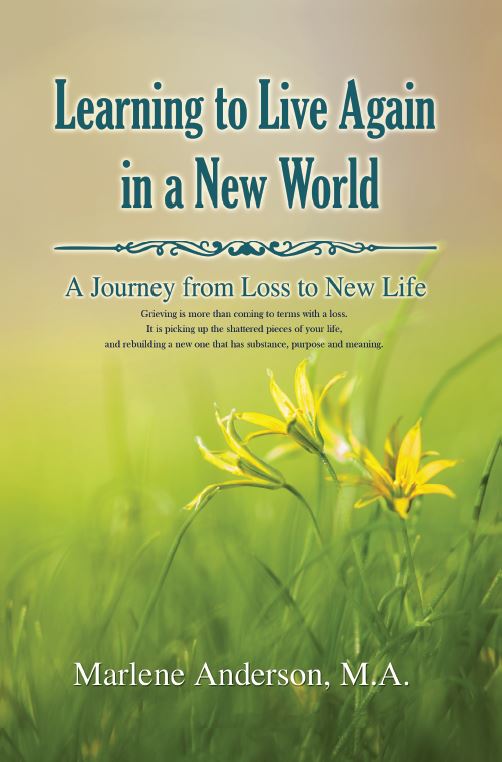
Learning to Live Again in a New World, by Marlene Anderson | focuswithmarlene.comIn my book, Learning to Live Again in a New World, I illustrate how one loss can trigger other losses – from our past to the present, including financial, friendships, family, social circles, and more.

We not only grieve, but are challenged with the question: “Who am I now? I knew who I was, but who am I now?”

The thing that prompted me to write this book was that grieving is not just healing. It involves making a new transition to a new identity – a new beginning.

Learning to Live Again in a New World takes you beyond those early days and months of intense grief to making a transitional journey from one reality to another.

This involves more than acceptance and letting go or picking up the pieces. It is celebrating your loved one, putting those memories in place, remembering with sweetness and sadness what had been and realizing you do have the strength and ability to move forward.

It is reassembling those life pieces to form a new picture of who you are today and who you can become.

Available from Amazon

Discovering Your Guiding Principles

If you were to take a trip to Mars or move to another country, what would you need to bring?

This isn’t about physical possessions, but about the core beliefs and values that make you, you.

What do you believe in and value? Can you define these principles in just a few words?

As you consider this, you become more aware of what you stand for and why. While much of what we believe has been said before, expressing it in a new way can bring fresh perspective and a deeper understanding.

What Defines Your Character?

Your values and beliefs are the qualities that make you distinct. They are the principles you respect, believe in, and live by. These guiding principles shape your life and tell others who you are; they form your character.

Character is built on core values such as:

  • Trustworthiness
  • Respect
  • Responsibility
  • Fairness
  • Caring
  • Citizenship

People of good character also exhibit traits like integrity, honesty, courage, and loyalty. These virtues define who you are and guide the choices you make.

Living your values is not about influencing others; it’s about being true to yourself. When you live a life that reflects your beliefs, people will know who you are.

Helen Keller once said:

“Character cannot be developed in ease and quiet. Only through experience of trial and suffering can the soul be strengthened, ambition inspired, and success achieved.”

Living Your Values

Woman's hand holding a compass

Values are the principles that shape your beliefs, behaviors, and decisions. They represent who you are and what you believe is important for yourself and others. This can include values like honesty, kindness, and responsibility.

Do you have respect for yourself and others?

Do you live these values even when those around you do not?

Living your values means making choices that are consistent with your core beliefs, even when it’s difficult.


Threads of Life

Threads of Life: Stories to Warm the Heart and Challenge the Mind, by Marlene AndersonWe will all struggle with burdens and overwhelming odds at some point. But when we encourage one another to not only survive but thrive, we can go on to celebrate life.

How we respond to these experiences will weave together the fabric of who we are. In Threads of Life, you’ll find a tapestry of stories about overcoming adversity, taking that needed risk, and moving beyond your losses to empower your life and find the joy, comfort, and laughter that we all need.

Along the way, you’ll learn valuable lessons about endurance and resilience as you face formidable difficulties. Learn how focusing on what you can do instead of what you can’t enables you to climb any mountain, overcome any obstacle, and praise God in the process—the story of living.

Threads of Life is available on Amazon in paperback and e-book versions.

From a Gravel Pit to a Beautiful Garden

Years ago, my husband and I visited friends in Canada who took us to the Butchart Gardens. It was spectacular! If you ever have the chance to visit, you’ll find it beautiful not only during the day but also at night when millions of little lights illuminate the grounds. It’s an unforgettable experience.

But how did this stunning garden begin?

It started as a gravel pit. Gravel pits are created when huge earth-moving machines remove land to extract gravel and other materials for roads and construction. What’s left is a massive, scarred hole in the ground with unstable sides; water seepage from underground springs; stagnant pools of rainwater; huge, discarded pieces of rock and other unusable mounds of earth.

It’s a place often perceived as worthless; as a place to throw away pop cans, beer bottles and candy wrappers.

Your Life’s “Gravel Pit”

We can use the image of a gravel pit as an analogy for our lives. We all have “gravel pits” of some kind—huge, ugly holes created by loss, divorce, violence, or tragic childhoods.

These pits contain old, ungrieved losses, toxic messages, and large “boulders” of doubt, shame, and anger that keep us from moving forward. We are left with a scarred landscape of indifference, bad choices, and isolation, which can leave us feeling desolate and alone.

In our attempts to rebuild our lives, we can become overwhelmed and give up, or we can accept that life will always be an ugly gravel pit. We may build fences around our shame, refusing to talk about our past for fear of rejection.

But even when we try to deny or distance ourselves from our past, it continues to impact every part of our lives—our behaviors, relationships, and core beliefs.

gravel pit to beautiful garden collage

Rebuilding Your Beautiful Garden

The Butcharts didn’t discard their gravel pit; they transformed it into a world-famous garden. We, too, can use our pain and broken dreams to build something beautiful.

We can turn hopeless situations into satisfying, productive, and pleasing futures. The very experiences that created our “gravel pit” can become the foundation for a new, beautiful garden—a place of hope, light, and joy.


Threads of Life

Threads of Life: Stories to Warm the Heart and Challenge the Mind, by Marlene AndersonWe will all struggle with burdens and overwhelming odds at some point. But when we encourage one another to not only survive but thrive, we can go on to celebrate life.

How we respond to these experiences will weave together the fabric of who we are. In Threads of Life, you’ll find a tapestry of stories about overcoming adversity, taking that needed risk, and moving beyond your losses to empower your life and find the joy, comfort, and laughter that we all need.

Along the way, you’ll learn valuable lessons about endurance and resilience as you face formidable difficulties. Learn how focusing on what you can do instead of what you can’t enables you to climb any mountain, overcome any obstacle, and praise God in the process—the story of living.

Threads of Life is available on Amazon in paperback and e-book versions.