

Let's Talk

Finding That Passion Within

In his book, Become Who You Were Born to Be, Brian Souza writes,

“Happiness in life is not about money, fame, recognition, or even competition. Successful people love what they do and feel compelled to express the best that is within them. They don’t strive to be better than their neighbors or contemporaries—they strive to be better than themselves.”

At any moment, you can ask yourself:

  • What is my passion?
  • What could I do for hours just because I enjoy it?
  • What kind of work could I do all day and never get tired?
  • What dream or burning desire do I have?

Once you identify these, ask yourself how you can productively use this passion, not just for yourself, but to benefit others.

My story

When I retired from teaching, I sought out satisfying and productive activities to engage in. I realized that, in addition to my work as a licensed mental health counselor, I still loved teaching. But I no longer wanted to be in a classroom. I soon discovered that writing could accomplish the same goal: sharing information from the scientific community, the spiritual world, and my own experiences.

A friend suggested I start a blog. I began blogging, which led to creating my own website. From there, I expanded into recording and podcasting. Not being on a rigid schedule allows me to prepare content in advance.

Blogging then led to writing several books. I offer several books on the “Products” page of my website.

My first hardcover book, A Love So Great, A Grief So Deep, was about the death of a loved one—for me, it was the death of my husband.

I followed that with two more published books, Learning to Live Again in a New World and Threads of Life, both available on Amazon.

I never set out to be a writer. I simply enjoy sharing information that people can easily apply to their lives to improve communication, resolve conflicts, lower stress, and become more effective problem-solvers.

open notebook with notes about my passion project

What do you get excited about?

What have you learned that could benefit others?

If you have something to share, ask yourself how you can do so—perhaps by speaking at events or joining a group.

Trying something new can be both scary and exciting, especially when you invest time and money. It is here where we reach out and take our Lord’s hand and ask His help to lead and guide us to become the person we were created to be.


Threads of Life

Threads of Life: Stories to Warm the Heart and Challenge the Mind, by Marlene AndersonWe will all struggle with burdens and overwhelming odds at some point. But when we encourage one another to not only survive but thrive, we can go on to celebrate life.

How we respond to these experiences will weave together the fabric of who we are. In Threads of Life, you’ll find a tapestry of stories about overcoming adversity, taking that needed risk, and moving beyond your losses to empower your life and find the joy, comfort, and laughter that we all need.

Along the way, you’ll learn valuable lessons about endurance and resilience as you face formidable difficulties. Learn how focusing on what you can do instead of what you can’t enables you to climb any mountain, overcome any obstacle, and praise God in the process—the story of living.

Threads of Life is available on Amazon in paperback and e-book versions.

Words to Encourage

Words possess immense power. Think about the words you use to encourage others, and use them to encourage yourself too.

Remember a time when someone thanked you for being thoughtful, and how good it felt when your words of comfort or encouragement made a difference.

Words, when used to help, comfort, praise, or encourage, enable us to get through the toughest times.

The Power of Words: A Woman’s Story

Years ago, I wrote about a woman who was a determined goal-setter. She was in college when she met and married her first husband. Soon after, her world began to fall apart. As her life crumbled, she fought to save her marriage, but eventually realized it was beyond saving. The emotional turmoil led to a breakdown, transforming her from a vibrant, healthy person into one medicated for depression and anxiety.

As she struggled to rebuild her life, she faced enormous challenges. One day, she discovered a bracelet inscribed with these words: Imagine – Create – Believe – Achieve – Inspire – Transform.

bracelet with encouraging words inscribed on it

Reading and rereading these words, she felt inspiration and motivation returning. She decided to put the pieces of her life back together, this time focusing on what she truly wanted. She started taking the necessary steps to make it happen, transforming from a state of depression into a vivacious, energetic, and goal-oriented woman.

How important were those words in her transformation?

More than we can imagine. She began to imagine what her life could be, then believed she could create and achieve it. That belief became the inspiration that kept her going. Words truly are more powerful than we realize.

The Power of Positive Language

In an article I read recently, researchers highlighted the power of words like love, forgiveness, and gratitude.

The word love itself can inspire positive thoughts and a sense of connection. It’s more than just romantic attraction; it creates a feeling of caring for others.

Similarly, focusing on forgiveness and gratitude can lead to greater happiness. We must make them a daily practice.

Words affect every aspect of our lives—mental, spiritual, psychological, and physical.

List all the words that encourage you to hang in there and become more than you are. Post them where you can see them every day.

To challenge fears about things like job loss and rising costs, we can take positive action, such as cutting expenses, creating a budget, and becoming smart shoppers. These actions help us take charge of our lives.

But we also need to use positive words to motivate ourselves and others. We should look for ways to love instead of hate, encourage instead of criticize, and offer assistance instead of tearing others down.


Threads of Life

Threads of Life: Stories to Warm the Heart and Challenge the Mind, by Marlene AndersonWe will all struggle with burdens and overwhelming odds at some point. But when we encourage one another to not only survive but thrive, we can go on to celebrate life.

How we respond to these experiences will weave together the fabric of who we are. In Threads of Life, you’ll find a tapestry of stories about overcoming adversity, taking that needed risk, and moving beyond your losses to empower your life and find the joy, comfort, and laughter that we all need.

Along the way, you’ll learn valuable lessons about endurance and resilience as you face formidable difficulties. Learn how focusing on what you can do instead of what you can’t enables you to climb any mountain, overcome any obstacle, and praise God in the process—the story of living.

Threads of Life is available on Amazon in paperback and e-book versions.

Communication Breakdowns: 6 Common Problems

Whenever there is an ongoing disagreement between couples about anything important to them, communication breaks down. Differences or disagreements that appear trivial at first soon become a hypercritical conversation.

When this happens, we need to stop the conversation to clarify and ask for feedback. (For tips on how to do this, see last week’s post, “4 Basics for Communicating with Others”)

6 problems that can lead to communication breakdowns:

1. “Summarizing Self Syndrome”

Each person repeats their point of view without listening to the other person’s perspective. Both parties begin to feel hurt. Neither one feels, sees, or hears what the other is trying to say and they don’t stay on the subject long enough to resolve any problems.

If you recognize this happening, stop your conversation and ask the other person for their feedback or understanding.

2. Ramble, Stray, or Drift to Other Problem Areas

Let’s say Thanksgiving is approaching, and you start talking with your spouse about having the family over for dinner. But instead of working on details, you talk about the times you’ve had family over and the problems that ensued. Before you realize it, you are no longer focusing on planning for this Thanksgiving.

3. “Mind Reading”

We make assumptions without checking what others are feeling or thinking. Let’s say that the in-laws have been invited for dinner. You want to make a special meal, and you prepare special dishes. But when they arrive, they bring half of the dinner with them because they thought you would be tired and would appreciate the help. They never checked first, and it became a very awkward moment.

4. “Kitchen Sinking”

We drag old history, old issues, and new issues into the current conversation. For example, a husband is watching a football game and his wife accuses, “You’re always watching TV. You never do anything around the house. You are like your father, never spending time with your son. Your feet are on the table. When your friends were over, they left a big mess. You don’t care about us or your home. You promised to fix the kitchen sink.” And on and on it goes!

5. “Cross-Complaining”

Each person in a conflict states a complaint in response to the other’s complaint. Every comment is met with another counter-complaint.

For example, the wife says to her husband, “I saw this darling dress and it was on sale.”

Her husband responds, “Our budget is already overdrawn. We can’t keep spending money frivolously.”

The wife quickly responds, “If you hadn’t bought all that hunting gear last month, we’d have more money to do things.”

6. “Stand-off”

Everything is repeated over and over, generating a stubborn refusal to back down. Your thinking may sound like this: “If I give in, I’ll always be in second place.”

Every person wants approval, acceptance, and validation of their feelings, and after a while they assume the same position in every communication scenario. “If he/she would only see my point of view, then I could/would. . .”  Giving in is seen as catastrophic.

Here are some suggestions if you find yourself in a standoff:

  • Call for a “Stop Action.” Ask for feedback. Try to see whether it makes sense and is valid from your partner’s perspective. Even if you don’t agree, you both can be right from your perspective. Then paraphrase again and validate what you heard and understood.
  • Become aware of expectations you may be attaching to things. Tell yourself that you will stop doing this.
  • Ask the other person: What can we do to make things better?
  • State clearly and specifically what you are willing to do. Present your recommendations in positive ways.

Threads of Life

Threads of Life: Stories to Warm the Heart and Challenge the Mind, by Marlene AndersonWe will all struggle with burdens and overwhelming odds at some point. But when we encourage one another to not only survive but thrive, we can go on to celebrate life.

How we respond to these experiences will weave together the fabric of who we are. In Threads of Life, you’ll find a tapestry of stories about overcoming adversity, taking that needed risk, and moving beyond your losses to empower your life and find the joy, comfort, and laughter that we all need.

Along the way, you’ll learn valuable lessons about endurance and resilience as you face formidable difficulties. Learn how focusing on what you can do instead of what you can’t enables you to climb any mountain, overcome any obstacle, and praise God in the process—the story of living.

Threads of Life is available on Amazon in paperback and e-book versions.
4 Basics for Communicating with Others

Can you communicate in a way that develops relationships while still respecting your needs and wants?

Yes, you can!

When I taught community college classes on communication, I also facilitated a group for couples who were trying to communicate better.

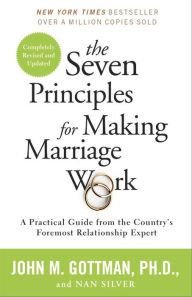
One resource I used was The Seven Principles of Making Marriage Work, by John M. Gottman, PhD. The information was helpful for any communication among people.

4 basics for establishing successful communication with others:

1. Listen and Validate.

A good communicator states exactly what they are thinking, wanting, or feeling. A good listener lets the other person know what they heard.

2. Look for Filters.

Filters are anything that colors our perceptions or distorts the message we are hearing, creating a bias. Is there something hidden within this dialogue that the speaker is trying to convey to you, or you are avoiding?

That’s Not What I Meant! | FocusWithMarlene.com

3. Provide Feedback.

Our communications contain both words – spoken and unspoken – and the emotions they create. We tend to assume we know what was meant, but assumptions can be wrong. Feedback lets the speaker know that this is what you thought the other person was telling you.

As you listen, clarify what is being said with questions such as, “Can we stop for a moment? I want to be sure I heard you accurately.”

If you are a speaker, ask yourself: “Have I said the words in a way that conveys how I actually think and feel?”

If you are a listener and want to be sure you have heard correctly, repeat exactly what you heard and ask for verification.

Use phrases such as:

“I heard you say ______. Is that correct?”

“Did you say________?”

“Do you mean ________?”

Requesting verification helps prevent misinterpretation or misunderstandings, especially when someone is giving instructions.

It isn’t disrespectful or insulting to ask for verification.

4. Check Your Perception.

Going a step further, you can do a perception check where you describe what you heard as the other person’s feelings. This does not express disapproval or approval.

For example:

“This is how I understand your feelings… Am I correct?”

“I get the impression you are angry with me when you become quiet? Are you?”

“I am not sure if you are confused or angry with me.”

Often, misunderstanding or incorrect communication creates friction, mistrust, and ongoing problems within a relationship. You can help overcome these issues by making a habit of clarifying so you are sure of what you heard and understood.


Threads of Life

Threads of Life: Stories to Warm the Heart and Challenge the Mind, by Marlene AndersonWe will all struggle with burdens and overwhelming odds at some point. But when we encourage one another to not only survive but thrive, we can go on to celebrate life.

How we respond to these experiences will weave together the fabric of who we are. In Threads of Life, you’ll find a tapestry of stories about overcoming adversity, taking that needed risk, and moving beyond your losses to empower your life and find the joy, comfort, and laughter that we all need.

Along the way, you’ll learn valuable lessons about endurance and resilience as you face formidable difficulties. Learn how focusing on what you can do instead of what you can’t enables you to climb any mountain, overcome any obstacle, and praise God in the process—the story of living.

Threads of Life is available on Amazon in paperback and e-book versions.

Defeating Your Internal Critic

When our minds focus only on what we can’t do, we lose confidence in what we can do. Our self-talk and thinking becomes distorted – “Everybody else can do things, but I can’t.”

When negative thoughts and messages are constantly repeated, they become an ongoing internal dialogue, like a recorded tape.

We refer to it as our “internal critic.”

These judgmental statements are triggered whenever we experience difficulties, problems, or unsettling events. They flood our minds with negative, pessimistic, discouraging, and self-devaluing thoughts and feelings.

These repetitive statements dictate how we must behave and act. They include a judgment of ourselves and others that automatically predicts a negative outcome to whatever we do.

Devaluing statements, when repeated consciously or unconsciously, form a self-fulfilling prophecy. They draw us towards that outcome.

Unless challenged, this internal critic will become relentless.

Stopping the Recording

When we stop these repetitive tapes, we can think through problems, consider options, and make informed decisions based on the here and now.

Self-Talk Exercise

While our self-talk can have a positive influence on how we solve problems or how we communicate in our relationships, we also need to be aware of what we are saying to ourselves about ourselves.

Ask yourself these questions:

Do I constantly focus only on the negative and on what I can’t do?

Do I belittle myself with statements such as,

  • “Why do you always do such stupid things?”
  • “Won’t you ever learn?”
  • “What’s wrong with you?”

When we focus on the negative, we block all the positive things we can do. When our internal dialogue constantly minimizes our worth, we are putting in place a belief that says, “I am not capable of accomplishing anything,” and are establishing a self-fulfilling prophecy.

Approaching Life from a “Can Do” Perspective

Problems are messy and often, not easy to identify. But how we approach looking for and finding solutions is critical.

Rather than allowing your internal critic to make your problems worse, tell yourself that you can change your responses.

  1. First, become aware of what you are constantly telling yourself.
  2. Work on changing that “can’t do” talk with “can do.”
  3. Boldly acknowledge your strengths and successes and work with them.

Threads of Life

Threads of Life: Stories to Warm the Heart and Challenge the Mind, by Marlene AndersonWe will all struggle with burdens and overwhelming odds at some point. But when we encourage one another to not only survive but thrive, we can go on to celebrate life.

How we respond to these experiences will weave together the fabric of who we are. In Threads of Life, you’ll find a tapestry of stories about overcoming adversity, taking that needed risk, and moving beyond your losses to empower your life and find the joy, comfort, and laughter that we all need.

Along the way, you’ll learn valuable lessons about endurance and resilience as you face formidable difficulties. Learn how focusing on what you can do instead of what you can’t enables you to climb any mountain, overcome any obstacle, and praise God in the process—the story of living.

Threads of Life is available on Amazon in paperback and e-book versions.

The Importance of Words

“Your talent is God’s gift to you. What you do with it is your gift back to God.”

—Leo Buscaglia

When you’ve experienced moments of anxiety or uncertainty, have you searched for words to describe what you’re feeling?

We use words in our self-talk to describe events, share concerns, ask for help, seek directions, and more.

Words of wisdom

I conducted an online search for “wisdom” and found numerous wisdom quotes. Here are a few:

  • “Nothing is impossible; the word itself says, ‘I’m possible!’”
  • “True knowledge exists in knowing that you know nothing.”
  • “There are many ways of going forward, but only one way of standing still.”
  • “Be the change that you wish to see in the world.”
  • “The journey of a thousand miles begins with one step.”

Leo Buscaglia’s quote is my favorite: “Your talent is God’s gift to you. What you do with it is your gift back to God.”

I also love:

  • “Change your thoughts and you change your world.”
  • “Wisdom is not a product of schooling but of the lifelong attempt to acquire it.”

And then there was Aristotle’s, “Knowing yourself is the beginning of all wisdom.”

It’s important to become aware of the words we use to describe ourselves or our situations.  Our words influence the way we resolve problems and live a positive life.

As we were growing up, some of us heard mainly put-downs or belittling words, and we continue to hear or speak them without realizing the effect they have on us today. Add to that all the other negative words or statements we create.

Words directly influence our thinking and actions.

What words do you consistently use to describe yourself and your circumstances?

Are they self-defeating?

Or do they reframe events to see the positive as well as the negative?

Think about the words you use to describe your situation and other people. Are they hurtful or helpful?


Threads of Life

Threads of Life: Stories to Warm the Heart and Challenge the Mind, by Marlene AndersonWe will all struggle with burdens and overwhelming odds at some point. But when we encourage one another to not only survive but thrive, we can go on to celebrate life.

How we respond to these experiences will weave together the fabric of who we are. In Threads of Life, you’ll find a tapestry of stories about overcoming adversity, taking that needed risk, and moving beyond your losses to empower your life and find the joy, comfort, and laughter that we all need.

Along the way, you’ll learn valuable lessons about endurance and resilience as you face formidable difficulties. Learn how focusing on what you can do instead of what you can’t enables you to climb any mountain, overcome any obstacle, and praise God in the process—the story of living.

Threads of Life is available on Amazon in paperback and e-book versions.

Discover the Art of Reframing Your Thoughts

Reframing is a different way of thinking about a problem or challenge. Instead of focusing on the things you can’t do, reframing helps you discover the things you can do.

Reframing is looking beyond pain and troubles and searching for alternatives that may have been hidden from view. It means realizing you are not alone, and that you can solve problems.

In my book, Yes, I Can: Take Charge and Step out in Confidence, I wrote, “Reframing takes what life has handed us and offers the opportunity to respond differently.”

Why is that so important?

Because when we are going through difficult or traumatic times, we need that kernel of hope, humor, and gratitude that is often hidden. We can choose to laugh through our tears.

Reframing is a skill we can apply to every situation.

Imagine you’re going to snap a photograph of a beautiful, diverse landscape. If you want to focus more on one area, you frame the image so the background is hidden and the area you want to expand takes center stage.

When going through tough times or after a major loss, we may think we’ll never recover or feel competent again. But we soon learn that God gives us resources to survive and to build resilience, belief in ourselves, and hope for a positive future.

When we include God in our thinking, we learn that He can give us the strength and assurance we need to keep going. Through prayer and faith, we can ask for the strength we need to begin again.

And God is faithful. In His love and grace, He gives us the tools we need to conquer our past and live a joyous new life. Life may not be as we hoped it would be or thought it ought to be, but there are wonderful surprises if we are willing to be open to them.

Reframing allows us to grow and prosper regardless of circumstances.

Don’t be afraid of uncertainty, misgivings, and reservations. It is normal to have doubts about stepping into unknown territory. You might feel discouraged. But you don’t have to stay that way. Your hesitancy, even your timidity, can be used to learn and become more of who you are and who you can become.

Doubts help us pause and think twice before repeating past mistakes.

Reframing helps us examine our options more carefully. It helps us look for pitfalls and plan for their removal before putting a new plan into action.

Reframing means we are not a hostage to our situation.


Threads of Life

Threads of Life: Stories to Warm the Heart and Challenge the Mind, by Marlene AndersonWe will all struggle with burdens and overwhelming odds at some point. But when we encourage one another to not only survive but thrive, we can go on to celebrate life.

How we respond to these experiences will weave together the fabric of who we are. In Threads of Life, you’ll find a tapestry of stories about overcoming adversity, taking that needed risk, and moving beyond your losses to empower your life and find the joy, comfort, and laughter that we all need.

Along the way, you’ll learn valuable lessons about endurance and resilience as you face formidable difficulties. Learn how focusing on what you can do instead of what you can’t enables you to climb any mountain, overcome any obstacle, and praise God in the process—the story of living.

Threads of Life is available on Amazon in paperback and e-book versions.
4 Constructive Ways to Combat Learned Fear

Also in this series:

Part 1: Identify, Challenge, and Replace Automatic Thoughts

Part 2: Fear: The Great Motivator

Part 3: How We Unintentionally Create Fear Dragons

Part 4: How to Thaw Fear That Freezes


“Be strong and of good courage, do not fear or be in dread of them: for it is the Lord your God who goes with you; He will not fail you or forsake you…”

—Deuteronomy 31:6

You can be the most intelligent person on earth, but if you have no faith in your abilities to make new choices or keep trying when things go wrong, you can get stuck.

Life can be harsh and cruel. When life hands us one tough situation after another, we begin to attribute our lack of results to our inadequacies and failure. Then we give up because we don’t trust ourselves. Fear has taught us to cower in a corner, immobilized.

Years ago, a young researcher named Martin Seligman and his colleagues conducted some experiments with dogs. A dog was placed in a cage and given random mild electric shocks. Unable to predict when the shocks would come and where he could go to escape, the dog gave up after a short time.

The following day, when given the ability to escape into an adjoining cage, the dog never attempted to cross into that open door but lay cowering in a corner.

Within 24 hours, the dog had learned helplessness.

There is evidence that humans also learn helplessness. And when life seems to teach us that no matter what we do, we will fail, we give up.

Fear can teach us many things: to be cautious, to listen to our gut feeling about physical danger, and to learn new, more constructive ways to accomplish things.

Fear should never teach us to give up.

4 ways to combat your “fear dragon”

1. Include God in your life.

Ask for and expect help. Turn to every scripture verse in the Bible that speaks of God’s faithfulness. Write them down. Carry them with you. Repeat them throughout the day.

2. Challenge every negative and fear-filled thought with a positive opposite.

When we constantly focus only on the negative, we draw ourselves toward an unwanted outcome.

Fear gives us important information to respond appropriately when there is danger. But when everything constantly triggers fear, we quickly become exhausted.

3. Push the STOP button on your fear monitor.

Check whether there is anything rational about it. Focus on the positive things you can do to bring about what you want.

4. Focus on what you can do, not on what you have no control over.

When your mind obsesses over what might happen, list those possibilities. Then counter each one with positive things you can do right now.

Remember, fear is a good thing when it is used appropriately. When it is not, it becomes corrosive, toxic, and debilitating.

God gives us hope through His promises. If we can learn helplessness, we can also learn optimism.


Threads of Life

Threads of Life: Stories to Warm the Heart and Challenge the Mind, by Marlene AndersonWe will all struggle with burdens and overwhelming odds at some point. But when we encourage one another to not only survive but thrive, we can go on to celebrate life.

How we respond to these experiences will weave together the fabric of who we are. In Threads of Life, you’ll find a tapestry of stories about overcoming adversity, taking that needed risk, and moving beyond your losses to empower your life and find the joy, comfort, and laughter that we all need.

Along the way, you’ll learn valuable lessons about endurance and resilience as you face formidable difficulties. Learn how focusing on what you can do instead of what you can’t enables you to climb any mountain, overcome any obstacle, and praise God in the process—the story of living.

Threads of Life is available on Amazon in paperback and e-book versions.

How to Thaw Fear That Freezes

Also in this series:

Part 1: Identify, Challenge, and Replace Automatic Thoughts

Part 2: Fear: The Great Motivator

Part 3: How We Unintentionally Create Fear Dragons


When fear sets up housekeeping, it brings along its friends, panic and anxiety.

Panic stops us in our tracks. Heart pounding, we’re frozen – unable to move and with nowhere to go.

Anxiety feeds the fear and panic with its slogans:

  • “You’re doomed.”
  • “There is nothing you can do.”
  • “Don’t move or you will be devoured.”
  • “It’s hopeless.”

When we feel anxious, we tend to apply a string of defeats, disappointments, or failures to our abilities and worth:

“I never do anything right, and I can prove it – look at my past.”

We allow our past to automatically predict our future:

  • “I will never be able to own my own home.”
  • “I will never have anything.”
  • “I am a failure.”

We embellish the negative and, worse, eliminate positive information from entering our minds. We create a self-fulfilling prophecy.

Anxiety leads to hopelessness and depression because we’ve eliminated other options, so we can’t see any other course of action.

Thawing panic and anxiety

It’s difficult and scary to work through challenging situations.

But when faced with a challenge, we get to decide whether to look for a new and different route. We can crawl into a corner and remain frozen in fear and anxiety. Or we can look for alternatives.

Five tips for dialing down fear:

  1. As soon as you sense panic, stop and take a deep, slow breath.
  2. Remind yourself that your brain is preparing your body to either flee or fight.
  3. Imagine you hold a control button with a dial you can turn. Imagine that it is connected to your fear. Right now, it is set on high. Turn it down.
  4. As you dial down the fear and bring your body back to a more restful state, you’ll be able to assess your circumstances more rationally.
  5. Remind yourself that there are always solutions.

Listen to your fear

Fear is a healthy emotion, and we need to listen to what it is telling us. However, becoming immobilized by fear is not healthy.

Honestly assess your situation. Consider options and create a plan of action that will work for you right now.

It’s also helpful to pre-think how you’ll react in fearful situations. Whether the danger is real or perceived, be aware that your survival instincts will kick in.

  • Think about what you can and can’t do.
  • Think about assets and abilities you can rely on in difficult circumstances.

Threads of Life

Threads of Life: Stories to Warm the Heart and Challenge the Mind, by Marlene AndersonWe will all struggle with burdens and overwhelming odds at some point. But when we encourage one another to not only survive but thrive, we can go on to celebrate life.

How we respond to these experiences will weave together the fabric of who we are. In Threads of Life, you’ll find a tapestry of stories about overcoming adversity, taking that needed risk, and moving beyond your losses to empower your life and find the joy, comfort, and laughter that we all need.

Along the way, you’ll learn valuable lessons about endurance and resilience as you face formidable difficulties. Learn how focusing on what you can do instead of what you can’t enables you to climb any mountain, overcome any obstacle, and praise God in the process—the story of living.

Threads of Life is available on Amazon in paperback and e-book versions.

How We Unintentionally Create Fear Dragons

Last week, we explored 9 positive aspects of fear. Today, we’ll look at a negative ramification of fear: focusing on “what if.”

Fear is a good thing when it alerts us to danger. Fear gets the adrenaline pumping so we can fight or run away.

However, fear can also keep us immobilized so we don’t search for the underlying cause. Searching for the cause involves asking ourselves: “Is this a normal reaction to what is happening, or am I making it worse than it is?”

If you are feeling afraid, stop and ask yourself, “What about this situation is creating this reaction in me?”

The difference between legitimate fear and fear monsters

It’s critical to understand the difference between legitimate fear that helps prevent us from doing stupid things and a fear of anything and everything.

For example, the legitimate fear of not having enough money in our old age can motivate us to avoid overspending and/or to create an investment plan for retirement.

On the other hand, fear can be an ongoing source of stress when we turn everything into a “fear monster.”

“What if” fears

I’m sure you’ve experienced moments of real fear when a car cuts in front of you on the freeway as it weaves in and out. However, we can create fears that are just as heart-stopping and real. I call them the “what if” fears.

  • What if I lose my job?
  • What if my spouse leaves me?
  • What if I can’t pay my mortgage?
  • What if I get really sick and can’t take care of my child?
  • What if I don’t get this job?
  • What if they don’t like me?
  • What if I’m not good enough?
  • What if? . . .

When times get tough, this internal dialogue can dominate our thinking, creating a constant source of stress and fear.

Let’s take the fear of losing your job, for example.

While you might spot indications that you’ll lose your job or not get the job you’re hoping for, there’s also the probability that you will keep your job or land your dream job.

When you fixate only on the negative outcome, you begin to act accordingly and put in motion a self-fulfilling prophecy.

“What ifs” can become so real that we defend their existence.

We become consumed by the terror of what might happen. If anyone suggests something positive, we go to great lengths to prove they are wrong and we are right.

When that happens, we create a “fear dragon” that needs to be continually fed. The problem with fear dragons is just that – they are created – they are not real.

If we can create them, we can tame them – turn them into something positive.


Threads of Life

Threads of Life: Stories to Warm the Heart and Challenge the Mind, by Marlene AndersonWe will all struggle with burdens and overwhelming odds at some point. But when we encourage one another to not only survive but thrive, we can go on to celebrate life.

How we respond to these experiences will weave together the fabric of who we are. In Threads of Life, you’ll find a tapestry of stories about overcoming adversity, taking that needed risk, and moving beyond your losses to empower your life and find the joy, comfort, and laughter that we all need.

Along the way, you’ll learn valuable lessons about endurance and resilience as you face formidable difficulties. Learn how focusing on what you can do instead of what you can’t enables you to climb any mountain, overcome any obstacle, and praise God in the process—the story of living.

Threads of Life is available on Amazon in paperback and e-book versions.