
Let's Talk

Developing Confidence

In my new book, Threads of Life,  there are many stories about believing in yourself, taking risks, developing confidence, etc.

You will experience many challenges in life, some greater than you could have imagined. At such times, your thoughts might go like this:

“I had prepared. I worked hard. Why wasn’t I able to meet my expectations? Did I overreach? Was I overconfident? What did I miss? What did I do wrong?”

Whenever life gets tough, you stop telling yourself, “Yes, I can. I will try again. I will find a new way.”

Instead, your self-talk tends to focus on the negative. “I should have done more. If I had worked harder, I would have succeeded.”

We feel stupid and incompetent, with no talent at all. At such times, whatever accomplishments we have had are blocked from view, and we fall into a pit of believing we are so flawed that we are incapable of succeeding at anything. Our self-talk and thinking becomes distorted. “Everyone else can do things, but I can’t.”

When our minds focus only on what we can’t do, we lose confidence on what we can.

Having confidence does not mean you won’t have challenges or failed attempts. Or that you shouldn’t examine what went wrong. We will make mistakes.

C.S. Lewis wrote:

“The only things we can keep are the things we freely give to God. What we try to keep for ourselves is just what we are sure to lose.”

As we allow ourselves to imagine more and create ways to accomplish our potential goals, there will be doubts and fears. But we don’t have to stay there.

Can you feel confident enough to step out and try?

As you reflect on all the things you could do if you allowed your imagination and creativity to flow, you will be gradually transformed from doubting to finding ways to accomplish the things you value and have a passion for.

These are the things that make each of us unique. As we set goals, and when we hold a belief in ourselves and in God, we can work with purpose and meaning to bring them about.

Taking any new step forward can be both scary and exciting. It is where we reach out and take our Lord’s hand and ask His help to lead and guide us to become the person we were created to be. It is where we develop confidence.


Threads of Life Released January 17, 2025

Threads of Life: Stories to Warm the Heart and Challenge the Mind, by Marlene AndersonWe will all struggle with burdens and overwhelming odds at some point. But when we encourage one another to not only survive but thrive, we can go on to celebrate life.

How we respond to these experiences will weave together the fabric of who we are. In Threads of Life, you’ll find a tapestry of stories about overcoming adversity, taking that needed risk, and moving beyond your losses to empower your life and find the joy, comfort, and laughter that we all need.

Along the way, you’ll learn valuable lessons about endurance and resilience as you face formidable difficulties. Learn how focusing on what you can do instead of what you can’t enables you to climb any mountain, overcome any obstacle, and praise God in the process—the story of living.

Threads of Life is available on Amazon in paperback and e-book versions.

Venturing Into the Unknown

My husband and I were sailors. When cruising, there were times we had to leave safe harbors in order to return home. Sometimes that meant traveling through fog with visibility almost nil.

Our instruments and charts showed the course we would take. There were foghorns and lighted buoys. But when the visibility was reduced to a few feet, even the sound of foghorns became disorienting. Not only was traveling extremely difficult, but our options were limited. We had to get home.

In my new book, Threads of Life (published January 17, 2025), I write about our many life experiences, including adversity and loss, and how we rebuild when everything has fallen apart.

Preparing for our journey through life

We can design many plans of action, but even with well-laid plans, we need to be prepared for the unexpected. Just as a sailor knows his or her life depends on preparing for the voyage, it is equally important for us to prepare for our journey through life. We often leave home oblivious to the rocks and shoals and obstacles that could shipwreck us if we aren’t prepared.

Adopting a “never give up” or “yes, I can” mindset allows us to believe there are options and possibilities if we are willing to look for them. It’s that perseverance that allows us to step out and try one more time. It empowers us.

When we add humor and laughter, along with the friendships we build, we discover hope instead of despair. When we add and maintain faith in God, we find strength and wisdom to confront our fears.

Before you step into the unknown, write down your responses to these questions:

  1. Identify the traits or strengths you have: determination, reflection, thoughtfulness.
  2. Identify your talents and abilities: artistic, computer savvy, athletic.
  3. Rate your social skills: friendly, shy, aloof, engaging.
  4. Identify your predominant attitude or way of thinking: dependable, trustworthy, independent, reliable.
  5. Define your typical emotional state: happy, anxious, angry, contented, cheerful, compassionate.

Venturing into the Unknown | focuswithmarlene.com

We are a combination of many things.

There is no perfect personality. When you take time to get to know yourself better you will find it easier to define what you want to do and why, and what you are willing to do before stepping out.

Where are you today?

Are you tucked away in a safe harbor somewhere? Are you ready to venture out of that harbor to expand your options and possibilities?


Threads of Life Released January 17, 2025

Threads of Life: Stories to Warm the Heart and Challenge the Mind, by Marlene AndersonWe will all struggle with burdens and overwhelming odds at some point. But when we encourage one another to not only survive but thrive, we can go on to celebrate life.

How we respond to these experiences will weave together the fabric of who we are. In Threads of Life, you’ll find a tapestry of stories about overcoming adversity, taking that needed risk, and moving beyond your losses to empower your life and find the joy, comfort, and laughter that we all need.

Along the way, you’ll learn valuable lessons about endurance and resilience as you face formidable difficulties. Learn how focusing on what you can do instead of what you can’t enables you to climb any mountain, overcome any obstacle, and praise God in the process—the story of living.

Threads of Life is available on Amazon in paperback and e-book versions.

Transform Into the Person You Long to Become

When we reflect, consider, and imagine new ways to create a better life, we find we have the ability to pick up the pieces that life has broken and start putting them back together.

At such times we are given a new understanding of what we want and what is important to us. We can draw up new plans, confidently step out in faith, and begin transforming our plans into actualities. In the process, we are transformed into a more productive and motivated person. We aren’t the same person we were before.

In much the same way an athlete’s muscles grow stronger and more reliable through daily workouts, we get stronger, more resilient, and more self-reliant when we are stretched in the arena of life.

We take charge of and are responsible for what we do. We let go of the blame game and focus on ways to develop more resiliency, compassion, and understanding.

We decide how we are going to treat others regardless of how we feel we are being treated. We turn our responses into possibilities that are better for everyone.

Growing through adversity

We won’t discover who we are until we have been challenged by adversity and grown from it. As we work through the knots and tangles of life, we discover who we are, what we are made of, and what we can become.

We learn to accept all parts of who we are and make a decision to be the best we can. It isn’t about comparisons or trying to meet an unreachable goal – it is being honest and genuine and telling ourselves, “Yes, I can!”

We have what it takes to meet our challenges.

But old messages can continue to make us doubt. Those are the old messages we heard growing up that told us we were stupid or not good enough and would never succeed.

But we have the opportunity to turn our lives into something positive by how we choose to live, regardless of the circumstances.

As we become more optimistic and confident, we will find ourselves transformed.

How to begin

Put together a personal plan of action for what you want to do with the rest of your life.

Imagination: An Essential Tool for Rebuilding

When I toured Europe, our guide showed us spectacular and colossal churches, buildings, and bridges that had been rebuilt after the war. We saw pictures showing the destruction bombs caused before they were rebuilt.

Wars, riots, and civil unrest destroy both buildings and lives.

Sometimes our lives feel as if we are on a battlefield where competition, rivalry, hostilities, and conflicts spin out of control, and we are left feeling like a casualty in a combat zone. But we are reminded that even when cities were bombed into burning piles of rubble, they were rebuilt.

We will experience tough times when our expectations are trashed. When the world we thought we would have forever no longer exists, and we feel we are on a battlefield, a casualty of war.

Where do we begin rebuilding?

Tough times can be opportunities to build something stronger and more durable. They can be an opportunity to take a passion we had as a child and work with it.

As you consider options, allow your imagination to soar.

Before you can start creating, your imagination needs to be stimulated. For example, before building a cathedral, you need to imagine what it is going to look like, draw up plans to construct it, and estimate the length of time it will take to complete it.

What does it take to build a cathedral – or, more realistically, to turn your home or business into something unique, distinctive, and inviting?

What do you do when wildfires, hurricanes, or floods destroy everything you have?

What does it take to start over again?

How do you pick up the pieces and reassemble them? What would be different? What would be the same?

Where would you begin?

The human spirit is incredible.

Our imagination can create intricate and beautiful structures and statues. We know that even when such creations are destroyed, people rise up and rebuild.

In my own life, I have discovered that when everything seems inside out and upside down, there remain important lessons I can take away from such events:

  • I learn to trust in God.
  • I learn to accept responsibility for myself, my choices, and my actions.
  • I think more thoughtfully about the pros and cons.
  • I become honest and genuine and realize what is truly important and valuable to me.

You, too, can take the stones of the past and rebuild them into something even more beautiful and long-lasting for today.

You Are A Creator!

Have you always wanted to learn to play an instrument, but never got around to it? Is it possible to do it now?

Certainly! Each year you can create new goals. If you enjoy music, you could rent an instrument and take lessons or learn from online videos.

If you love to sing, you could join a local chorus.

Perhaps you dream of creating something from wood or cloth, or you’d like to try decorating your home with plants. Join a woodworking group, an art guild, or a home design and decor group.

Another alternative: join a support group that reaches out to others – that will bring you a sense of gratification and pleasure.

“In the beginning, God created the heavens and the earth . . .”

Genesis 1:1

I believe God gave us the ability to create. I’m not talking about grand cathedrals with spires that reach to the sky, or building giant monuments, or even painting masterpieces. But every day in some way, we can create something of importance.

Think about the relationships you are creating as you reach out to others. You are creating acceptance and caring and showing empathy.

Perhaps others are experiencing similar concerns as you. You can create a warm and safe environment within your home where family and friends feel loved and accepted. Aren’t these as important as towering skyscrapers or driverless cars or phones that talk to us?

I remember the time I attended a weekend course on art therapy. The teacher – an art therapist – used different forms of art expression to help clients work through grief.

We were given a lump of clay and told to shape and mold it according to how we felt. It wasn’t important how it looked – what was important was that we allowed ourselves to use the clay as an expression of what we were feeling and experiencing.

At the end of our course, our teacher showed us stunningly beautiful slides of collages, quilts, and wall hangings her clients had done in her art therapy classes. While the creators didn’t consider themselves to be artists, out of their hearts and souls they allowed themselves to express who they were at that moment in time.

Creating something that reflects who you are right now can be invigorating and fulfilling. Perhaps it is as simple as finding ways to show people you love and care about them. Or you might have a flair for flower arrangement or writing.

Give yourself time to explore. Allow yourself to be creative. As you participate in the creative process, you might be surprised to discover you have triumphed over many difficult situations.

Today’s Challenge: Take that spark of inspiration and create something positive.

Self-Inventory: Exploring New Opportunities

Every year we have the opportunity to redefine our goals.

Are you satisfied with your goals?

  • What needs to be improved?
  • What needs to be let go?

Over the years, I have written, blogged, and spoken on topics that define practical ways to meet our day-to-day challenges. As a retired mental health counselor with a master’s degree in psychology/counseling, the information I share comes from research and science as well as the spiritual and experiential sides of life.

Like you, I have made and worked on goals, shared my hopes and dreams with others, and sought their input. I have managed my finances and sought good and reliable help. My husband and I built two homes that were later sold. After his death, I built a smaller home and then found meaningful work to do through writing, blogging, and podcasting. With the help of God and friends, I overcame loneliness and created a new identity for myself.

Self-Inventory: Who am I today?

While it takes time to work through our challenges, each challenge presents a new opportunity to grow, learn, and become more of who we are. As you begin this year, start by asking:

  • What is more important to me than anything else?
  • What is the most important thing I want to accomplish?
  • What current needs do I have that need to be met?
  • What needs or wants can wait until a more convenient time?
  • Where do I want to begin?

Processing loss

As you explore who you are today, consider the losses you have experienced or are currently having and the impact it has had on your life. (I will share more about processing losses in future posts, but just know that major losses can leave us feeling unsure about our future.)

When processing a loss, it is often difficult to focus and think. Your energy is depleted, and everyday routines and even simple chores can feel exhausting. Take time to rest and do less. Accept help from others when needed. And remain in the present.

As we move forward into this year, focus on just being “you.”

Resist the temptation to think about all the things you might have done or didn’t do. Instead, focus on today and where you want to go.

A New Year – A New Beginning

Listen to today’s episode:

Happy New Year!

Each year holds the excitement for a new beginning… a new way of doing things as we work to meet our goals and aspirations.

  • What would you like to accomplish this year?
  • What do you see yourself doing during the year?
  • What new goals would you like to put in place?
  • What previous goals do you want to work on?

During the past year, we have seen riots and social unrest. We’ve heard people screaming, “My way or no way.”  We haven’t experienced substantive conversations about working together. All the while, rising prices have created uncertainty and anxiety about our future.

How do we live normal, stable, predictable lives while surrounded by so much social unrest?

We do not need to stay in that social arena. We decide who we want to be around, what is truly important, and what we want to work on. Then we plan a way to take tiny steps forward to accomplish our objectives.

This year, I want to share meaningful information about the challenges and concerns we all face. We’ll look at topics such as hope and faith, trust and courage, taking risks, becoming a more effective communicator, negotiating conflicts, and recovering from losses.

We’ll address some of these questions:

  • How do you ask for what you want and need while respecting others?
  • Can you define what you need vs what you want?
  • Is your self-esteem based on merit and faith, enabling you to meet the challenges you face?
  • What do you say to yourself about who you are and what you can or cannot do? Do you feel encouraged or deflated?
  • As you learn and grow, can you feel a sense of worth despite difficult times and hard choices?

Where do you see yourself as you move into a new year?

Can you tell yourself, “With God’s help, I am ready to meet the challenges that lie ahead.”

As we go through this year, let’s explore ways to succeed in life.

Stacks of Blessings

Listen to part 4 in this month’s series, “Focus on Your Spiritual Life”:

Part 1: A Christmas Invitation
Part 2: Hope and Faith
Part 3: God’s Gift of Love


“What a stack of blessings you have piled up
For those who worship you,
Ready and waiting for all who run to you
To escape an unkind world.” 

—Psalm 31, The Message

I love the Christmas season: the smell of candles and pine boughs, Christmas cards that connect me with old friends, and music that fills my spirit’s tattered and worn places. I love the afterglow when family and friends have returned home after a special day of celebration.

Each year, we are given the opportunity to reflect on what Christmas means. Christmas isn’t just about pretty bows, celestial music, and decorative lights; it is about a gift of sacrifice and love given by God.

Who can fathom a God who loves us so much He would be willing to send His Son to die for us?

As we open our gifts, scattering wrapping paper and bows everywhere, will we recognize God’s gifts of love, hope, and peace? Will we experience these gifts as we celebrate this special time?

What will we do with these precious gifts from God?

Will we put them on a shelf with other gifts we don’t know what to do with? Will we discard them like crumbled paper and smashed bows? Or will we unwrap their many layers throughout the coming year?

Throughout history, people have strived to understand life and our relationship to it. Jesuit Father Karl Rahner wrote,

“. . . if the image of God faded completely from our minds, we would slowly cease to be human.”

He writes that without God, our source of “ethical vitality” would be gone. Without a higher moral standard, would we simply be another species of animals that could do “clever things?” Who would determine what was right and wrong? Would anything go – would anything be acceptable?

We can rise above our base nature and accomplish great things. We also can perform the most heinous crimes against each other and find ways to justify our actions. When we have no moral compass to balance us, torture, genocide, and other abominable actions are released.

The love, hope, and peace we long for don’t begin with negotiations to end wars. Or in governments that write peace treaties. Love, hope, and peace can be found only in the gift God gave us, which can transform our hearts and lives.

Every major world religion except Christianity and Judaism believes that we seek God. We climb the divine mountain, struggling, digging in with our fingernails, searching for God, striving for union with some ultimate power.

But in the Hebrew-Christian tradition, God seeks us!

If God did not come after us, would we seek Him? Or would we fashion a belief system that sets us up as the god who grants permission to do horrible things to one another?

It is in the God who seeks us that we learn how to love, forgive, and extend grace when we don’t feel like it.

It is in the God who seeks us that we learn humility. That we understand we have the same capacity for evil that we accuse others of having.

The love God extends is a gift.

We can’t earn it, find it, or create it. It is a gift that comes from the sacrifice of His Son for us when we only knew hate.

When we accept this gift, we discover forgiveness and grace and can let go of resentment, bitterness, and hate.

God loves us and seeks us.

God never forces or demands, but grants us the incredible ability to choose.

Which path will you choose?

God’s Gift of Love

Listen to part 3 in this month’s series, “Focus on Your Spiritual Life”:

Part 1: A Christmas Invitation
Part 2: Hope and Faith


“For God so loved the world . . .”

Love.

We use the word so casually, superficially – even flippantly. We often demean it to mean “lustful desire.”

God.

We create our own image of God. We exploit Him for our purposes and then throw Him in the trash when we are no longer interested. We group Him with all the superficial little gods we create to make us feel good.

“For God so loved the world that He gave His only begotten Son to die for us.”

—John 3:16

In this simple statement, God and love come together. We are told exactly what kind of love God is offering. It is a love solemn and significant enough to die for us.

People are being killed today in the name of some god. But would a god of hate die for us? I don’t think so.

Peace.

Christmas cards encourage peace. “Peace” suggests freedom from war and harmony with those of opposing ideologies and purposes.

Making peace, however, sounds simpler than it is. Achieving peace requires agreeing to replace hostility with forgiveness and harmony.

Peace begins within us. It starts with making peace with God and then ourselves. It radiates out towards family and friends. Peace creates a state of quiet and tranquility within us. When we experience peace, our mind is calm and free from anxiety.

Love.

We have diminished it and tarnished its value while desperately needing it. We need to receive love. We need to give love. We cannot live without it.

Love:

  • Gives
  • Reaches out
  • Lifts up
  • Cares
  • Sacrifices
  • Needs others

Love:

  • Listens
  • Is patient
  • Forgives
  • Is necessary to live

Love:

  • Offers grace, mercy, and understanding
  • Disciplines and sets boundaries
  • Is never cheap
  • Is given freely – cannot be earned
  • Offers purpose and meaning

Christmas is a time to reflect.

Yet we have made it a time for “I want” and “to-do” lists. But it is so much more. Christmas is a time to remember and anticipate a gift of love given to us – freely – without a charge on our credit card. Yet at a great cost to the Giver.

I love Christmas tree lights, presents under the tree, bright ornaments, and greenery. But without the gift of love given to us so many years ago, Christmas would seem shallow and superficial.

Perhaps St. Paul gave us the best definition of love in I Corinthians 13 (NIV):

“If I speak in the tongues of men and of angels, but have not love, I am only a resounding gong or a clanging cymbal… Love is patient, love is kind. It does not envy, it does not boast, it is not proud.

It is not rude, it is not self-seeking, it is not easily angered, it keeps no record of wrongs.

Love does not delight in evil but rejoices with the truth.

It always protects, always trusts, always hopes, always perseveres.

Love never fails. But where there are prophecies, they will cease; where there are tongues, they will be stilled; where there is knowledge, it will pass away.

For we know in part, and we prophesy in part, but when perfection comes, the imperfect disappears.

When I was a child, I talked like a child, I thought like a child, I reasoned like a child. When I became a man, I put childish ways behind me.

And now these three remain:  faith, hope and love. But the greatest of these is love.”

Our Christmases become so filled with time commitments, hectic schedules and long “to-do” lists that we forget that Christmas is actually about love.

It’s about remembering and celebrating the love God gives us – a love that never tires, never burns out, and never dies. It’s about a love freely given with the hope that, as we accept it, our lives will be forever changed and transformed.

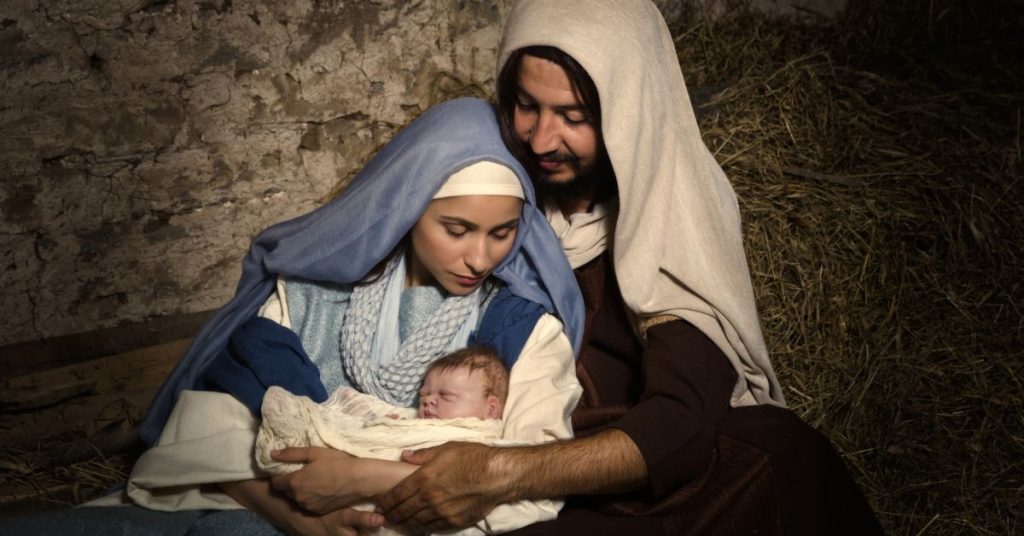
The gift of love is wrapped within the swaddling clothes of a tiny infant who would grow up and sacrifice his life so we can have hope and salvation.

If we take God’s love and gift to us out of the Christmas season, we are left with shallow rituals that momentarily spike our pleasure before dumping us back into the dull routines of life. If we forget this gift, we will not experience the joy, anticipation, and love attached to it.

May you experience the joy of that great love this Christmas. As you open presents and celebrate with family and friends, may you experience His gift of love and His Peace.

Hope and Faith

Listen to part 2 in this month’s series, “Focus on Your Spiritual Life”:

Part 1: A Christmas Invitation


Hope.

Many times in my life, things seemed hopeless. I felt as if I had run out of options and solutions. Like the Psalmist, I cried out to God:

“Hear my cry, O God; listen to my prayer; from the end of the earth, I call to thee, when my heart is faint.”

—Psalm 61:1-2

In those moments we realize we need much more than our own strength and ability to find solutions – we need God’s love, strength, and wisdom. We cry out for a miracle.

Hope.

When we have hope, we trust that something good might happen. But it isn’t a hope placed in the human world but a trust in God and a belief that He will never desert us.

We will face daunting challenges that require us to analyze and realize solutions. When these adversities involve the death of a loved one, a medical prognosis with no treatment options, or other life-altering events that drastically change our lives, we are left stunned, wondering what we can do.

Many people in life-threatening situations experience miracles. But what happens when we pray for a miracle and it doesn’t happen? Does that mean our hope is misguided?

I have experienced miracles that supersede rational explanation. But I have also experienced transformation as a result of placing my hope, faith, and trust in God. The miracle that springs from trusting God is receiving the wisdom, strength, and fortitude to work through tough times and impossible circumstances.

“For I know the plans I have for you,” declares the Lord, “plans to prosper you and not to harm you, plans to give you hope and a future . . .”

—Jeremiah 29:11

As we humble ourselves and place our hope and trust in God, we are given what we need to face any adversity or loss. With His help we can handle whatever crisis or tragedy we face.

What do you do when faced with difficulties?

Can you hope for a positive outcome?

Can you have faith that God loves you and will help you through life’s tough times?

Even a tiny whisper of hope can set us spinning in a positive direction. It plays a role in practically everything we do, from getting up in the morning to buying a lottery ticket.

Doctors respect hope as powerful medicine; surgeons are wary of operating on people who lack it.

Hope sustains us through petty crises and real adversity; it’s what keeps us from throwing up our hands and saying, “I just can’t hack it.”

Psychologists and social scientists want to harness hope as a force for change. They have discovered that most people never give up hoping; there is an art to hoping and we can learn it.

Hope . . .

Saves a life. When we believe there is a chance for recovery, our attitude and often, our general health begins to improve.

Encourages action. Working towards a goal as if it is happening right now can become a self-fulfilling prophecy.

Reduces stress. Hope is the light that keeps us from giving up in the face of great pain or distress.

Relieves pain. Doctors are familiar with the phenomenon of the placebo, where an inert drug results in the same result as a powerful drug. Its power stems from the combined hopes of doctor and patient. In fact, hope may activate the body’s endorphins, which are nature’s own painkillers. Both cortisol and prolactin (two hormones of the body) are affected by a positive attitude.

As we celebrate this Christmas season, let’s remember that it isn’t solely about decorations and twinkling lights. We are celebrating the birth of our Savior.

May your hope and trust be placed in the Son of God who came to earth to be our hope and salvation.