
Let's Talk

Book feature – Tales of Two Sisters

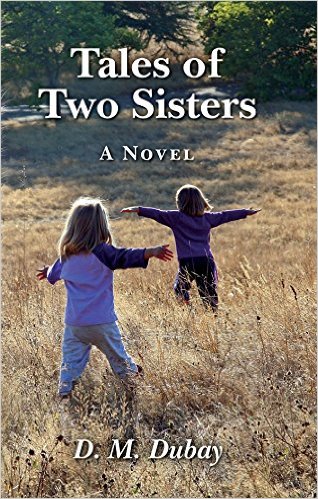
Tales of Two Sisters

As we reflect on the families we grew up in, we read stories and novels about siblings that perhaps remind us of our own experiences.

Sisters.

If you grew up with a sister you may remember the fights, the tears, the camaraderie, the secrets, and competition. You may have looked up to or felt inferior by the other. Perhaps you felt you were treated unfairly and when you left home, you took with you long-standing quarrels that were never resolved; both going their separate ways, hoping their paths would never cross.

Darlene Dubay is a first time Northwest author who has published her first novel about two sisters, their estrangement, setbacks and personal tragedies. Over the years, the sisters went their separate ways, married and had families. Separated geographically, they live two different lives that are full of tragedies, losses and re-discoveries.

Death, betrayal, troubled liaisons, and new loves and relationships are woven into this story of two sisters who are trying to find themselves amidst the fateful events that have touched their lives in different ways.

Both sisters suffer losses: one from death, another from infidelity. Both try to discover who they are within the complexities of their past and present lives. At the end of the novel they are brought together by a tragedy that impacts both sisters and their estranged families. But reconciliation is difficult as perceived hurts and injustices from their growing up years keep the struggle alive.

Woven into the story are Darlene’s own in-the-cockpit experiences as a professional Alaskan Airlines pilot. Darlene lived in Alaska and shares her background with flying in small planes as well. One of the sisters in her novel resides in Alaska, operating a small charter plane service. That sister’s husband flew the planes until he died in a plane crash when the son took over. We are privy to some of the beautiful, unspoiled wilderness of Alaska within the context of the story.

Darlene continues to write and is a member of the Skagit Writers. Her talents also include singing and we both sing with the Skagit Valley Chorale. It is a book you might enjoy reading.

Marlene Anderson

Also in the RELATIONSHIPS series:

Part 1: Relationships: Who Needs Them?

Part 2: Relationships: Where Do We Start?

Part 3: Relationships: Love Them or Hate Them

Love Them or Hate Them

MP900438417Do you remember when you were a teen and couldn’t wait to leave home? You couldn’t wait to live life the way you wanted to and didn’t want anybody telling you what you could or could not do.

Kids often can’t wait to leave home, establish their own rules and leave behind sibling rivalry, jealousies and what they might view as ongoing conflicts with their parents.

But like it or not, we take our families of origin with us. We can’t run away from them.

And whether we like it or not, we often end up repeating the behaviors we saw modeled – good or bad – even if we desperately want to do things different.

For those fortunate to grow up in nurturing and caring homes, we will have the support of our families as we leave home. We still want to be on our own, but will be able to appreciate the sacrifices and values and discipline we had as kids especially when we start our own families.

But for those who grew up in less than nurturing environments, were subjected to emotional or physical abuse, leaving home represents freedom from neglect and less than favorable family dynamics. They want to remove themselves as far as possible from their family of origin.

The only way we can keep from repeating what we learned as children, including abuses, is by processing and resolving any unfinished business of our childhood. That means going back and untangling the web of conflicts that don’t go away just because we have left home.

Families have an enormous power on us and our lives.

If we come from a supportive home, we will learn that disputes can be settled and we can set boundaries without hurting someone else. We learn how to engage with others even if it is imperfect. We will know that we can trust and get close to others without always having to feel suspicious and wary.

It is in our families where we develop a sense of worth and esteem, have our first contact with the values and principles that were important to our parents. We may modify or reject them later, but they are the basis of our first core beliefs about life.

We do not have to repeat the patterns we grew up with; but we need to be aware of them, take time to process and release ourselves from past neglect and abuses, and choose different rules and values to live by.

If you are constantly having relationship problems that repeat themselves over and over again, it might be beneficial to look back to your family of origin. Take time to explore and understand your relationship with your family.

  • How do you feel when you return home as an adult? Do you find yourself feeling and reacting as you did as a kid? Are those good feelings or unpleasant ones?
  • Have you been able to establish an adult relationship with your parents? If not, why not?
  • Have you been able to get beyond the sibling rivalry of your childhood? Have you allowed old battle wounds to heal as you interact with each other now as adults?
  • Do you find yourself reluctant to visit or phone your parents or family members? To what do you attribute those feelings?
  • Do you find it difficult to understand or forgive those who may have hurt you? Hanging onto grievances only harm us. What will it take to let go of them? Forgiveness allows you to put the boundaries in place that may be necessary.

 No family is perfect.  Parents will never meet all the needs of their children.  But even in imperfect homes, we can know we are loved no matter how strict the rules or how difficult the circumstances.


Marlene Anderson

Also in the RELATIONSHIPS series:

Part 1: Relationships: Who Needs Them?

Part 2: Relationships: Where Do We Start?

Part 4: Relationships Book Feature: Tales of Two Sisters

God Bless America

j0444741Firecrackers popping, potato salad made. Pop and beer are in the cooler covered with ice and we congregate as friends together to watch the evening fireworks.

The 4th of July – it is one of our favorite holidays.

It is a favorite because it represents freedom, independence and liberty.

We are free to be our own person, free to move around and make our own choices.

We have autonomy and self-determination.

Our liberty was bought with the blood, sweat and tears of others who stood up for what was right and fought to help our country become free and remain free.

That liberty assures us that we are free from tyranny, unreasonable control and restrictions of a despotic, arbitrary or over-reaching government.

What are we doing with that freedom?

When we apply that independence to our everyday life, we are challenged to use it with wisdom and self-discipline.  We can use our freedom to destroy or to build up.

We are free to build lives of caring and compassion or lives filled with bitterness and nursed grievances. We can choose to reach out and help our neighbor, or build higher walls of intolerance to screen out the need of others.

We cannot legislate love and tolerance instead of hate and prejudice. It is a matter of the heart – not law.

We choose to let love rule instead of hate. We choose to use the skills and talents God has given us to build something meaningful or remain mired in helplessness.

We choose to pick up the tools of diligence, commitment and determination rather than blaming God and others for our misfortunes.  The one empowers – the other self-destructs. The first will ignite our creativity, ingenuity and resourcefulness. The other will erode our sense of worth and esteem.

What does the 4th of July mean to you?

I hope it means more than flags waving, parades, and bands playing. We get caught up in the celebration and it is easy to gloss over the sacrifices that was made so we could be free.

I pray that God will strengthen me to use this freedom and liberty I was given to serve Him and others.

I pray that God will give me the wisdom to make the right choices even when they are tough ones.

I pray that God will teach me how to love and be compassionate and to use the blessings He so generously gave me to reach out and help those in need.

I pray that God will grant mercy and grace to a nation that so often forgets that He was the reason why we were able to become a great nation in the first place.

Marlene Anderson

Where do we start

Woman and young girl embracing outdoors smilingWhat is the earliest memory you have as a child and the relationships you had? Was it pleasant or sad?

We are shaped and molded by people and events as we grow up.

The experiences we had as a child affect our relationships as an adult.

Max Lucado in one segment of “Traveling Light for Mothers writes about a “wedding reenactment” they did at his church. In this staged drama the thoughts of the bride and groom were revealed to those watching as they stood before the pastor and the altar.

Each had armloads full of “excess baggage” of “guilt, anger, arrogance, and insecurities” they were bringing with them to this new relationship.

Each believed they were marrying the person who would help them carry or relieve them of their load, and would take care of them.

As they stood before the congregation, their “baggage”, typically unseen, was piled high around them.

What did you bring with you to your significant relationships?

What did you learn as a child? Did you learn to trust, have faith, how to share and get along with others? Did you feel loved and accepted even when your behavior didn’t warrant it?

Or did you learn that nobody cared, you were helpless to make any changes, and were told over and over again how worthless, stupid and insignificant you were? Did you learn to shrink in the background so you wouldn’t be noticed?

Did you learn that no matter how hard you tried you were never quite good enough and would never amount to anything? Did you learn that relationships were just constant arguments and fights and power struggles?

Gregory L. Jantz, PH.D, wrote in his book, “Moving Beyond Depression”, about the importance of reviewing the family dynamics we grew up with. When we can identify those relationships that were unhealthy and destructive, we can also begin to identify those that were supportive and significant and work on strengthening those. That includes the relationship we have with ourselves.

If you have been in some troubling relationships, here are some questions you might like to ask:

  1. What was your best relationship and what made it successful?
  2. What was your worst relationship and what made it so bad?
  3. What do you want in a relationship? What do you give and what do you expect in return?
  4. What relationships are destructive in the long term and you ready now ready to let go of and which ones do you want to strengthen?
  5. What kind of relationship do you have with yourself? With God?

As you explore the answers to these questions, you might want to consider reading about some of the relationships we find in the bible. Consider the following:

  • Genesis 4: Cain and Able – brothers
  • I Samuel 18-20: David and Jonathan
  • Job: Job and his not so helpful friends
  • I & II Timothy: The Apostle Paul and Timothy
  • Ruth: Ruth and Naomi – mother-in-law and daughter-in-law
  • The 4 Gospels: Jesus and his disciples

Relationships are important. There is so much we can do to both establish and strengthen good relationships as we let go of those that might feel good in the moment but are destructive over time.

Marlene Anderson

Also in the RELATIONSHIPS series:

Part 1: Relationships: Who Needs Them?

Part 3: Relationships: Love Them or Hate Them

Part 4: Relationships Book Feature: Tales of Two Sisters

Relationships – Who Needs Them?

Couple on BeachPerhaps you have experienced misplaced loyalty, broken commitments and trampled expectations from those you considered friends, colleagues and spouses.

If you have been hurt in relationships, you may ask: Relationships – who needs them? Wouldn’t it just be easier to stay out of any serious relationship all together?


And yet, we are social animals and require social interaction to survive. Consider this post from Jeney Cadell, PsyD who writes in her blog, How Healthy Relationships Change our Brains,


“We are much more interconnected than we realize. As technology advances and we are able to actually see into the human brain, we now have proof of this.”


Research is literally showing evidence that we are hardwired to connect with each other and “that healthy relationships actually soothe our brains.” Technology is allowing us to see what is happening within our brains.

We were not meant to face “the trauma and difficulties of life” by ourselves. Creating secure bonds is important for our health.


Consider the following statistics from several years ago when I put together my class on relationships:

  • Socially isolated people are two to three times more likely to die prematurely than those with strong social ties. The type of relationship doesn’t matter: marriages, friendship, religious and community ties all seem to increase longevity.
  • Divorced men (before age 70) die from heart disease, cancer, and strokes at double the rate of married men. Three times as many die from hypertension; five times as many commit suicide; seven times as many die from cirrhosis of the liver; and ten times as many die from tuberculosis.
  • The rate of all types of cancer is as much as five times higher for divorced men and women, compared to their single counterparts.
  • Poor communication can contribute to coronary disease.  One Swedish study examined 32 pairs of identical twins. One sibling in each pair had heart disease, whereas the other was healthy.  Researchers found that the obesity, smoking habits, and cholesterol levels of the healthy and sick twins did not differ significantly. Among the significant differences, however, were “poor childhood and adult interpersonal relationships” – the ability to resolve conflicts and the degree of emotional support given by others.
  • The likelihood of death increases when a close relative dies.   In one Welsh village, citizens who had lost a close relative died within one year at a rate more than five times greater than those who had not suffered from a relative’s death.

Do we need each other? Yes, I think we do.


Marlene Anderson

Also in the RELATIONSHIPS series:

Part 2: Relationships: Where Do We Start?

Part 3: Relationships: Love Them or Hate Them

Part 4: Relationships Book Feature: Tales of Two Sisters

He said – She said

Man and woman shaking hands isolated on a white background.“That’s not what I said.”

“Yes it is, I heard you.”

“You always try to pin the blame on me. If you stayed home once in awhile instead of going golfing, this wouldn’t have happened.”  

“Oh, and how about you – you are always out with your girlfriends shopping again…. “

And round and round and round it goes. And we end up with two angry people who continue to find ways to attack, defend and destroy each other.

Have you ever found yourself in such a situation? The anger we feel is intensified as we go along. We dig in our heels believing we are right and refuse to budge.

How did we get into this conflict in the first place? And how do we get out of it? Everybody wants their needs met. Everybody wants to win. Everybody wants to be liked and appreciated and respected and…..    and the list goes on.

When we find ourselves in an ongoing conflict, we believe that if only the other person would see my point of view, we wouldn’t have to have such discussions. If you cared, wouldn’t you understand my needs?

The only problem with this is the other person is saying the same thing. And since neither person at this point is listening to the other, the conflict simply intensifies.

Conflicts may be divisive, but they can be great teachers

Relationships are never perfect. But it is in them where we learn we are not the end all or the greatest thing on God’s green earth. It is where we discover the art of give and take and that we don’t always get what we want. Compromise and negotiation and sometimes sacrifice is part of the package.

The hidden question within our conflicts is, what do I really want? What do I need from the other? What does the other need from me? What will be different – what will remain the same? What is the most important priority in this conflict? Am I willing to work towards a win-win?

We enter relationships because we need people. We want to be loved and accepted for who we are in spite of our shortcomings. We want to be heard and understood. We want what a relationship can bring, but we aren’t always prepared to work on making it last. Yet, moving in and out of relationships is not very satisfying over the long term.

Several years ago, I put together an eight week class on relationships for my church, drawing from my training and teaching as well as my own personal experiences. Over the summer my blogs will focus on relationships: with friends, spouses and partners, our children, and with God and ourselves.

While I started with an example of conflict, the series will cover communication and establishing the rules for asking for what you want, negotiation and conflict resolution.

When the series is over, it will be offered in book form to those who are following me.

I would love your feedback. Relationships are personal and while I can address this in more general terms, your input can make these blogs even more relevant.

Marlene

Five Easy Steps

 Woman and young girl embracing outdoors smilingWhy have I spent so much time on the topic of anger?

Because it is so prevalent and we see its destructive powers everywhere. Like summer wildfires, the results of anger unleashed and unchecked by reason leave behind a path of destruction. Our lives, too, can become tinder boxes ready to explode with just a spark of irritation.

As therapists we see the results of growing up in homes where anger is out of control. The wounds and scars run deep.

Unless recognized, addressed and changed, the patterns of behavior repeat themselves from one generation to another.

Shame, guilt, fear and sometimes downright terror often keep us from getting the help we need. Yet getting that help is the most freeing thing you can do.

Listen to what your anger is telling you. Maybe it’s time to review your priorities and goals. What is most important in your life – your career or your family? Do you spend time with your kids? If you grew up with constant turmoil, conflict and anger, you may be repeating those patterns with your children.

We are not doomed to repeat patterns that are destructive. Knowledge gives us power to change directions, heal and put in motion a different set of rules. Find a good therapist who can help you unravel the roots of your anger.

Five Simple Steps

Here are 5 simple steps to express anger effectively and channel it appropriately. It is a learned skill.

1.When you feel angry, STOP. Don’t immediately react. Take some slow, even breaths. Count to ten if necessary to calm down. Then ask yourself if the anger you feel is appropriate for this situation. If not, what hidden issues are being triggered making this worse?

2. When you are feeling calmer, ask yourself, what do I want to accomplish? What do I want to have happen? Will an angry outburst give me the result I want? We don’t have to be afraid of our anger; we just need to weigh carefully the outcome.

3. Shift from feeling to doing. Move from anger to a clear plan of action. Don’t just feel hurt and angry. Do something constructive about it. Start a conversation. Evaluate and problem solve.

4. Do not accuse. Shifting blame or using accusatory statements only increases the problem. Take responsibility for what you do and say. Instead of saying, you make me so angry, say; I get really angry when this is happening. Then state clearly and simply what you would like to have happen. Focus on what you want versus putting a guilt trip on someone else. Be willing to negotiate or compromise a solution.

5. Listen Each of us come to confrontations and conflicts with our own set of rules, perceptions and agendas. Unless we are able to listen and discuss we will continue to be in our battle zone.

Learning any new skill takes time and practice.

Put in place a prevention plan to reduce the possibility of anger outbursts. Here are some things that will help.

  • Recognize your trigger points. Replace angry thinking with problem solving. Continue to keep an anger log until it no longer is a problem. Remind yourself you no longer what to be reactive.


  • Have someone model appropriate coping strategies for handling stress and anger. Rehearse them and get feedback. Practice these new skills as often as possible.


  • Use relaxation techniques to reduce your stress levels during the day. Mentally visualize yourself reacting in a way that will meet your goals.


  • Become aware of those times and places when your anger gets triggered. Avoid them if possible. Learn effective communication and conflict management skills. Ask for what you want and listen to the other person’s point of view.


  • Clarify your values to reduce irrational thinking. Expand your frame of reference. Replace negative thinking with constructive problem-solving, empathy, positive self-talk and affirmations.


  • Re-direct your anger. Put it into constructive action. Turn it into humor.

Believe in yourself.

Ask God for the strength and courage to be honest with yourself.

When we can acknowledge our vulnerabilities, fears, and perceived weaknesses, we will discover how free that makes us. But if we continue to hide our vulnerabilities, they will rule our life and we remain a prisoner of them.


Marlene Anderson

Wildfires


Brush Fire Along I-84We are entering the summer fire season, when everything becomes tinder box dry and all it takes is a spark to set in motion a wildfire that can wipe out acres and acres of trees and homes in a short amount of time.

Last summer we saw the devastation of such an event in the eastern part of our state.

If caught in time, fires can be extinguished. If not, they soon become a raging, out-of-control inferno.

It is also time when families take summer vacations, kids get grumpy, parents are stressed to the max and the well of patience has dried up. Even minor irritations become tinder boxes ready to ignite. Once a “wildfire” begins, it quickly feeds upon itself.

The Anger Habit

Anger can become a habit. But like any habit, it can be replaced. We can easily become addicted to anger as our first response to situations. We are the ones who decide whether to get angry or laugh, problem solve or walk away.

Here is how an anger cycle gets started

1. Triggering event: Some event triggers a reaction from us. It might be gestures, profanity,    disrespect, bullying – anything that we perceive as emotionally threatening in some way.

Within families it is that immediate reaction to a child’s temper, talking back or ignoring the rules. We can change our response at this juncture.

2.  Warning signs: emotional and physical. Identify the other first response emotions you are experiencing. Some of those first feelings might be feeling hurt, anxiety, threat, fear, surprise or a combination of emotions. They often go unnoticed, but we can train ourselves to become aware of them.

Go back to other times when you got angry. What were you feeling before that anger kicked in? What were you saying to yourself?

Physical signs include tightening of the jaw, change in breathing, inability to speak slowly and distinctly, altered posture, intense eye contact, facial tics, and flushed complexion. Ask those around you if they see these signs. Then become aware of them yourself.

3.  Thought patterns: feelings don’t happen on their own – they are a response to our interpretation of what is happening.

Ask yourself, why am I getting so angry? Is this incident worthy of this anger response? Is there another way to solve the problem? Has anger worked for me in the past? If not, what did I want to accomplish that my unchecked anger prohibited?

We have three choices available to us with anger:

We can get angry and fight

We can get angry and flee or run away

We can choose to maintain our self-respect, develop the courage to say to ourselves, I am going to engage in a positive way or I will choose to walk away.

It takes courage to walk away.

Courage is defined not just as the ability to conquer fear or despair, but choosing a course that is not easy but requires caring and a purposeful decision.

4. Battle signs: When we have reached the battle stage, we are in fighting mode. We gear up to destroy our enemy and to defend ourselves. The problem is the battlefield is our families, homes, places of work, and the communities we live in. The enemy we kill is our loved ones.

5. Engagement: As we engage with anger, we lose control of our emotions and what is happening. Anything goes – we are no longer in control of what we are doing.

6. Consequences: When anger has spent its emotional power, we can see the devastation it has produced and those who have been wounded. Sometimes the wounding can be fatal in terms of our relationships. When we choose our responses, we choose their consequences as well.

7.  Recovery: The battle is over, emotions calmed down. We have an opportunity to examine what has happened. If you take time to do an assessment and are really honest with yourself, you will be able to answer the following: Did I accomplish what I wanted?

8. The same old way: If we do not assess the consequences, we will continue the same pattern over and over again. The cycle continues. Only the fallout gets worse.

We can change directions, replace habits, and discover different ways to resolve problems by recognizing our patterns of response to events, asking some pertinent questions and then taking time to prepare ourselves for different responses.

Marlene Anderson

Anger – The Misunderstood Emotion

MP900285119Anger – I don’t like it! I don’t know what to do with it! I don’t want it in my life!

In my last blog entitled, “Do you have an Anger Problem, I listed a series of questions that can help identify an anger problem.

If you think you have a problem with anger, don’t be afraid of it. Recognize the symptoms and redirect the energy to finding solutions.

What should I do if I have a problem with anger?

  • First, go over the list of symptoms in last week’s blog. Do you see yourself there? If you think anger may be a problem for you, admit that possibility and take the next step.
  • Keep a dairy for at least a week. Mark down every time you get angry. What triggered your anger? What did you say to yourself? What other feelings were you experiencing? What was the first action you took after your anger was triggered? Did it resolve the problem or conflict? Did your response to this situation help or hurt you?
  • There are thoughts and long held beliefs attached to our responses to events. It isn’t the events themselves that cause our emotional reaction; it’s our interpretation of those events – what they mean to me. Sometimes those meanings come from long-held grievances that when examined are hurting me. Make a conscious decision to let go of them. We can challenge our thinking and expand or alter our interpretation.
  • After you have kept a record for a week or so a pattern will emerge. Has your anger become a habit? Is it just an easy way to deal with irritations? Are you using your anger to protect that “younger self” that was wounded when you had no way to defend or protect yourself? We can use our anger to become assertive without attacking or hurting the rights of another.

An anger problem not only hurts us, but those around us: our spouses, partners, children, relationships, colleagues, etc. Whether acting passive-aggressively or aggressively, others are affected.

Remember that even if we don’t physically attack someone, the words we use not only hurt but injure the spirit and psyche of others. They are weapons that inflict deep wounds that can last a lifetime!

If your own wounding triggers ongoing, unnecessary anger, consider getting professional help.

Next month’s blogs will have a focus on conflict resolution and becoming assertive. Remember: when you are angry, you are trying to fill some need. We can do that without attacking and defending.

If you find yourself getting angry in any situation, step back. Take some deep, slowing breathes. Count to ten or even twenty if necessary. Ask for a time out if anger levels are rising when in a heated argument.

Go for a run or walk around the block. As your anger levels lower, think about what you want and how to ask for it while listening and considering the needs of others as well.

My blogs next month will continue on this series of unspoken stress and will focus on how to deal with anger in others, becoming assertive and negotiating conflicts in our relationships.

For more information on turning your distress into productive stress, my book, Use Stress to Meet Your Goals: 12 Steps to Understanding Stress and Turning it Into a Positive Force, with MP3 recording of each chapter is available on my website for only $19.95. 

Marlene Anderson

Marlene Anderson to Guest on Radio Show May 28

marleneI’m going to be the guest on a live call-in radio show today, Thursday, May 28, 2015 at 4:30 p.m. PDT/7:30 p.m. EDT.

The show is called “The Word for Today Is… and the host is Stephanie Hill Williams.

We’ll be discussing what it means to be a counselor and life coach, and what led me to the publication of my book, A Love so Great, A Grief so Deep, and my upcoming book, From Winter to Spring, with time at the end for questions from listeners.

Here’s the recorded version of the show. My interview starts 7 minutes in to the podcast.

Check Out Motivation Podcasts at Blog Talk Radio with Stephanie Hill Williams on BlogTalkRadio