

Let's Talk

Leftovers

Family Pulling Party Favors During Christmas DinnerI love leftovers. I love Thanksgiving dinners: turkey, mashed potatoes, gravy, and all the other special foods and recipes brought out for our traditional dinners.

But I enjoy the leftovers almost as much: warmed in the microwave, I continue to savor that turkey, stuffing and warm gravy.

However, there is more than just the food leftovers that I want to take home with me. I want to take the camaraderie, the moments of laughter when the past wasn’t remembered and the moment was simply enjoyed.

As we stopped and listened to each other for a moment longer than usual, took time to thank and appreciate all the work and effort of our host and hostess it left a glow of togetherness, friendship and closeness.

But most of all, I want to take home with me the leftovers of gratitude – those things that I was grateful for in that moment when we bowed our head and gave thanks to God for all we had. It is those moments of gratitude that I want to taste every day, not as simple leftovers, but as a regular staple of life.

For if I continue to count my blessings I will slowly begin to see loveliness in the loveless, hope in the hopeless, something special in the mundane of life. I will search for strength when I feel weak, understanding when I feel irritated, and compassion for those who struggle against great odds.

I not only want to hang onto the positive memories, but continue to build on them. This is not wishful thinking or unrealistic optimism; but a purposeful decision I make each morning when I wake. It is a challenge I give myself to turn from the hurtful to the forgiving, to let go of grievances instead of hanging onto them, and choose to build on the beneficial instead of the negative.

I can affirm my choices as I respect others’ decisions. I can work on developing my potential while reaching out to others with a helping hand as they develop theirs. I can affirm my strengths while encouraging others to recognize theirs.

There is so much I can do to continue to build my grateful lists. The benefits are huge and the cost is minimal.

Marlene Anderson

Receive a Free Consultation: Fill out the contact form to receive a free consultation about Personal Life Coaching, speaking engagements, retreats or teaching workshops for your church or women’s groups on relationships or other topics that affect our lives.

Sign up today to receive the entire series:  http://eepurl.com/baaiQ1

 

Things For Which I am Grateful

advertising pictures033Thanksgiving – A time to get together as families and celebrate – giving thanks for what we have been given throughout the year.

While the tradition is deep-rooted in our culture, with long distances between family members and time constraints, it is becoming more difficult to find the time to get together.

Add to that fractured families, where unkind and hurtful things in the past keep us defensive; even when we do get together it is difficult to let go, relax and be thankful for one another.


We want peace in the world but we don’t necessarily want to seek it in our own homes.


It is difficult to seek out blessings when life is in turmoil. You may be faced with the loss of a job, a spouse who is dying, a best friend’s betrayal, a marriage that is unraveling or invasion of cancer. And yet, there are so many things to be grateful for if we just took the time to consider.


“We would worry less if we praised more. Thanksgiving is the enemy of discontent and dissatisfaction.”  ~ Harry Ironside


In a recent psycho-educational training workshop entitled, “Happiness: How Positive Psychology Changes Your Lives”, we learned that research shows that practicing the art of gratitude has a huge impact on reducing depression and anxiety. We were encouraged to do the following three Gratitude exercises and then assist our clients do the same. I share them with you today.


Exercise 1: Pick a person you know within driving distance and write a 1 – 2 page letter of appreciation to that person. List the things that were helpful to you or assisted you in some way for which you are grateful. Increase its importance by framing or laminating it. Call the person, go visit and read it to them. Then leave it with them.

Exercise 2: Jot down 3 things that happened within the past 24 hours that you feel good about and would like to see continue. Then write down one or two things you did that made you feel good, right, ethical or noble and anything else that you approve of.

Exercise 3: This gratitude exercise is for the challenges that we receive. Jot down something that upset you. Now reframe the situation by brainstorming all the ways that this challenge might be a blessing in disguise. How can you turn it to your advantage? What good can come from this?

Start a Blessings or Gratitude Diary


Every day record 3 to 5 things that you liked.

  • What happened?
  • Why did it happen?
  • What did I do right?
  • Why did I do that?


Then write about one thing that you didn’t like and ask yourself,

  • How could I turn that around and make it a blessing in disguise?
  • How could this be a lesson that is helpful.


“I will praise the name of God with song, And shall magnify Him with thanksgiving.

Psalm 69:30  


It isn’t just the Bible that teaches us to be thankful and recognize our blessings, but also the science that God has given us. We are able to measure the results of gratitude mentally, physically and spiritually.


Thanksgiving

For each new morning with its light, For rest and shelter of the night, For health and food, For love and friends, For everything Thy goodness sends.

Ralph Waldo Emerson


When I was mourning the loss of my husband, I started making a list of all the blessings that God was giving me each day. Finding those things of gratitude helped me heal.

What am I thankful and grateful for today? Here is just a partial list.

I am thankful

  • For God who loves us so much He sent His Son to die for us
  • For my family who I love very much
  • For loyal friends that are there for me when I need help
  • For the ability to be a friend and help others in the time of their need
  • For the capability to seek and accomplish meaningful and worthwhile work
  • For the discretion to choose love instead of hate
  • For the many, many freedoms I have living in this country


This Thanksgiving, I not only want to thank God for all the things for which I am grateful for, but I also want to pray for those who struggle:


O God, when I have food, help me to remember the hungry; When I have work, help me to remember the jobless; When I have a home, help me to remember those who have no home at all; When I am without pain, help me to remember those who suffer, And remembering, help me to destroy my complacency; bestir my compassion, and be concerned enough to help; By word and deed, those who cry out for what we take for granted. Amen.

-Samuel F. Pugh


Have a very Blessed and Happy Thanksgiving

Marlene Anderson

Receive a Free Consultation: Fill out the contact form to receive a free consultation about Personal Life Coaching, speaking engagements, retreats or teaching workshops for your church or women’s groups on relationships or other topics that affect our lives.

Sign up today to receive the entire series:  http://eepurl.com/baaiQ1

Are my struggles worth it?

Couple Holding HandsWe all want to be happy. And we want our marriages to not only last, but grow better over time. While some relationships will fail for a variety of reasons, being willing to identify and work on the problems we face is the first major step to a meaningful relationship.

The first years of a marriage tend to be the most vulnerable and statistics reveal that reality. When we are passionately in love, we believe it will last forever.

However, work schedules, babies, chores and home maintenance soon become the focus and we can quickly get mired in daily problems. Add in personal careers and the stresses increase and the relationship begins to suffer.

It is easier than ever to get a divorce and people often hold the mistaken belief that if they get out of their current relationship, the next one would be the one that will make them happy. However, again, the statistics reveal a different picture.

Consider the following divorce stats in America:

1st marriage     45-50% end in divorce

2nd       “           60-67%     “

3rd       “           70-73%     “

In a study in 2004, around 16,000 adult Americans were asked whether they were happier with multiple partners and the response was no – they were happy when they were attached to just one person.  People do want a long term relationship.

What are some of the causes of divorce?

While many reasons contribute to the breakdown of a marriage, the following research data is worth reviewing:

  • Some sociologists believe childlessness is a common cause of divorce because the “absence of children leads to loneliness and weariness.” In the U.S. at least 66% of all divorced couples are childless. (From Divorce Magazine)
  • A breakdown in communication was cited as a major cause in a recent study by the American Academy of Matrimonial Lawyers (AAML). It showed that approximately 67.5 percent of all marriages failed because of arguing, the inability to understand the other spouse, or total lack of communication.
  • Another predominant factor was infidelity. Almost 30% of all divorces involved cheating on their spouse. Infidelity leads to further communication problems and distrust. Yet there are many marriages that survive cheating. Many prominent studies show that infidelity is the result of a marriage already in distress as spouses reach outside the marriage for comfort and understanding.


What can add the most distrust to a marriage?


  • According to experts on marriage and psychology at Loyola University Medical Centre, social media, and Face book in particular, is becoming more and more responsible for dissolving marriages.  This reason may factor into infidelity and communication problems as well.
  • Some US lawyers and academics also classify Face book as the leading cause of marriage problems and part of the number one reason for divorce.  According to a study done by the AAML in 2010, four out of five divorce lawyers stated they are seeing increased numbers of evidence pulled from social networking websites that showed contradiction to a spouse’s statements and evidence of infidelity, unreasonable expenditures, and even fraud.  When you are on the internet, you are not interacting with your partner.

See the following links for more information. http://divorce.laws.com/number-one-reason-for-divorce and http://divorce.laws.com/number-one-reason-for-divorce#sthash.Ytu3GHP5.dpuf


In a recent article by Eliana Osborn in the October 15, 2015 Real Simple magazine, she writes that  many relationship experts indicate 4 common problems couples face that lead to the ending of a marriage.


  • Letting a problem go on unaddressed for years. Little irritations built to giant proportions. If it is an ongoing irritation to you, schedule a time to sit down and talk about it.


  • Feeling disconnected from one another. When the busyness of life keeps people from spending time with one another, there is a disconnect. Couples start taking each other for granted. Hurt feelings gradually become resentful feelings. Schedule time every day, even if only for ten minutes, to talk with your partner. Talk about fun or silly things. Tell your partner how much you appreciate him/her. When criticisms become the norm instead of appreciation, the relationship soon gets into trouble.
  • Avoiding confrontation often leads to distancing. We don’t talk about problems because of past negative consequences. But unless issues are addressed, they will only get worse. Confronting requires being willing to listen, compromise and negotiate; it isn’t about changing the other’s values or beliefs.
  • Getting stuck in patterns of behavior that go around and around without resolution. In the process we start playing the blame game and taking a victim stance. You have the same argument; you turn away from rather than towards your spouse, to others – co-workers and friends – to complain instead of talking directly to their partner.  It is easier to complain than identify the problem and articulate what you want.

Anything of value is worth tending to.

If you valued your relationship once, what is keeping you from reclaiming that value today?

We need each other. We need healthy, viable relationships whether it is between husband and wife, parents and children or extended families. We need friendships we can rely on. It keeps us young, physically and emotionally healthy and believe it or not, boosts our brain power.

Marlene Anderson

Receive a Free Consultation: Fill out the contact form to receive a free consultation about Personal Life Coaching, speaking engagements, retreats or teaching workshops for your church or women’s groups on relationships or other topics that affect our lives.

Sign up today to receive the entire series:  http://eepurl.com/baaiQ1

A Hidden Agenda

Woman on Beach Looking at Ocean

I’ve tried the communication model, but it seems no matter what I do, we still end up arguing. It just doesn’t seem to be working. Any serious discussions just keep breaking down.

When I bring up a point of disagreement or conflict, it is interpreted as a criticism and is countered with a negative jab at me. I am reminded of when I did this and that and pretty soon we don’t even remember what the current problem is because we are too busy trying to resolve past issues that are no longer relevant.

Why isn’t all this communication stuff working?

Like any skill we develop, communication is an aptitude that needs to be practiced over time to gain competence.


And like any habit we put in place, it is easy to get discouraged and we go back to old ways of doing things.


How do we stay on topic?


Too often we come to our interactions with a hidden agenda – something that isn’t always clear to us at the time. We want the other person to listen and understand our point of view; we don’t necessarily want to hear theirs.

.

We don’t come to resolve problems, but to convince the other person that they need to change what they are doing or not doing.


Honest Conversation


What is your honest motive when you are in a sensitive discussion? What do you really want to have happen?  If your secret agenda is to find fault, the discussion will soon break down.  If, on the other hand, it is to genuinely work together to find solutions, your listening, validating and clarification skills will improve. Highly charged emotional differences and problems are never easy to resolve.  It takes both people to come with the desire to work together on them.


If communication continues to break down, ask yourself 


  • What do I want the outcome to be of our conversation?
  • Have we adequately defined the problem?
  • Am I honestly trying to understand the other person’s point of view?
  • Is revenge or pay back more a part of this discussion than I want to acknowledge?
  • Am I willing to negotiate and compromise?
  • What am I prepared to do to improve both our conversations and our relationship?


Anything that is worthwhile in life requires effort and work. Anything of value is worth working to preserve. The benefits are so rewarding.


Think about a beautiful garden that you enjoy. In order for you to continue that enjoyment it requires diligence in pulling weeds, trimming the bushes and digging the soil. A beautiful home will soon become a scene of chaos unless we maintain it.


A promising relationship will soon die if we do not work to keep it vital and flourishing. Without maintenance, it too will quickly dissolve into chaos.

Here are some ways to maintain and help your relationship grow


  •  Take time to do things together that are pleasant for both of you.
  •  Have discussions about positive occurrences and mutual interests.
  • Reframe past negative experiences into more positive ones
  • Look for and express your appreciation of the other. Compliment them for the things you appreciate and admire often and spontaneously
  • Eliminate labeling, vilifying and stereotyping the other person
  •  Refuse to play the blame game or constantly find fault. Stay on task and speak to the issues and not personal global faults
  • Try to see where the other person is coming from. It’s okay to disagree and still respect the other’s point of view.
  • Speak honestly about your needs. Share them without making the other person feel responsible. Work together to meet relationship needs and goals.
  • Respect the others viewpoint and position. Let them know that it is as valid as yours and that you both can be right.


Relationships take a commitment and a willingness to give and take – a desire to know each other better. It is where we realize the joys of intimacy, emotional connection and deep friendship. Within a safe place of mutual respect and support, we can be ourselves and share the challenges and struggles we face. Believe the best of yourself and the other.


Relationships take effort and work.  If this relationship is significant, then it is important for you to explore what it will take to make it grow and thrive. Then start doing those things.

Marlene Anderson

Receive a Free Consultation: Fill out the contact form to receive a free consultation about Personal Life Coaching, speaking engagements, retreats or teaching workshops for your church or women’s groups on relationships or other topics that affect our lives.

Sign up today to receive the entire series:  http://eepurl.com/baaiQ1



That’s Not What I Meant!


MP900285119“But you said. . . .”

“No, I didn’t. . . .”

“Yes, I heard you say. . . . .”

“Well, that’s not what I meant!”


Have you ever had such a conversation with your children or your spouse? You were sure you said what you believed would be easily understood. And yet, that is not what the other person heard.


When we talk to one another, communication is traveling both ways. Messages we send and the messages we hear are colored and often distorted by the filters we have. What sounded clear to us was not heard the same way by another..


Because messages are being loaded on each side of the interaction, by both the speaker and the listener, communication can become unclear and misleading.


We can better make sense of the process if we think about the messages we send as going through a filter that reflects your life in the moment. The message received is also going through a listener’s filter. When we become aware of our filters, we can better transmit messages.


What are some of the filters that make communication difficult?

When you get up in the morning grumpy and tired from lack of sleep your mood will influence how you speak. If on top of that you have had a bad day at work, everything went wrong that could go wrong and you return home angry and even more tired. Let’s say the kids are having a great day and are especially exuberant – but you see it as not being considerate about others in the house, your tone and speech will reflect that. If you have been troubled by events that affect you and your spouse, unspoken conflicts that grow in tension, you tenor of voice will reflect that as well.


On the receiving end, your child, co-worker, spouse, boss or anyone else you are conversing with will have their own problems of the day, unsolved problems, unresolved conflicts and concerns. They may be having a good day while you are having a bad one. They may be fighting off a cold and not be as attentive as you think they should.


The messages sent and received will take on a whole new persona. How you feel in the moment, your psychological state of mind and the aches and pains you have will all affect how you formulate your conversation and how the words are heard.


So, is there any hope for us?


Yes. Here are some simple things that can help.


Listening and Validation


A good speaker states exactly what he or she is thinking, wanting or feeling.

A good listener makes sure the intent of the speaker’s message is understood. We do that by asking questions or giving feedback instead of just filling in the gaps with assumptions or guesses.


Feedback


When you give feedback you tell the speaker how you have interpreted the message sent. You are asking for clarification of what you heard, you don’t just assume. If the conversation is turning into an argument, you ask for a stop in the conversation – a request to stop a moment to check on feelings, intent and impact.


“Let’s stop a minute. I think we are getting away from the problem at hand?” or

“Wait, stop a minute. How are you feeling right now?”


Messages contain both content and emotional meaning.


“You promised to go on a family outing this Saturday

I am upset that you have made different plans.”


Give appropriate feedback through paraphrasing, clarification and perception checks.


Paraphrasing is rephrasing or rewording what was said. This is especially useful when instructions are given. It can prevent incorrect inference about instructions given or you are unsure of what you heard and understood was accurate and intended. The person paraphrasing is not being disrespectful or insulting.


Clarification is stating what was said in your own words. It explores the meaning of what was said:


“I heard you say _____________   Is that true?

“Did you say __________ ?

“Do you mean _____________?


Perception Check is when we describe the other person’s feelings. A perception check is not used to express disapproval or approval but simply conveys the desire to better understand how the other is feeling.


“This is how I understand your feelings. Am I accurate?”

“I get the impression you are angry with me when you become quiet. Are you?

“Am I right that you feel disappointed when your mother criticized you?”

“I am not sure if you are confused or angry at me?”


The next time you are in a conversation and you find yourself getting irritated, check your feeling state and what is going on in your life in the moment.  Check the things that might be making your conversation tense for potential misunderstanding. Make adjustments. If you are a listener, do the same and then use the skills of paraphrasing, feedback and confirming to nip problems in the bud.

Marlene A

No One Understands

MP900442656

Communication is about sharing our thoughts and feelings.  It involves some kind of interchange or  conversation. We send and receive messages as we talk about our wants and needs.

Many times, however, our conversations with loved ones end up in misunderstandings and ongoing fights or disagreements.

Why can’t she or he listen?  Why do we end up struggling to be heard and understood? It’s as though the words we speak aren’t registering or are constantly being misinterpreted.

In today’s world there are so many ways to communicate.  Yet, it seems, our every day discussions with loved ones often break down and our exchanges create misunderstanding and division.

Ineffective communication creates on-going irritation and stress.  We begin to see the other in less than loving ways. When communication breaks down between those we love, our relationships begin to unravel.

We need people.  We need to share ideas and perspectives – our joys and laughter – our pain and sorrows. We need effective communication to solve problems, share different points of view, meet today’s challenges, hear a different narrative and seek understanding.

Communication is not just speaking but involves careful listening to hear the other’s intent and meaning connected to their words. We convey our messages not only through words and symbols, but through facial expressions, body language and behaviors.

It sounds so simple – so why do we have such difficulty?

Communication

  • Is a process
  • Is circular
  • Is non-verbal
  • Is continuous – you cannot not communicate

Communication breaks down because

  • We haven’t learned how to be effective communicators
  • We do not know how to listen, give and ask for feedback for clarification
  • We do not know how to ask for what we want
  • We do not know how to be assertive without being aggressive
  • We haven’t put boundaries in place and do not respect the boundaries of others
  • We do not take responsibility for our emotions, reactions and responses
  • We don’t take the time to organize our thoughts into understandable messages
  • We allow fears to keep from having meaningful discussions
  • We want to avoid conflicts so we resist sharing our true opinions or deeply held beliefs

During this next week, pay special attention to your conversations. When do they breakdown? What triggers that breakdown? Have you or your loved one become defensive and find yourself attacking rather than talking?

Although we learn to talk almost as soon as we are walking, we are rarely taught how to communicate.  So much pain is endured because we lack the skill of communication.  But that skill is easy to learn and has enormous benefits.

Marlene Anderson

Receive a Free Consultation: Fill out the contact form to receive a free consultation about Personal Life Coaching, speaking engagements, retreats or teaching workshops for your church or women’s groups on relationships or other topics that affect our lives.

Sign up today to receive the entire series:  http://eepurl.com/baaiQ1

The Joy of Relaxed Conversation

IMG_1907I just returned from a seven day cruise.  Besides the relaxation, new scenery, exciting day trips to never before visited places, I think what I enjoyed as much was meeting and talking to the people who were on this cruise.

We met people from all over the United States and Canada. As we sat for dinner or a glass of wine, we talked and shared about where we lived, places we have traveled, our interests and backgrounds.

Over the course of a week, we would bump into each other at various places on board, laugh and joke and at times shared phone numbers and e-mail addresses.

Most cell phones were turned off since we had entered another country. But we found we didn’t need them except to take pictures.

How fun to talk face to face, see expressions and hear inflections and the tone of messages. Has life become so hectic that we have to go on a cruise to find time to sit, relax and talk with one another for a few minutes?  How sad that today’s conversations are often fast sound bites texted to one another.

IMG_1952Since my dear friend of many years returned to spend a few extra days with me, we continue to reminisce and talk about our lives. When I take her home, I will miss those moments of shared conversation, laughter and sometimes intense discussion.

In his book, “Resilience: Hard-Won Wisdom for Living a Better Life”, Eric Greitens, a former Navy Seal, quotes Antiphon (Fifth Century BC,

“There are people who do not live their present life; it is as if they were preparing themselves, with all their zeal, to live some other life, but not this one. And while they do this, time goes by and is lost.” Antiphon (Fifth Century BC).

Sometimes, we get so busy making a living, that we don’t take time to “live.” Living is creating meaning in our life through our work and play and the friendships we have.Like Antiphon, it can be good to remind ourselves not to be so busy that we forget to live.

Antiphon died two thousand five hundred years ago. But his words still resonate as we reflect on how we can live a  more meaningful life. Conversations are one way that creates meaning for me.

Marlene Anderson

Receive a Free Consultation: Fill out the contact form to receive a free consultation about Personal Life Coaching, speaking engagements, retreats or teaching workshops for your church or women’s groups on relationships or other topics that affect our lives.

Sign up today to receive the entire series:  http://eepurl.com/baaiQ1


Climate Change and Your Relationship

j0433127

We hear a lot these days about climate change. Climates have been cyclic for years. Do we influence the weather patterns? I don’t know – and neither do many scientists.

But I do know that we have a huge influence on the climate of our relationships. This is especially important for our marriages.

Years ago Aaron Beck, founder of CBT, helped us understand cognitive distortions, the distorted thinking that gets us into so much trouble. They include All or Nothing Thinking, Overgeneralization, Mental Filtering, and Mind Reading among others.

When we identify and alter these thinking and communication errors, we can change the climate of our relationships.


Let’s take a closer look at these 4 distorted thinking patterns


All or Nothing Thinking

Everything is either black or white. No shades of grey. It is either/or thinking. You are either a saint or a sinner – good guy or bad guy.

This kind of thinking dehumanizes individuals because no one is either all good or all bad. When we have programmed ourselves to see things in such a rigid way, we miss all the wonderful parts of who we are.


Overgeneralization

A single negative event is made into a rule with key words such as never, always, no one, nobody, all, none, every, everybody.

These words slip into our vocabulary so easily and color how we see ourselves and others. “I always screw up” or “I’ll never learn” or “He/she will never change”. We use it with our kids as well. We will make lots of mistakes. Failure is part of growth, learning and achieving. If we hold a belief that we have to be perfect to be okay, we set up impossible rules for ourselves and others and establish a world without grace, forgiveness or development.


Mental Filtering – Ignoring the Positive

With this thinking error, we pay attention only to very selective information, usually what is negative and filter out other more positive information. Key words: loss, unfair, rejection, dangerous, hurt, stupid.

For example, when a person makes a mistake they continue to dwell on what they did wrong and never consider all the things they do right. The same is true for how we look at other person. We focus only on what we don’t like and ignore or filter out anything positive, setting up a destructive interactive pattern.


Mind Reading or Fortune Telling

We jump to conclusions. Our thinking is based on the assumption that everyone is just like us: they think like I do – they feel like I do. This belief says we all experience life exactly the same because we are all human beings.

Mind reading occurs when we interpret other people’s actions and intentions as being negative before we actually know or have checked it out. Our conclusions are reached without any real evidence.

We assume we know what the other person is thinking and feeling and we act in accordance with that assumption, resulting in unrealistic and undefined expectations, assumptions, confusion, mixed messages, anger, labeling and name calling.

If you hear yourself saying, “I just know, I can just tell, I have a strong hunch”, you are probably mind reading. When you anticipate things turning out badly, you are fortune telling and setting up a self-fulfilling prophecy that acts in accordance with a premise considered to be an established fact.

So how can you turn these into positive interactions?

There is so much we can do that will change our relationships for the good. This next week, turn each of the above thinking errors upside down.

  • Think about the diversity of yourself and others and celebrate those differences
  • Purposefully become aware of the words “never, always, etc.” and eliminate them from your communication
  • Make a list of all the positive things you love about your partner and tell them every day. Do the same with yourself.
  • Investigate situations and problems. Ask and inquire and collect more information before you draw a conclusion.


Marlene Anderson

Receive a Free Consultation: Fill out the contact form to receive a free consultation about Personal Life Coaching, speaking engagements, retreats or teaching workshops for your church or women’s groups on relationships or other topics that affect our lives.

Sign up today to receive the entire series:  http://eepurl.com/baaiQ1

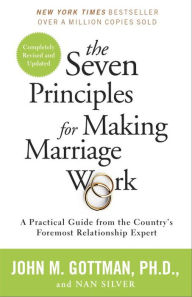
Book Review: The Seven Principles for Making Marriage Work

cover of The 7 Principles for making Marriage Work

There are a lot of books out there to help any marriage that might be in trouble, excellent books that describe how we form attachments, how we love and different love languages we use with our mates.

However, I am particularly biased toward Gottman’s books because of his extensive work with clients and research study on the habits of marriage couples through The Gottman Institute.

While he has written a number of books, two of my favorites are “Couples Communication” and “The Seven Principles for Making Marriage Work”

Each chapter describes one of the principles and includes many user friendly exercises for better understanding and application to your own marriage. Here is his blueprint to make your marriage long-lasting.

The seven important principles according to Gottman

1.  Enhance your Love Maps

Become intimately familiar with your mate. Know each other’s goals, worries, hopes, likes and dislikes. Develop a “love map” of your spouse, know what pleases him or her. Then make time for each other – make it a top priority every day. This isn’t a chore – this is a joyful event of becoming more known to your spouse and understood as you do them.

2. Nurture Your Fondness and Admiration

Gottman believes fondness and admiration are two of the most crucial elements you can have in a rewarding and longlasting romance. While problems, personalities, etc. may create friction at times, if partners continue to treat each other with honor and respect they won’t be a problem. Remind each other of their positive qualities. Fondness and admiration are antidotes for contempt.

3. Turn Toward Each Other Instead of Away

It is staying connected that is important. And that is always a choice. You choose to turn towards or away from each other. When turning towards the other you are creating an emotional bank account that will be a cushion when times get tough.

4. Let your Partner Influence You

Respect and honor each other’s opinions and feelings and make your spouse a partner in all decision making. Ask for and respect the input and influence of the other. This can be more difficult for a man, but when he is NOT willing to share power there is an 81% chance the marriage will self-destruct.

5. Solve Your Solvable Problems

Gottman believes there are two basic kinds of marital conflicts: those that are solvable and those that are perpetual. 69% of problems fall into the perpetual problem category, those problems that cannot be resolved. So what do you do? You learn to live with them and approach them with good humor. Both acknowledge it is a problem, but they accept each other and their differences with love. The relationship is more important than the difference. Solvable problems are less painful or intense and are the subject of a particular situation that may involve underlying issues of trust, security and selfishness. They may include problems with in-laws, finances, sex, household chores, parenting, etc.

6. Overcome Gridlock

When we are in a gridlock, our dreams and aspirations and wishes that are part of your identity and which give purpose and meaning to your life has come to a standstill. To end gridlocks requires dialogue, understanding the cause of the gridlock, respecting the dreams and desires of your mate, honoring the requests of the other.   Within any relationship we need to feel we have the freedom to be ourselves as individuals and just as we explore who we are as individuals we explore who we are within our relationship.

7. Create Shared Meaning

Marriage is how you share your life beyond the chores, parenting and raising children, or making love. It’s about creating meaning together. It’s creating an atmosphere where each person can talk honestly about his/her conviction. It involves creating both family and couple rituals that are satisfying to both.

Marlene Anderson


Receive a Free Consultation: Fill out the contact form to receive a free consultation about Personal Life Coaching, speaking engagements, retreats or teaching workshops for your church or women’s groups on relationships or other topics that affect our lives.

Sign up today to receive the entire series:  http://eepurl.com/baaiQ1

Listen? Of course I’m listening…


00490033We are communicating every day in some way: with words, or a look, a touch of the hand, a gesture or by our posture. Sometimes it is through notes we write or texting on our phone.

What are we saying and what is being heard?

As I was reviewing some of my notes and former class material on relationships, I came across the following five important communication reminders for parents.

But they’re not just for parents communicating with their children, but also for couples who struggle every day to share and better understand each other. I have rewritten them to include spouses as well as parents and children.

Communication – for everyone

1. Listen – just listen. Don’t be so quick to respond. Be quiet or validate the feelings of the speaker. Do not judge, or criticize, or come up with your answer to someone else’s problem.

Silence can be the most effective and helpful tool a listener has.

Pay attention to what is being said. Can you listen from the other’s point of view? Don’t think about what you want to say in response and don’t interrupt. Give the other person time to compose his thoughts.

Be there in the moment. Don’t bring up the past or attack with your own list of complaints or criticisms.

2.  Don’t criticize or judge. We often dismiss our kids or our spouse when they talk about struggles they are having. Some of what is said can trigger an instantaneous response from us; we have the solution and if they just did things the way we would, they would have no problem.  But it infers that you are smart and the other is stupid. Judging anyone places you in a superior position to the other.

We can have an opinion about behaviors and actions, but we do not know the heart of someone who is struggling. If you want to encourage, check your reactions.

You can support and confirm the other’s ability to problem solve by substantiating their feelings. “I didn’t realize such things bothered you.” This opens the door to communication rather than slamming it shut.

3. Talk from the heart. When someone uses heart talk with you, the language of feelings and emotions, don’t respond intellectually with head-talk. It diminishes the other person’s feelings and they often will not talk about them again.

4. Don’t assume. We hold preconceived notions about the people we live with and work with. These can hamper communication. Don’t assume that you know another person’s thoughts or feelings. Find out.

5. Show your love. Actions can be as important as words – oftentimes more important.

Marriage is an extremely complex institution.

It takes courage, determination and resiliency to maintain a long-lasting relationship. Happy marriages are based on a deep friendship and mutual respect for and enjoyment of each other’s company.

Couples who have this know each other intimately.

They know each other’s likes, dislikes, personality quirks, hopes and dreams. They have an abiding regard for each other and express fondness in little ways day in and day out. They have found ways to stay connected.

They maintain their friendship because it is the foundation of their love.

Friendship fuels flames of romance.

When we are dating our future mate, we want to be with that person as much as possible. We share our hopes and dreams along with our past. Somewhere along the way, however, we stop doing that after we are married. Instead of discovering more of each other, we focus on all the problems of life and forget to continue building that relationship that was so important to us.

Marlene Anderson

 Sign up today to receive the entire series:  http://eepurl.com/baaiQ1