Laughter is not just good for the soul – it is vital for our overall health – mental, psychological, spiritual and physical.
“The art of medicine consists of amusing the patient while nature cures the disease.” Voltaire, French Philosopher
Are there really health benefits to laughter, other than it feels good in the moment? Yes there is and it is confirmed not only through scripture and sages of the past, but also from medical research. Unchecked long held stresses over time contribute to illness.
“A merry heart doeth good like a medicine.” Proverbs 17:22
Laughter releases the hormones that heal our physical body and strengthens our heart and immune system. Hearty laughter exercises our heart – lowers blood pressure, gives our lungs a workout, releases tension in all parts of our body and releases opiates in our blood system giving us a high – a lift.
Within humor and laughter we find:
An expanded view of life – we see a larger picture
We can be real – we no longer have to pretend we are something we are not
It enlarges possibilities and encourages us to take a risk
Turns over powerlessness and tickles its tummy
Humor helps us cope and survive in even the most horrible conditions
Humor gives us power – laughter reinforces it
It helps us overcome fear, anxiety and uncertainty
Humor removes the rough edges and fills in the deep chasms of distress
Our rigid beliefs, thoughts and attitudes meet the Charlie Chapman’s of this world
Releases the pressure cooker of anger, hostility and fear. “Rage is impossible when mirth prevails”
Laughter is the freedom we experience when we disconnect from the dreadfulness of events
Humor reveals potential solutions – we are able to see options
Humor gives us a way out – it balances life
It helps us live with our imperfections
Tears of laughter are as beneficial as tears of sorrow. They carry harmful toxins out of the body
Humor and laughter diminish our emotional pain
Humor breaks a deadly self-fulfilling prophecy of doom
Laughter brings people together
There are many reasons why we don’t laugh more. The more common is embarrassment, rejection, criticism and not wanting to give up the immediate benefits of being angry. Sometimes we hesitate to laugh because we were told as children to be more serious.
But I would rather laugh – looking for that kernel of the absurd and ridiculous and then creating that moment of freedom to laugh at myself and my world.
What does humor or laughter have to do with concentration camps?
Could laughter and humor have any place within conditions where people were being annihilated because of their faith and race? Wouldn’t that be sacrilegious to the sacredness of life to even suggest such a thing?
Only someone who had been there, and who by the grace of God survived, could speak to such things.
As I watched a documentary on the death and unfathomable horror of those Nazi concentration camps, and saw the recorded footage of the death and torture of thousands and thousands of Jews during WWII, as recorded by the British, American and even the Nazi’s themselves, it was unimaginable that it could be real. How could any man do that to another man? And how could anyone find meaning in such circumstances.
In his book, “Man’s Search for Meaning”, Viktor Frankl wrote about how he and others were able to discover meaning for life – even here. I was profoundly impact by his book during my graduate work.
Viktor Frankl was a psychiatrist who had a thriving practice in Germany when Hitler took power. But it wasn’t long before his practice came to an end. Because Viktor was a Jew. He and his entire family were sent to Nazi concentration camps.
Over a three year span, Viktor was in three separate concentration camps,ending up in Auschwitz, considered by many to be one of the worst. His entire family, except for his sister and himself, perished in those camps. Every possession was taken from them, and the Jews who weren’t shot or sent to the gas chamber, endured unspeakable horror.
In his book, Viktor wrote this about his life-altering experience:
“To live is to suffer, to survive is to find meaning in the suffering. If there is meaning in life at all, then there must be a meaning in suffering.”
It was in the concentration camps where Frankl discovered meaning for life. In spite of the horrible environment, depravity and brutality, the prisoners were able to “retreat from their terrible surroundings to a life of inner riches and spiritual freedom.”
In fact, he said it was exactly in such situations where our “spiritual life” could deepen. Men were compassionate to others who were dying and would sacrifice their meager portion of food with those who needed it more.
He discovered that with practice, the prisoners could focus their minds on things of good – they could see the beauty of God’s earth around them even in the scorched desolation of the land – and for the briefest of moments focus on the blue sky or a bird’s song or a budding bush. And they could look for humor.
“Humor was another of the soul’s weapons in the fight for self-preservation. It is well known that humor, more than anything else in the human make-up, can afford aloofness and an ability to rise above any situation, even if only for a few seconds.”
He and another prisoner made a decision to invent at least one amusing story daily to share with each other.
“The last of the human freedoms – to choose one’s attitude in any given set of circumstances…. could not be taken away from them.”
One could starve, beat, humiliate, and take away every shred of human modesty. The Nazi’s tried to destroy the spirit and soul of their prisoners. But they were unable to take away the ability to find meaning in the midst of the hell they were creating. Even in such circumstances, in fact probably because of them, man could decide what he wanted to take away from this experience.
“It can be said that they were worthy of their sufferings; the way they bore their suffering was a genuine inner achievement. It is this spiritual freedom – which cannot be taken away – that makes life meaningful and purposeful.”
Viktor saw and experienced for himself that “any man can, even under such circumstances, decide what shall become of him – mentally and spiritually.”
We choose our responses to what is happening to us at any given moment in time. Even in a concentration camp, man can retain his human dignity. He can choose how he will respond.
Perhaps the greatest gift that humor gives us is to be able to laugh at ourselves.
Laughter, if just for a moment, takes the edge off the seriousness of death and tragedy, expands our world view, and more than anything else allows us to let go of our inflated self-image, our bloated pride and self-importance.
Laughter clears the playing field, reduces levels of stress and gives our body the boost it needs to help fight off the effects of depression and loneliness.
When we take off the rose colored glasses, we stop embellishing or diminishing ourselves through impractical comparisons, and realize that we are all God’s creatures subject to both humor and divine intervention. When we stop taking ourselves so seriously, we are able to laugh at the flawed parts of our nature while celebrating the parts that give rise to creative energy.
We are not “more than” others – but are a mixture of good and evil struggling to survive. Humor teaches us we are still “okay” with all our deficits as well as our emotional toughness. Besides, we are not as tough as we want to believe we are and not as powerful as we profess to be. When we can laugh at our own puffed up status, we are able to lift others up and laugh together.
Laughter when not used to demean someone is a bridge to acceptance and tolerance. When we accept ourselves, just as we are, and accept life with all its upsets, disappointments, and burdens we are able to bring that ray of hope and sunlight into the darkness of the moment. It chases away the fog of depression and sweeps the dark clouds from our prison cells of rigidity.
We all enjoy the spoofs by comedians of people who make themselves too pompous or self-important. Their humor reveals the ridiculousness of most of our actions. Their spoofs teach us the importance of taking off our masks of smugness and self-importance and laugh.
Life is full of pain and sorrow – illusion and disappointment. But when we take that plunge and laugh, we are rewarded with a larger picture of life. And in the process, we get a glimpse of the gold in the dark threads of life, as an anonymous author wrote:
“My life is but a weaving between my Lord and me,
I cannot choose the colors, He weaveth steadily.
Sometimes He weaveth sorrow, and I in foolish pride,
Forget He sees the upper and I the underside.
Not ‘til the loom is silent and shuttle cease to fly,
Shall God unroll the canvas and explain the reason why.
The dark threads are as needful in the weaver’s skillful hands,
As the ones of gold and silver in the path that He has planned.”
Laugh. And if you cannot laugh yet, smile. Make it a purposeful goal of each day, to see the humor that lies underneath the tragedy. Instead of walking under the dark clouds, flip your day over and walk on top of the darkness with the full sunlight on your face. And you’ll find yourself walking with our Savior.
Stress is very subjective. Perception is both the creation of stress and what we will do with it. It is both personal and unique. What stresses you out may not stress me at all.
Any life event, major or minor, can become a cause of dis-stress. It can be an on-going source of irritation and even victimization. It can also be the beginning of an off-repeated humorous story. Can we take events and turn them into something we can laugh at for decades?
Years ago in a speech I gave on stress to a group of teachers in the U.K. I shared one of the stories my father-in-law told our kids about when he was a kid. Their much loved Grandpa Bert was an easy-going guy, with seemingly not a care in the world who drove my mother-in-law crazy. As a kid he attended a small, rural school.
Now Bert was not a student of academia – in fact he hated sitting in the classroom. During recess while other kids were busy jumping rope or throwing ball, he was busy exploring the tall grass around the little country school, looking for wonderful things such as bugs, worms, caterpillars, frogs – you name it.
One nice warm spring day, he found a cute little baby garter snake. Wow! He was in seventh heaven – really excited. While he was busy enjoying his new discovery, the school bell rang and all the kids ran inside. The teacher, knowing “Bert” would be dawdling, stood at the school door and yelled sharply. “Bert”.
Oh – oh. Now what do I do. He did not want to let the snake go! He wanted it as a pet. He didn’t even consider what his Mom might do when he took it home. But he knew that if he didn’t move fast, he was going to be in big trouble with his teacher! But what should he do? Well he did what every red blooded young boy would do – he stuffed the tiny wiggling snake into the pocket of his jeans and ran into the school.
At first the little snake was content just to lie in this nice warm cozy “nest”. But pretty soon, as little snakes are apt to do, he got restless and began squirming and wriggling. And Bert began to squirm as he tried to keep the snake from slithering out of his pocket. Finally, he did the only thing he could think of to do – he reached inside and took the snake out and held it tightly in his hand.
Well, the curiosity antennas of the astute kids around him went on full alert. “What you got, Bert” and “Let me see” they whispered back and forth. Bert carefully and discreetly gave them a peek when the teacher’s back was turned or when she was looking down at the papers on her desk. But his luck soon ran out as the teacher looked up at him just when he was giving a peek to the kid across the aisle. “Bert, what are you doing”, she bellowed as she got up and marched down the aisle towards him.
“Oh no, I’m in real trouble now – big trouble.” He tried to put the snake back in his pocket, but the darn thing just wouldn’t cooperate. The snake now was just as determined to get away as he was to stuff it. As the teacher approached she demanded in her loudest sternest voice: “Bert! You give me what you have in your hand right now! Oh no, I’m dead meat, thought Bert. What am I going to do?
He did the only thing any rational young man would do. “No”, he said meekly. Upon which she adamantly demanded, “You give me what you have in your hand.” Again he said, “No”, upon which she said, “If you don’t put that in my hand right now I will march you to the principal’s office.”
Well now, he really was in a dilemma. More than experiencing the wrath of his teacher, he was even more afraid of going to the principal’s office. Bad things happened there. Sometimes kids were never seen again – at least for that day!
So, he did what he was told, opened his hand and put the snake in his teacher’s hand. Upon which she screamed and fainted.
And yes, he did end up in the principal’s office – and yes, he disappeared from school for a whole week because he was expelled.
But there is more to the story. The day he returned to school, he was late and came screeching around the corner of the school house on his bike and smack – ran right into his teacher knocking her flat!
We all laughed as teachers could identify with the antics of their students. And I’m sure they remembered times when they were the “Bert’s” in their own teacher’s lives.
As we visualize this humorous story, we have an opportunity to ask ourselves, can we see humor in those difficult and challenging times? As a parent, can we bring humor into our family times together, by being able to laugh at ourselves and see the humor in less than humorous moments? It is not being insensitive or laughing at someone’s misfortunes. It is seeing within ourselves those humorous moments and knowing we can laugh as well as cry.
See the humor in things. Smile! It takes only 13 muscles to smile but it takes 64 to frown. Look for the good things in your challenges. It is a skill we develop over time. It is a lifestyle. And once you start laughing, you won’t want to stop.
Laughter is not a once-in-a while event – it is a lifestyle – a way to look at life. You not only find the good things every day, but you find those moments when you can take an intolerable situation, one packed with emotions and stress, flip it on its side and tickle its tummy.
“I’m giving so much money to my therapist; they will want to erect a statue in my honor.”
“I’m hanging on so tight, I’m getting rope burn.”
It isn’t laughing at someone – it’s laughing at intolerable situations – its taking the edge off the adversity that is in front of you – it is enlarging the joyous moments – expanding the depth of our love and enjoyment of life. Humor takes the edge off any crisis.
“When we admit our schnozzles, instead of defending them,we begin to laugh and the world laughs with us.” Jimmy Durante
Perhaps the greatest gift we give ourselves is our ability to laugh at ourselves! Don’t take yourself so serious. When we laugh at ourselves nobody can laugh “at us” – they can only laugh “with us….”
Make laughter and humor a normal part of your life
Exaggerate. Take a bad day and blow it out of proportion. Make a mountain out of a molehill. Imagine you are giving a performance at a local theatre and your material is coming from what is happening right now in your life.
“I had such a bad day. . . You wouldn’t believe how bad it was… It was so bad…”
“I wouldn’t say the rooms in the last place I stayed were small, but the mice were hunchbacked!”
“Accent– chew– ate the positive, eliminate the negative…” was a popular song in the 1940’s. Choose to look at the world on the positive side vs. the negative side. Rewrite current events to include humor.
A 50% chance of sunshine instead of a 50% chance of rain.. .
A glass half full vs half empty.
Smile at yourself every time you pass a mirror! You will be surprised at how just putting a smile on your face can make you feel different inside. Then make a point to smile at others – at the busy, harassed store clerk, the gloomy person walking down the street, at the retiring neighbor.
Start a “Happy Journal”. Paste a large smiling face on the cover. Record a happy, pleasant or joyful event each day. Put warm comments, favorite sayings or anything that made you laugh in your journal along with cards and letters or articles that focus on the positive. Look at your journal every day.
Look for that blessing in whatever is happening. Sometimes blessings are hiding under a big rock of troubles. Lift the rock and release them. Let them penetrate the gloom in your life, the sadness and worry and fear. Let the blessings shower you with gratitude and put a smile on your lips.
“When you get to the end of your rope, tie a knot and hang on. And swing!” Leo Buscaglia
When was the last time you laughed – really laughed – until the tears rolled down your cheeks, your sides hurt and you gasped for air? You laughed and laughed and didn’t want to stop.
Something tickled your funny bone so that in an instant you saw the world differently – your situation was so bad, it was funny – your problem so profound, it was laughable – the ludicrous became the comical. The world had turned upside down and you laughed as you swung in the absurdity of the moment.
“The crisis of today is the joke of tomorrow.” H. G. Wells
What precipitated that laughter? How did it change how you felt about your world, your situation, yourself? How did it change the minutes and hours afterwards?
“Against the assault of laughter, nothing can stand.” Mark Twain
Laughter helped Allen Klein, author of “The Healing Power of Humor” go through the death of his beloved wife. Together, they chose to focus on the ludicrous, the absurd, and the farcical. They laughed over the ridiculous and after her death; these memories put a smile on his lips along with the tears on the eyelids. The focus was on the good times together and the wonderful memories that were created.
A year after my husband died, I invited a group of close friends over to my home for dinner and together we toasted his life and shared stories about the funny things he did, the way he could laugh at himself, and how much we loved his subtle humor. It was more than just a celebration of his life; it was a placing of wonderful stories and events and connections lovingly in our memories.
Each person has within them the ability to create humor and laughter. Humor is not just fun. It is extremely powerful “medicine” that heals the soul and mends the body. Humor is a revival, a mini vacation, a breath of fresh air, a way to cope. There is no situation so severe that we can’t find a way to laugh at it.
Humor can:
Instantly transport you to another world
Remove you from the troubles of the moment
Allow the pain to subside for a moment
Make life more bearable
Allow you to laugh at yourself and your situation
Give you power over what seems impossible and powerless
What makes you laugh? When do you laugh the most? What if you took your impossible situation and looked at it upside down? Would it make you smile – maybe even laugh?
Comedians find humor in all life circumstances. In fact, they would not be in business if they couldn’t take the tragic events that occurred and turn them into occasions to laugh.
Can you laugh when you are revisiting the trauma of your childhood – or when your only son dies? Can you laugh when your wife has just a few weeks left to live and she wants to put up a picture that both of you can laugh at so her passing will have a deeper meaning than just sorrow? Would you have the courage? Would you feel as though you were being insensitive and callous? Or could you, like the authors of the following books, see laughter as a way to help you get through impossible times – a way to keep sane and keep from falling in the abyss.
The authors of the following books are testimony to not only our need to laugh but to find healing within its grasps.
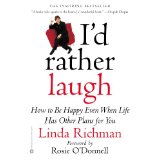
“I’d Rather Laugh”, by Linda Richman tells a personal story of trauma and intense emotional pain and how learning to laugh through even the greatest of these pains, not only helped her survive but to heal. It is a moving story that all of us can identify with and know that there is hope and healing from any pain.
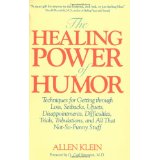
“The Healing Power of Humor” by Allen Klein, is an older book, but well worth the time to read. Not only does he share his own story, but tells us why it is so important that we learn to laugh and gives us tips on how to get through “loss, setbacks, upsets, disappointments, difficulties, trials, tribulations and all that not-so-funny stuff”.
I learned the subtle skill of humor from my husband who could find humor in all things while being sensitive to the space of another.
My upcoming blogs will be on laughter and the healing power of humor – how we can apply it to our lives and how it can help us overcome even the greatest of tragedies and give us the ability to move forward.
Every day we have the opportunity to begin again – to start over – to write a new chapter in our life story.
We can choose to find solutions instead of dwelling on the insolvability of problems.
We can focus on all our blessings instead of all the things we think we have to have.
We can focus on love instead of hate – laughter instead of crying. We choose our focus.
Love, Laughter and Grace
Every day we are graced with a new beginning. Within each day we can purposefully look for the grace of God in our pain, make a decision to laugh in the midst of our struggles and accept God’s gift of love and then apply it throughout the day.
In all facets of life, we will find God waiting for us if we choose to look for Him: in the breath of spring, the flowers that spring out of the still cold earth.
We find Him in the vast expanse of His world and the universe, the changing seasons, and in the ebbs and tide of life.
We find Him everywhere – in life and in death. His grace touches the wounded heart, the bruised spirit, and our tired and exhausted engagement with life’s trials.
If we allow His love into our lives, we will find comfort and assurance. I do not have to be a brave soldier to fight off fear and anxiety. He gives me courage to endure and to let go of the endless struggle to be perfect and trying so hard. I can give myself permission to just be.
Laughter
Oh, for the unrestraint of laughter – that shakes the rolls of belly fat and sends tears cascading down our cheeks as it takes away our breath in its intensity – laughter that drives out the demons of unhappiness, depression and loneliness. It is laughter that reminds us that under the fear that creeps into our spirits and soul there is love and grace.
Satan may have thought he had his revenge with the Cross – but God is laughing in the heavens. His Son has risen and forever shines on His people – It is love that wins. It is laughter that spreads the love – It is grace that binds it all together.
Each new day
So start each new day with love, laughter and grace.
Love God with all your heart – because He loves you with all of His.
Love your neighbor, spouse, and children. Love yourself – for God loves you.
Reach out to those who are in deep pain – yet cannot speak about it.
Reach out to those who want to laugh – help them to join in the song.
Reach out to those who are unlovable – welcome them for we too have felt unloved.
Love deeply, sincerely, and with wild abandon.
Laugh heartily, loudly and with great joy.
Accept the gift of love and laughter and with grace, accept yourself and others.
It is a time of celebration and rejoicing – a time of excitement and joy.
What does Easter mean to you? How has it impacted your life? What are you personally able to take away from the cross of suffering, sacrifice and death?
As with all things scripturally, it is only when we apply it personally that we are given the greatest gift of peace and joy and assurance.


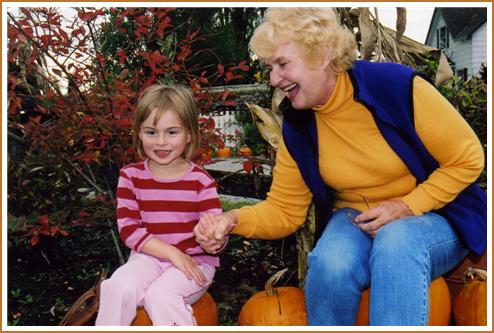 Laughter is not just good for the soul – it is vital for our overall health – mental, psychological, spiritual and physical.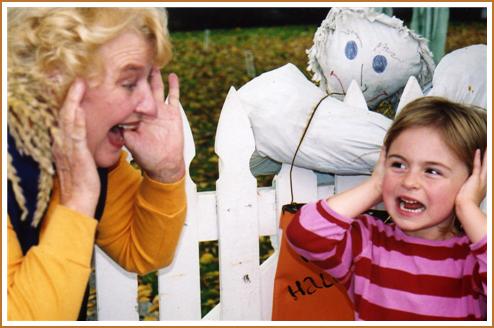
 What does humor or laughter have to do with concentration camps?