
Let's Talk

Self Correcting

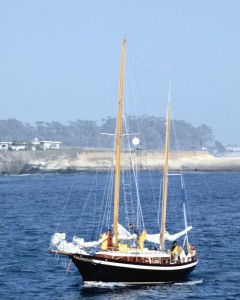
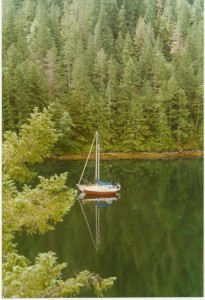
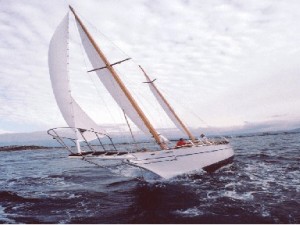
BOATS026My husband and I were sailboat cruisers. We moved to the beautiful northern Washington area so we could take advantage of the wonderful cruising opportunities available in the San Juan Islands.

When you do any serious sailing or cruising it is important to learn the rules of the road, know where the shipping lanes are, what the different buoys mean, know how to chart a course and take into consideration prevailing winds, tides and currents. Without these basics you can easily get into trouble.

So it is in life. We need to learn what it means to be comfortable at the helm, where the rip tides are, how to avoid submerged but dangerous rocks and where the safe passages are located.

Preparation not only includes knowledge of the areas where we are sailing, but also preparation of the boat and ourselves.

There were times when we had charted a course, set the boat on its path and then were able to activate the automatic pilot – a self-steering apparatus which enabled you to take your hand off the wheel and allow the automatic pilot to take over. But you never left the area – you continued to monitor where you were going so in a moment’s notice you could resume control of the helm.

While the automatic pilot could self-correct within a predetermined set path, it couldn’t anticipate the unexpected.

So, it is with us. We set our goals, develop a course of action and then we move on automatic pilot. Yet if we have not prepared for the unexpected, know what to do when the weather changes, the fog rolls in or the winds whip up the waves, we will not know how to take over the helm and self-correct our directions and our actions.

Unless you are in danger of running aground, crashing into a barrier reef, or being run over by a ferry or large ship, correcting course on a boat usually requires small actions. The rudder on any size boat is relatively small in relation to the size of the boat, but its steering capacity is remarkable.

When we have dealt with unexpected changes in the past with panic and severe re-actions, it takes time to replace those habits with calm and thoughtful responses. Your first response to any perceived or real danger may continue to be panic and fear.

While fear and panic can motivate you to take immediate emergency action to correct a direction, if the situation doesn’t warrant such action, your responses simply continue to elevate heart pressure, put your body and mind in high stress and you become a candidate for major health problems at some point.

How do you change the habit of over-reacting to events? You learn a new way to assess, evaluate and respond.

Go back in your mind and revisit events where you panicked or worried. What automatic panic thoughts did you have? How did your body respond? (Heart racing, stomach flips, etc.) Did that way response help you resolve the situation or make it worse? Perhaps it is time to find a better way to put new responses in place. Next weeks post will address replacing automatic panic thoughts with new measured responses.

Marlene Anderson

If you enjoyed this blog post, share with your friends.

Sign up today to receive the entire series:  http://eepurl.com/baaiQ1

To Receive a Free Consultation for putting together a Personal Plan of Action for yourself,  fill out the contact form beside this blog or send me an e-mail.  I am also available for speaking engagements, retreats or teaching workshops for your church, clubs or women’s groups on a variety of topics that affect our lives.
Friendship Circles

IMG_0728We came together to pray and plan and encourage and find out where we were on our career paths.

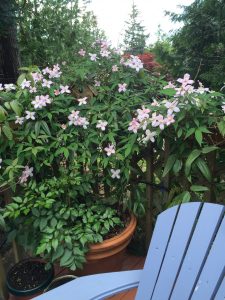
Author, counselor, coach, teacher – we all congregated at my home for our annual retreat from life as usual to catch up and listen and ask for and receive clarification of our goals.

Sometimes our talking went on so long we failed to realize we were hungry when it was time to eat.

Friends: they support us and are willing to give us the valuable information we need from a trusted friend.

Our friendship circle was formed so we could support each other and encourage one another in our life’s work. Setting aside our wants and wishes, we reached out to help each other visualize and test their goal ideas. We shared information from the educational and training backgrounds we had along with articles we have read and books we recommended reading. At times it was like a think tank – exploring what we could accomplish if we set our hearts and prayers to it.

Friends: they are worth their weight in gold. No amount of money can substitute for friends who care.

We can accomplish many things in life – some of which, when looking backward can seem pretty impressive. But it is hard to accomplish a lot without the support of those who we can call friend. We can dream dreams and put our shoulder to the wheel of life and make things happen; but it is the support of friends who encourage us when we are down and out and take time out from their own busy schedules to give us a hand back up.

An honest and true friend will warn you about dangers of going down a wrong path while helping you visualize impossible dreams and goals. A loyal friend will support you when everything goes wrong or when you need help.

That is a friend I want to be – that are some of the friends I have. I want to be a friend who will see the best in others, and who care as much about them as I do about myself. I want to be a friend who will take time to listen and pray and support.

Marlene Anderson

If you enjoyed this blog post, share with your friends.

Sign up today to receive the entire series:  http://eepurl.com/baaiQ1

To Receive a Free Consultation for putting together a Personal Plan of Action for yourself,  fill out the contact form beside this blog or send me an e-mail.  I am also available for speaking engagements, retreats or teaching workshops for your church, clubs or women’s groups on a variety of topics that affect our lives.


A New Perspective

IMG_0751IMG_2579Every day, we have the opportunity to observe and be blessed by the wonders of our world. These wonders and blessings come as a gentle falling rain after a hot dry summer or silently tumbling snowflakes that shimmer like diamonds in the winter sun.
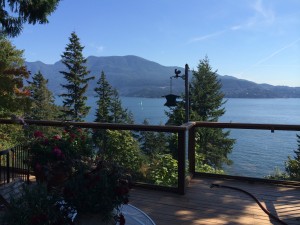
Who hasn’t felt refreshed by a cooling summer’s rain or been touched by the quiet serenity of an earth blanketed in mounds and mounds of downy snow?

At such times, nature is silenced and time suspended.

And who hasn’t experienced the deep, enduring and gentle peace that comes from looking over a countryside bathed in the light of a full moon. And what person hasn’t marveled at stars so dazzling and vivid it seems we could reach up and touch them.

And yet, the snow is only frozen water, and the sun, moon and stars are nothing more than hardened, desolate, uninhabitable rocks and dangerous gasses.

What transforms these unattractive objects into things of beauty? And what happens to change the mundane of everyday events into things of beauty, miracles and blessings?

When I allow my mind to become quiet and still, I not only see the beauty of our world and universe, but experience it on a deep, penetrating, healing level. God reveals Himself to us in these timeless acts that occur every day.

IMG_0748The mystery of life is constantly unfolding around us from the green shoot pushing up through the dirt to the developing baby spiders clinging precariously to the edge of their web. We brush them aside as a nuisance before we have had time to consider what it would be like without them.

I am humbled by the power of God witnessed in storms that lash out in gale force winds. But at the time I do not consider them blessings.

Yet, it is through storms that the earth is swept clean and renewal occurs.

If we take time to observe the awesome power and beauty of God in nature, would we be able to recognize that same awesome power in our personal lives as well?

Marlene Anderson


If you enjoyed this blog post, share with your friends.

Sign up today to receive the entire series:  http://eepurl.com/baaiQ1

To Receive a Free Consultation for putting together a Personal Plan of Action for yourself,  fill out the contact form beside this blog or send me an e-mail.  I am also available for speaking engagements, retreats or teaching workshops for your church, clubs or women’s groups on a variety of topics that affect our lives.


Moments in Time

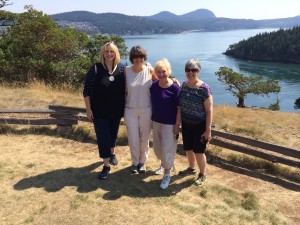
Women Posing for PhotographAugust has flown by – Minutes filled with work, accomplishing projects and conversations.

But the best moments were those spent with good friends – talking, sharing and just being together.

Relationships are an important part of any steps we take through life. Knowing we are not alone allows us to step more confidently.

“This is the day which the Lord has made. Let us rejoice and be glad in it.” Psalm 118:24.

We only have that moment in time. If we waste it, we are wasting a part of who we are. In that moment in time we have the ability to reflect, connect with loved ones, do some meaningful work, try new things, and look for opportunities.

Dr. Nathaniel Branden in his book, “The Art of Living Consciously” wrote about the need to take responsibility for where we are at any point in time. We are responsible for how we spend those moments. We decide whether we will live a life of purpose or simply plod along without joy or expectation.

This is the day the Lord has made. These are the moments He has given us. Pack them full of life lived to the fullest.

We live in a fast paced world – everybody running here and there, often fragmented and disconnected.

But we choose our pace. We choose to work hard to accomplish things. We choose to slow our steps to appreciate the people around us; to spend time with those we love. We choose to make relationships an important part of our lives.

We choose to stop and look and appreciate what God has given us and give thanks for our many blessings. We choose to notice that squirrel trying to steal food from the bird feeder or the hummingbirds challenging each other as they flit about.  We choose to notice that person in need and do something about it.

If we are constantly running, we will miss out on those very special moments in time when we are richly blessed.


Marlene Anderson

If you enjoyed this blog post, share with your friends.

Sign up today to receive the entire series:  http://eepurl.com/baaiQ1

To Receive a Free Consultation for putting together a Personal Plan of Action for yourself,  fill out the contact form beside this blog or send me an e-mail.  I am also available for speaking engagements, retreats or teaching workshops for your church, clubs or women’s groups on a variety of topics that affect our lives.


The Next Step

MP900439455The Next Step

Do you remember your first toddling steps?

I don’t. But we’ve all had them.  While we may not remember our first attempts at walking, we remember snippets of running and jumping and falling down with scraped knees and scaring our parents half to death as we climbed and explored places where danger was adventuresome.

As we march through life, we take steps full of confidence and those filled with timidity and hesitation.

There were those hesitant steps as we entered kindergarten, and then bounded through grade school and high school, entering college with a false sense of self and doubt but soon striding with self confidence. Soon we were light footing it into romance and love and then that solemn walk down the aisle. Steps in tandem soon slowed down as we tried to match the baby steps of our first toddler.

As the years marched on, we became more sure-footed, learning not to make the same mistakes twice.

But then just as we had found a comfortable gait, life throws us some unexpected hard balls and we learn we don’t have as much control as we thought we had.

Losses and tragedies knock us down and our steps are slowed to a halt in grief, unsure of whether we can recover and start moving again. The next steps are once again hesitant, unsure and less confident as we let go of expectations and assumptions that seemed so right.

Where are you in your life journey?

Wherever you are in your journey of life, your steps will either be a broad stride or hesitant as you consider new paths. Sometimes the choices may seem limited but they are always there.

What step are you on? Where in the life chain of events do you find yourself?

Perhaps you are working through the loss of a favorite person, the end of health as you knew it. It may be a time of reflection before you step out again.  It may be a time of excitement as you consider new options.

The Next Step

Follow along with me as I begin a new exciting series of blogs that will focus on how we can make our next steps the best ever.

Marlene Anderson

How do I say Goodbye?

SSGP1563How do I say goodbye?


She was petite, perky, and full of life. Her smile brightened a room and you felt uplifted as soon as she walked in.


She never made a big deal about the obstacles she faced in her life. With severe food allergies she would bring her own food with her to any event without any fanfare and nobody noticed. It wasn’t a big deal to her. Life was to be enjoyed and not spoilt by little things you could or couldn’t do.


Her outlook on life carried through in all situations. She looked at problems and found solutions.


How do I say goodbye


She was my friend.


A Quiet Cove 001Throughout life we are saying goodbye to people – some who have come in for only a short time while others stayed longer. For some the connection was transitory – but others stayed and took root in our lives and our hearts. They became an integral part of who you were and by their presence in your life helped you develop more of who you could become.
 

Barbara Cooper touched many lives with her gentle but bold spirit. We sailed together with our husbands in the San Juan’s and Canadian Gulf Islands.Last week, we celebrated her life together with tributes, a piano solo by a granddaughter who flew to Washington from England and a parting song, Say It With A Song, from the chorus she loved to sing with.


How do we say goodbye?


j0433113We don’t. We tuck the wonderful memories we had of her in our hearts where she will always be with us until we meet again.

 

Marlene Anderson


Unplug

Young Woman Standing with Arms Stretched OutUnplug and just “be”


Be in the moment. Take 15 minutes and simply disconnect from life as usual and connect with your self and your surroundings.


From the time we get up until the time we go to bed we are running.  Even when it is time to relax we are bombarding our thoughts and minds with media sites, posting, texting, zoning out with TV, video games, and on and on and on. All the things we must do, should have done or ought to do. I get tired just writing about it.


I propose a 15 minute reprieve from the madness of the day to day business of life.


Yes, there is a lot we have to do to pay the bills and take care of our families. And it may seem like a ludicrous suggestion to add another 15 minutes to my list. And yet, it may be the most important 15 minutes of your day.


So here is how you unplug


Select a time when you can be alone. When you can relax and not think about the millions of things you have to do, must do, or think you ought to be doing.


Find a spot to sit quietly. It is especially nice to be outdoors this time of year. Or you may choose to go for a walk on a nature path, in a park or on a country road. I am fortunate to live where there are many nature trails to explore and enjoy, plus beach access and extensive nature parks.


Our minds are constantly busy thinking and solving problems. During this 15 minutes, however, we want to switch from thinking and problem solving to simply being in the moment, becoming aware of what is happening around us.  Whether sitting or quietly walking, first become aware of your breathing and how effortlessly you breathe in and out.


Because we are programmed to be doing something, our mind will thoughts to the forefront of all the things on our “to do” list. Simply acknowledge these thoughts and then re-focus on your breathing. Don’t try to force thoughts away. Simply re-direct your attention to your breathing or what is going on around you.


What do you see? What do you feel? What do you smell? Notice the sky, the clouds, birds, noises in the background, the warmth or chill of the day, smell of flowers, the colors, scent of fresh air, birds flitting about singing, a bug crawling on a plant, a spider’s web, the movement of tree leaves. If you are walking notice the texture of the path, the shapes of bushes and tangles of roots and scent of pine needles.


After awhile you will be amazed at how refreshed you feel. This is so simple, yet we resist the urge to sit still and be in the moment. We are so busy rushing around.


This is mindfulness – being in the moment – not the past – not the future – but right now in the present moment. When you are in the here and now, your mind is not regurgitating all the problems or things that have gone wrong, what you should do, haven’t done, or are incapable of doing, feeling helpless, stressed, and frantic.


Mindfulness quiets the mind – giving it a rest. It takes you away from obsessive rumination of the past and anxiety about the future.


And it just takes 15 minutes. It is like a mini-vacation that you can take during the noon hour or at the end of day.


Marlene Anderson

To experience a guided relaxation response, my CD, Relaxation, available on my website, will enable you to sit quietly in a chair and go through the relaxation process of all the parts of your body.

If you enjoyed this blog post, share with your friends.

Sign up today to receive the entire series:  http://eepurl.com/baaiQ1

To Receive a Free Consultation for putting together a Personal Plan of Action for yourself,  fill out the contact form beside this blog or send me an e-mail.  I am also available for speaking engagements, retreats or teaching workshops for your church, clubs or women’s groups on a variety of topics that affect our lives.


Hope

Bald Eagle in FlightAs I was sharing with a friend a page from my book, “A Love so Great, A Grief so Deep,” I thought about all the times in life when we get overwhelmed and lose hope.

Here is what I wrote about hope when my husband was dying.

Hope is the effort to fly with wings not yet grown. If I don’t hope – don’t try – don’t struggle, there will never be the possibility of flying.

I was still hoping that he would live – even as I knew he would not.


We cannot live without hope. We may feel as though we are getting bruised and bloodied in the process, but that is a part of living.  To live without hope is worse than struggling – you are only flapping your wings without going anywhere.

But with hope, our wings get stronger, and soon they are not just flapping but carrying us – taking us beyond sorrow to healing, recovery and beyond.

I always wanted to soar like an eagle. I just never realized that it took such work to accomplish it. But In the end, what a blessing.


Hope! It is a gift I cannot refuse. Belief. It is the assumption that God catches you when reality doesn’t match your hopes and you begin to fall.


If you are in the middle of a crisis you didn’t want, never wanted and desperately wish to be free from, you may not be aware of being caught and held safely because the terror of falling is too great. But I discovered God was there regardless of how I felt, like the parachute keeping a skydiver from plummeting to earth. A skydiver has learned to turn his fear of falling into a heady joy of floating.


When reality has dashed my hope, how do I turn my fear of falling into floating?


In order to fly, we have to exercise our wings. In order to fly, we have to be willing to fail and fall.  In order to fly, we are required to “let go” of our fear of heights, let go of restricting branches and free fall – spreading our arms to catch those updrafts and float. In order to fly, we must have hope.

When we struggle with any obstacle we face in life, at times it may seem as though we are pushing against that proverbial stone that won’t budge.  That obstacle might be dealing with a rocky marriage, a major loss through death, chronic illness that sprang out of nowhere, or teens in trouble.

Facing that obstacle, resisting the urge to wring our hands and say we can’t, and finding the ways to work through whatever is happening is putting hope to work.  We believe in our efforts to overcome, think about things in a new way, willing to work on problems, that our hope will have found the wings it needs to take us to those new destinations.


Hope can energize. It seeks new solutions as you learn from crashes what to do and what not to do.


Fear grounds us – makes us miserable, resentful, blaming. Fear eats us up and spits us out in the garbage dump! Hope reaches upward. Fear drives us down into the ground. Hope is the wings that will enable me and you to fly.

Marlene Anderson

If you enjoyed this blog post, share with your friends.

Sign up today to receive the entire series:  http://eepurl.com/baaiQ1

To Receive a Free Consultation for putting together a Personal Plan of Action for yourself,  fill out the contact form beside this blog or send me an e-mail.  I am also available for speaking engagements, retreats or teaching workshops for your church, clubs or women’s groups on a variety of topics that affect our lives.

What Do You Focus On?

Woman Rollerblading on a PierWhat do you focus on when you wake up?

Do your thoughts go something like this:

“I have to hurry, I will be late, there is so much to do, where will I begin, I wish I could have slept longer, I wish I hadn’t stayed up so late, did I make the kid’s lunch………

From the moment we wake up to the time we finally lay our thoughts down for the night, we are focusing on some part of life.  Our thoughts often revolve around all the “have to’s” – the things we have to accomplish in order to survive.

After awhile our thoughts become so adrenalin filled we become highly charged and stressed before we leave home for work.


Before we know it, stress is ruling our lives – we aren’t. We are creating a pattern – a habit – a way of thinking that creates tension that works against us.


Stress.  Everyone lives with it.  But can you make it work for you?


We were made to deal with stress

Stress is the energy that helps us accomplish things.  When we harness that energy and use it appropriately we will be energized and able to accomplish the things we want to accomplish.

We could liken our bodies to that of a well maintained car engine. As long as it is taken care of, it will run effectively and smoothly for a long, long time. But when neglected or not taken care of, that engine begins to break down.

So it is with us. It is estimated that around 75% of doctor’s visits are attributed to high and prolonged levels of stress – the kind that we would call dis-stress. Consider the following:

  • Stress contributes to heart disease, high blood pressure, strokes, and other illnesses
  • Stress contributes to the development of alcoholism, obesity, suicide, drug addiction, cigarette addiction and other harmful behaviors
  • Prolonged stress exhausts the adrenal glands, depletes the nervous system and can cause symptoms such as ulcers, chest pains, headaches, depression and finally exhaustion. It also lowers the immune system which protects us from many serious diseases
  • Recurring health problems of any type can be a signal that we are under high levels of stress that require our attention. When the body is highly stressed for too long, it gets out of balance and that imbalance is expressed with disease.

We were designed to deal with life. Our internal “engines” were made to function in many different situations. However, when overloaded and fatigued for longer and longer periods of time, we begin to show signs of distress.


Normal stress gradually becomes “dis-stress” when we are constantly geared up for action without an opportunity to recuperate.


Yet, not everyone who experiences similar stressful events becomes dis-stressed. It seems a lot of what creates distress is how we respond to the “stressors” in our life.


We are extremely resilient and flexible. Even when high levels of stress extend for longer periods of time, we are still able to cope.


Dis-stress occurs when we don’t find a way to resolve the problems we face over a long period of time and our energy is put into worry and anxiety and fear.  We begin to focus on what we can’t do – not what we can do.


Focus on what you can do – not what you can’t


We maintain stressful habits because they are just that – habits – and we are no longer aware of them.

How we think and look at life becomes a habit, looking for everything that could go wrong instead of all the things that do go right is a habit.


Our patterns of doing things become a habit – even when they are working against us.  It is easier, even though it may be destructive, to do things we have always done them rather than bringing about constructive changes.


To change the dis-stress in our lives, we need to change the habits that continue to keep it in place.


Tracking our daily activities, as boring as it may sound, is the best way to discover the habits that keep us from accomplishing the things we need to do or want to do.

So for a week, track your activities every day:  when you get up – what you do – when you leave for work.  If you work from home, do you have a regular work schedule set up.  Continue tracking throughout the day.  Include the times you eat, when and how you relax, bedtimes, etc. What activities create more stress? When do you feel energized?  When do you feel more stressed?What might different routines reduce unwanted stress?

Then for a week, track your thoughts.  Negative thinking creates a lot of unnecessary stress.  We want to release the energy we have instead of using that energy to worry.  Each day, record your thoughts throughout the day.  What are your thoughts telling you – about you and your capabilities?  Do you hear yourself saying “I can’t” more than “I can”? When does your stress levels rise?


We choose our responses to life

We choose to believe we can’t – instead of looking for ways we can.

We choose to focus on resolving problems – instead of allowing problems to grow bigger than life.

We choose to keep habits in place that waste our time instead of using time efficiently for our benefit.

We choose to maintain an unhealthy attitude towards ourselves and others. Changing our mindset to look for things of gratitude and blessings and the good in others is a choice of humility and gratefulness that nurtures peace, happiness and accomplishmen.

We choose.

Marlene Anderson

You will find more information on understanding and using stress positively, in my book, “Use Stress to Meet Your Goals, 12 steps to understanding stress and turning it into a positive force” available on my website.  It defines how we experience stress and steps we can take to reduce its negativity and harness it instead to reach our goals.  It includes an Mp 3 recording as well.

If you enjoyed this blog post, share with your friends.

Sign up today to receive the entire series:  http://eepurl.com/baaiQ1

Receive a Free Consultation: Fill out the contact form to receive a free consultation about Personal Life Coaching, speaking engagements, retreats or teaching workshops for your church or women’s groups on relationships or other topics that affect our lives.


Stress is Costly

Young Woman Standing Over a Car Engine Bay Checking An Oil DipstickWhen we allow ourselves to remain in constantly activated high stress, we are impacting our health on many levels. That stress maintained over time has an impact on your pocket book.

Many health costs experienced today can find their roots in long standing stress levels.  But we can lower those levels when we become aware of those things that trigger unhealthy stress.

Several years ago, I put together a Wellness workshop and compiled facts and figures about stress at that time. Although these statistics are several years old, they still give us a picture of some of the costs associated with stress. Here are some of those statistics:


  • 30 million Americans have some form of major heart or blood-vessel disease
  • One million Americans have a heart attack every year
  • $700 million are spent each year to recruit replacements for executives with heart disease
  • 25 million Americans have high blood pressure
  • 8 million Americans are alcoholics
  • $15.6 billion are lost by American industry each year because of alcoholism
  • 5 billion doses of tranquilizers are prescribed each year
  • 5 billion does of barbiturates are prescribed each year
  • $19.4 billion are lost by American industry each year because of premature employee death
  • $15 billion are lost by American industry each y ear because of stress-related absenteeism


Stress costs the American industry billions of dollars annually. Everyone is affected by escalating health care costs and the long term impact of high stress.


When people are stressed for long periods of time we see more:

  • Overeating as food becomes a relaxer
  • Smoking cigarettes or marijuana for a quick fix
  • Overmedication or abuse of medically prescribed or over the counter drugs
  • Allergies, hyperthyroidism and skin disorders
  • Depressed immune systems: excess adrenal gland hormones pumped into the body over long periods of time when we are stressed can chronically depress our immune system.

What can we do about it?

Stress is universal. Everyone experiences it in some way – every day.  It is normal and natural.  We can’t live without stress. It enables us to set and achieve goals and enjoy life. Stress is a survival system. It protects us from danger.

But it is an overabundance of dis-stress that puts increased pressure on us and begins to do damage.

Our perception of life and ourselves, what we can and can not do can create unwanted stress. Any situation perceived as threatening, whether physically life-threatening or simply embarrassing or emotionally painful will trigger a stress response. Past traumatic and unpleasant experiences can be triggered over and over again creating unwanted stress.

Stress is a subjective process.

When we let go of anxiety, resentment, anger and frustration we let go of unnecessary stress. The best protection against heart attacks is love. The heart that loves is free and joyful.  In the expression of love we become healthier.

Low self-esteem can create unnecessary stress. How you see yourself, how you feel about yourself has an effect on our stress levels. What are you saying to yourself over and over again?

Stress can become a habit. We develop habitual ways to respond to life that can be stress-laden.

If our first responses to events are consistently fear, anxiety, worry, and panic you put yourself into survival mode instead of a problem-solving mode. One keeps you frozen like a deer in the headlights – the other uses that concern to find solutions.

Stressors are anything that creates some kind of response within our body and we all experience stressors differently. When those stressors are constantly seen as danger, we are constantly geared up to fight or flee.  What we want is to recognize these responses and problem solve solutions.

As we become aware of what triggers high levels of stress within us, we can begin to take steps to drastically reduce dis-stress.

You will find more information on understanding and using stress positively, in my book, “Use Stress to Meet Your Goals, 12 steps to understanding stress and turning it into a positive force” available on my website.  It defines how we experience stress and steps we can take to reduce its negativity and harness it instead to reach our goals.  It includes an Mp 3 recording as well.

Marlene Anderson

If you enjoyed this blog post, share with your friends.

Sign up today to receive the entire series:  http://eepurl.com/baaiQ1

Receive a Free Consultation: Fill out the contact form to receive a free consultation about Personal Life Coaching, speaking engagements, retreats or teaching workshops for your church or women’s groups on relationships or other topics that affect our lives.